Why are there eleven dots over the words
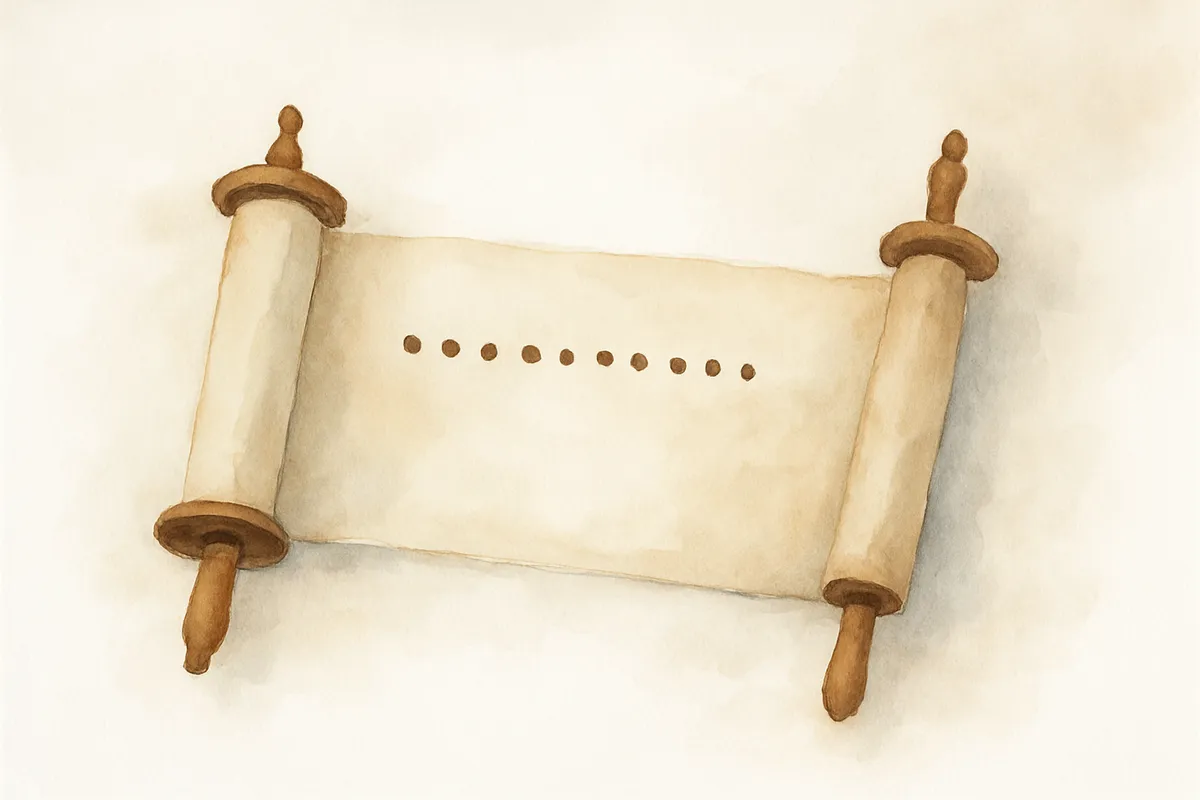
This is a fascinating question in Torah scholarship! You're referring to the eleven nekudot (dots) that appear above certain words in the Torah — a phenomenon known as otiyot mekukkadot or more commonly nekudot sheba'Torah (extraordinary dots in the Torah). These dots appear in 10 places in the Torah (covering 11 words/letters), and they signal that something unusual or noteworthy is happening in the text that requires deeper interpretation.
Key Takeaways
- There are 10 passages in the Torah where dots appear above letters or words, covering approximately 15 letters total across the Five Books.
- These dots are part of the received tradition (mesorah) going back to Ezra the Scribe or to Moses himself at Sinai.
- The Talmudic rule is: when dots appear, the dotted portion is partially or fully discounted in its plain meaning.
- The dots signal to the reader: "Investigate this word — something is hidden or requires qualification here."
- This tradition is cited by Rashi, the Midrash, and the Talmud as authoritative and binding.
What Are These Dots?
The nekudot (dots placed above letters) appear in the following books:
| Book | Passage | Word(s) Dotted | |------|---------|----------------| | Genesis | 16:5 | וּבֵינֶיךָ (between you) | | Genesis | 18:9 | אֵלָיו (to him) | | Genesis | 19:33 | וּבְקוּמָהּ (and when she arose) | | Genesis | 33:4 | וַיִּשָּׁקֵהוּ (and he kissed him) | | Genesis | 37:12 | אֶת־אֶחָיו (his brothers) | | Numbers | 3:39 | וְאַהֲרֹן (and Aaron) | | Numbers | 9:10 | רְחֹקָה (far away) | | Numbers | 21:30 | אֲשֶׁר (which/who) | | Numbers | 29:15 | וּנְסָכֶיהָ (and its libations) | | Deuteronomy | 29:28 | לָנוּ וּלְבָנֵינוּ (to us and our children) |
The Source of This Tradition
The Talmud's Teaching
The Talmud [Pesachim 9b] records a dispute about the dotted heh in Numbers 9:10 (רְחֹקָה), and derives a practical halacha from the presence or absence of the dot. The Talmud states:
"Wherever Ezra was in doubt as to whether a word belonged in the text or not, he wrote it but placed dots over it."
[Avot d'Rabbi Natan 34]
This gives us one major theory: Ezra the Scribe added these dots when he was uncertain about a textual reading.
The Midrashic Tradition
Midrash Bereishit Rabbah (78:9) on the dots over וַיִּשָּׁקֵהוּ ("and he kissed him" — Esau kissing Jacob in Genesis 33:4) records the famous dispute:
- Rabbi Yannai says the dots teach us that Esau did NOT kiss Jacob wholeheartedly — he came to bite him, but Jacob's neck miraculously hardened.
- Rabbi Shimon bar Yochai says: "It is a well-known rule that Esau hates Jacob" — yet at this moment, his mercy was genuinely aroused and he kissed him sincerely.
Both derive their interpretations from the very presence of the dots.
Rashi's Approach
Rashi [Genesis 33:4] cites the midrash and notes that the dots signal the reader to "expound upon it" — they are an invitation to deeper interpretation.
Who Placed the Dots? The Major Theories
There are three main opinions regarding the origin of these dots:
1. Moses at Sinai
Rabbeinu Bachya [Numbers 9:10] and other Rishonim hold that Moses himself placed these dots as part of the original Torah given at Sinai. The dots represent a halacha l'Moshe miSinai — a tradition transmitted orally alongside the written text.
2. Ezra the Scribe
As cited in Avot d'Rabbi Natan, Ezra placed the dots when he was uncertain whether certain words were authentic. This is the more "minimalist" view — the dots represent editorial hesitation, not divine instruction.
3. The Soferim (Scribes)
Some hold that the early Soferim (scribes of the Second Temple period) added dots as textual markers to preserve variant traditions, similar to the Kri u'Ktiv (what is read vs. what is written) phenomenon.
How Do the Dots Function Hermeneutically?
The Sifrei [Numbers 9:10] articulates the general rule:
"Wherever dots appear over letters, the dotted letters are as if they are not there — but wherever undotted letters appear alongside dotted ones, expound the undotted ones."
This means:
- Fully dotted word → treat as if the word doesn't exist (discount it)
- Partially dotted word → the undotted portion carries the meaning
A Famous Example: Esau's Kiss (Genesis 33:4)
The word וַיִּשָּׁקֵהוּ ("and he kissed him") has dots over every single letter. This is remarkable. The Midrash uses this to raise the question: Was Esau's kiss sincere or treacherous?
This single example shows how the dots function as a hermeneutical trigger — they tell the reader: "Don't read this at face value. There is a deeper truth hidden here."
Deeper Significance: Sod (Mystical Level)
The Ba'al HaTurim notes that the total number of dotted letters across the Torah has kabbalistic significance, hinting at hidden structures in the divine text. The Zohar views these dots as "crowns of mystery" — places where the infinite light of Torah breaks through in an unusual way.
For personal guidance on halachic matters derived from these passages, consult your local rabbi or posek.
Sources
People Also Asked
Want to dig deeper?