What’s the reason for taking off ones tefillin before mussuf on Rosh Chodesh?
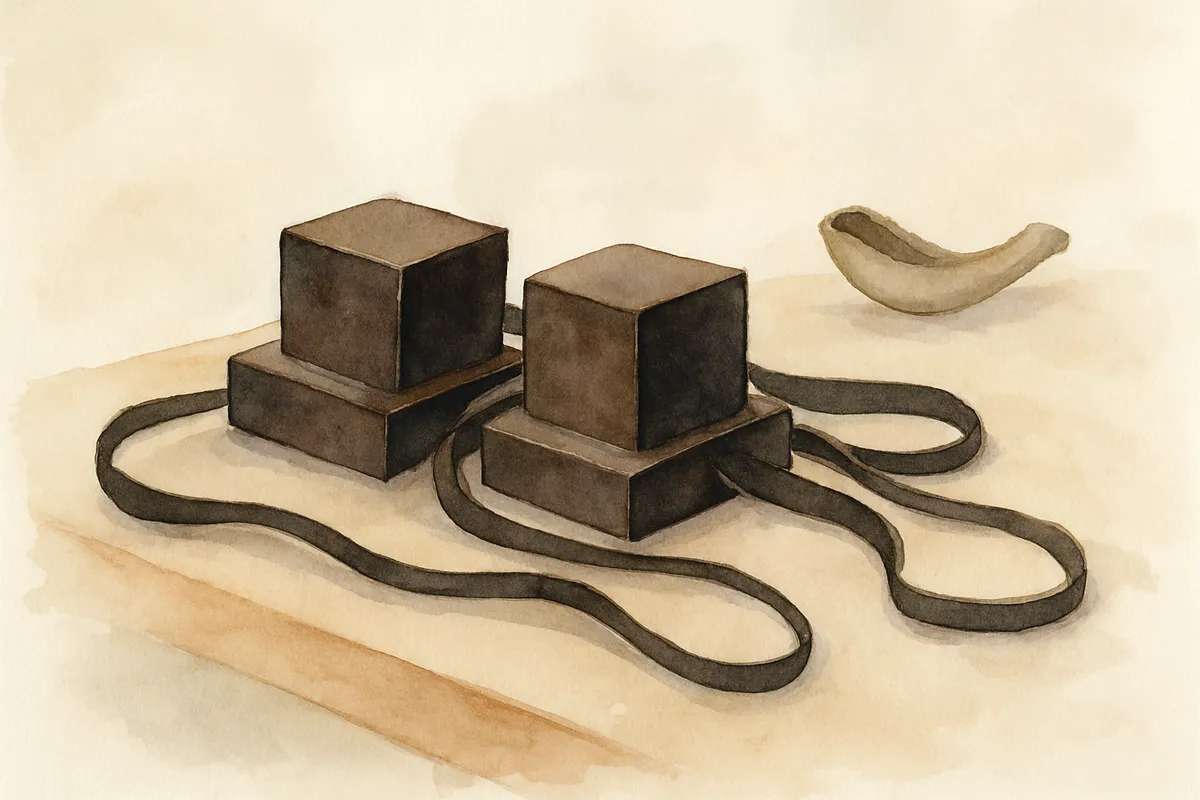
The custom of removing tefillin (phylacteries) before Mussaf (the additional prayer) on Rosh Chodesh (the New Month) is rooted in the concept that tefillin are called an "ot" (sign), and Rosh Chodesh itself is also considered an "ot" — making it somewhat disrespectful to wear tefillin on that day, particularly during the Mussaf prayer which is the defining service of Rosh Chodesh. The dominant Sephardic practice is to remove tefillin before Mussaf, while Ashkenazim generally remove them before or during Hallel, with significant variation among communities.
Key Takeaways
- Tefillin are called an ot (sign/covenant marker), and Rosh Chodesh has its own sacred ot status, creating a conflict.
- Sephardic practice (minhag) is to remove tefillin before Mussaf; Ashkenazic practice varies — typically during or after Hallel.
- The Vilna Gaon (GRA) held that tefillin should not be worn at all on Rosh Chodesh, though this is a minority position.
- The underlying debate concerns whether Rosh Chodesh has sufficient sanctity to "displace" the sign of tefillin.
- There is no explicit Talmudic source requiring removal; the custom developed through later halachic reasoning and minhag (custom).
The Core Concept: Two Competing "Signs"
The Torah describes tefillin in two key verses:
[Exodus 13:9]: "וְהָיָה לְךָ לְאוֹת עַל־יָדְךָ" — "And it shall be for you a sign upon your hand."
[Exodus 13:16]: "וְהָיָה לְאוֹת עַל־יָדְכָה וּלְטוֹטָפֹת בֵּין עֵינֶיךָ" — "And it shall be a sign upon your hand and totafot (frontlets) between your eyes."
Similarly, Deuteronomy 6:8 [from the Shema passage] commands: "וּקְשַׁרְתָּם לְאוֹת עַל־יָדֶךָ" — "And you shall bind them as a sign upon your hand."
The classic reasoning, cited by the Beit Yosef and others, is that Shabbat and Jewish holidays are themselves called an ot between God and Israel. Wearing tefillin on such days — which carry their own ot — would be redundant at best and disrespectful at worst, as if the day's holiness alone were insufficient.
Does Rosh Chodesh Have This Status?
Shabbat and Yom Tov are explicitly exempt from tefillin because of their ot status. Rosh Chodesh is a more complex case — it is not a full Yom Tov, work is permitted [Tur, Orach Chayim 417:1], and yet it has a Mussaf sacrifice/prayer and a degree of sanctity.
The Zohar (Kabbalistic tradition) was particularly stringent, treating Rosh Chodesh as fully incompatible with tefillin — this strongly influenced Sephardic practice.
The Halachic Positions
Sephardic Practice
- Remove tefillin entirely before Shacharit Mussaf, often even before Hallel.
- Based on the Zohar and codified by Maran Rabbi Yosef Karo in the Shulchan Aruch.
- The concern is that wearing tefillin during Mussaf — the prayer that defines the day's special status — constitutes a zilzul (disrespect) of the day.
Ashkenazic Practice
- The Rama (Rabbi Moshe Isserles) ruled that Ashkenazim do wear tefillin on Rosh Chodesh but remove them before Mussaf, based on the custom to avoid a beracha levatala (blessing in vain) if one were to reconsider putting them back on.
- In practice, many Ashkenazic communities remove tefillin during Hallel — specifically before the last section — or after Hallel but before Mussaf.
- The timing varies: removing during Hallel (to avoid saying a blessing again if they slip) is a common compromise.
The Vilna Gaon's Position
- The GRA (Vilna Gaon) held that tefillin should not be worn at all on Rosh Chodesh, aligning with the Zohar.
- This view is followed in some Ashkenazic yeshivot and by those who follow the GRA's rulings closely.
Why Specifically Before Mussaf?
The Mussaf prayer corresponds to the korban Mussaf (additional sacrifice) brought on Rosh Chodesh [Numbers 28:11-15]. This prayer is the liturgical centerpiece that expresses the unique sanctity of the day. Standing before God in Mussaf — the prayer of the day's special ot — while wearing the ot of tefillin is considered the most acute point of conflict.
Practical Note on Blessings
The Shulchan Aruch [Orach Chayim 25:12] addresses complications around removing and replacing tefillin mid-service — specifically whether a new blessing is required. This is relevant because removing tefillin during Hallel and then continuing into Mussaf raises questions of hefsek (interruption) and whether the original blessing still applies.
For personal guidance on exactly when your community removes tefillin on Rosh Chodesh, consult your local rabbi or posek, as the precise timing varies significantly by community custom.
Sources
People Also Asked
Want to dig deeper?