What is the Yahrzeit prayer and candle?
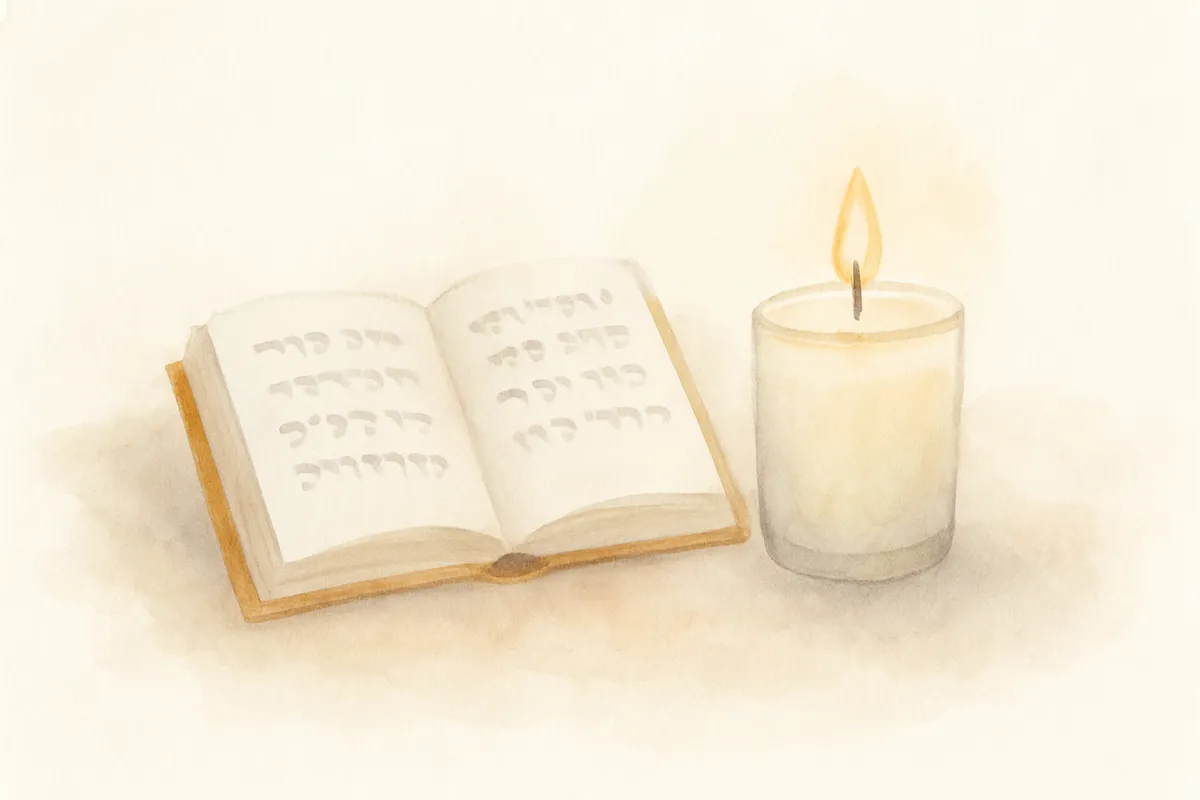
The Yahrzeit (yahr-tsayt, Yiddish: "year time") is the annual Jewish observance commemorating the anniversary of a loved one's death, observed on the Hebrew calendar date of passing. The central practices include lighting a candle that burns for 24 hours and reciting Kaddish (the mourner's prayer) in a synagogue with a minyan (quorum of ten). These practices connect the living to the deceased through acts of memory, honor, and spiritual elevation.
Key Takeaways
- Yahrzeit is observed annually on the Hebrew calendar anniversary of a loved one's death.
- The primary practices are lighting a 24-hour memorial candle and reciting Kaddish in a minyan.
- Visiting the grave of the deceased is a widely practiced Yahrzeit custom, rooted in the example of Caleb at the Cave of Machpelah.
- When the exact date of death is unknown, the date the news of death was received may serve as the Yahrzeit date.
- Sephardic communities have distinct customs, such as sponsoring synagogue lighting rather than a home candle.
The Yahrzeit Candle
Origin and Meaning
The custom of lighting a candle on Yahrzeit is rooted in the verse "נֵר ה' נִשְׁמַת אָדָם" — "The candle of God is the soul of a person" (Proverbs 20:27). The flame represents the neshamah (soul) of the deceased, which continues to illuminate even after physical death.
The candle is traditionally lit at nightfall the evening before the Yahrzeit date (since the Hebrew day begins at nightfall) and burns for the full 24 hours of the Yahrzeit day.
Sephardic vs. Ashkenazic Practice
Interestingly, the practice of lighting a home candle is not universal across all Jewish communities. Rav Ben-Zion Uziel writes in his responsa:
"ודע שבקהלות הספרדים לא נתקבל ולא נהוג מנהג זה של הדלקת נרות ביום פקידת השנה של ההורים, אלא זהו מנהגם לספק כל השמן הדרוש להארת ביהכ"נ" — "Know that in Sephardic communities, the custom of lighting candles on the anniversary of a parent's death was not accepted or practiced. Rather, their custom is to supply all the oil needed for the lighting of the synagogue on the Shabbat before the Yahrzeit..."
[Mishpetei Uziel, Volume III, Orach Chayim 23:11]
In this Sephardic tradition, the person honored in this way was called "madlik ha-me'orot" — "the one who lights the lights" — in the synagogue context rather than at home.
The Yahrzeit Prayer: Kaddish
What is Kaddish?
Kaddish (Kaddish Yatom, the Mourner's Kaddish) is an Aramaic prayer that praises God's greatness. Paradoxically, it contains no mention of death — it is entirely focused on the exaltation of God's name ("Yitgadal v'yitkadash sh'mei rabbah" — "May His great Name be exalted and sanctified").
Why Kaddish Elevates the Soul
The Talmudic and later sources teach that when a child recites Kaddish publicly and the congregation responds "Amen, Y'hei Sh'mei Rabbah", this brings spiritual merit (z'chut) to the soul of the departed. This concept is traced to a story in Tractate Sanhedrin and developed extensively by the Rishonim and Acharonim.
Requirements for Kaddish
- Must be recited in a minyan (quorum of ten adult Jews)
- Traditionally recited by the closest relatives (children, spouse, siblings, parents)
- On Yahrzeit, Kaddish is recited at all three prayer services: Shacharit, Mincha, and Maariv
- The mourner also customarily receives an aliyah (Torah honor) on the Yahrzeit
Visiting the Grave
The Kav HaYashar (R. Tzvi Hirsch Kaidanover) connects the custom of grave visitation on Yahrzeit to the biblical story of Caleb:
"וַיָּבֹא עַד חֶבְרוֹן" — "And he came as far as Hebron" (Numbers 13:22). Rashi explains: This teaches that Caleb went to the graves of the Patriarchs to pray there, that he be saved from the counsel of the spies. From here spread the beautiful custom among Israel that we go to the graves of our fathers to pray on the day that one's father or mother died — the Yahrzeit."
[Kav HaYashar 71:1, citing Rashi on Numbers 13:22]
This grounds the practice of Yahrzeit grave visits in a biblical precedent, demonstrating that turning to the merit of one's ancestors in prayer is an ancient and honored tradition.
When the Date of Death is Unknown
A practical halachic question arises when the exact date of death is not known — common, for example, in Holocaust-era situations. The responsum from Collected Responsa in Wartime rules:
"In the case of tidings of death (Shemuah Kerovah or Shemuah Rechokah), the date when the tidings are received is the important date."
[Collected Responsa in Wartime, Yahrzeit, 5]
This provides a compassionate and practical framework: when the date of death is uncertain, the date the news was received can anchor the annual observance.
Additional Yahrzeit Customs
- Fasting: Some have the custom to fast on Yahrzeit (especially common for the Yahrzeit of a parent)
- Torah study: Dedicating Torah learning l'iluy nishmat (for the elevation of the soul) of the departed
- Charity (tzedakah): Giving in memory of the deceased
- Learning Mishnah: The letters of Mishnah (משנה) are an anagram of neshamah (נשמה), soul — hence the custom of studying Mishnah for the departed soul
For personal guidance on specific Yahrzeit observances — including questions about the correct date, which prayers to say, or community-specific customs — consult your local rabbi or posek.
Sources
People Also Asked
Want to dig deeper?