What is the summary of Parshat Ki Tisa?
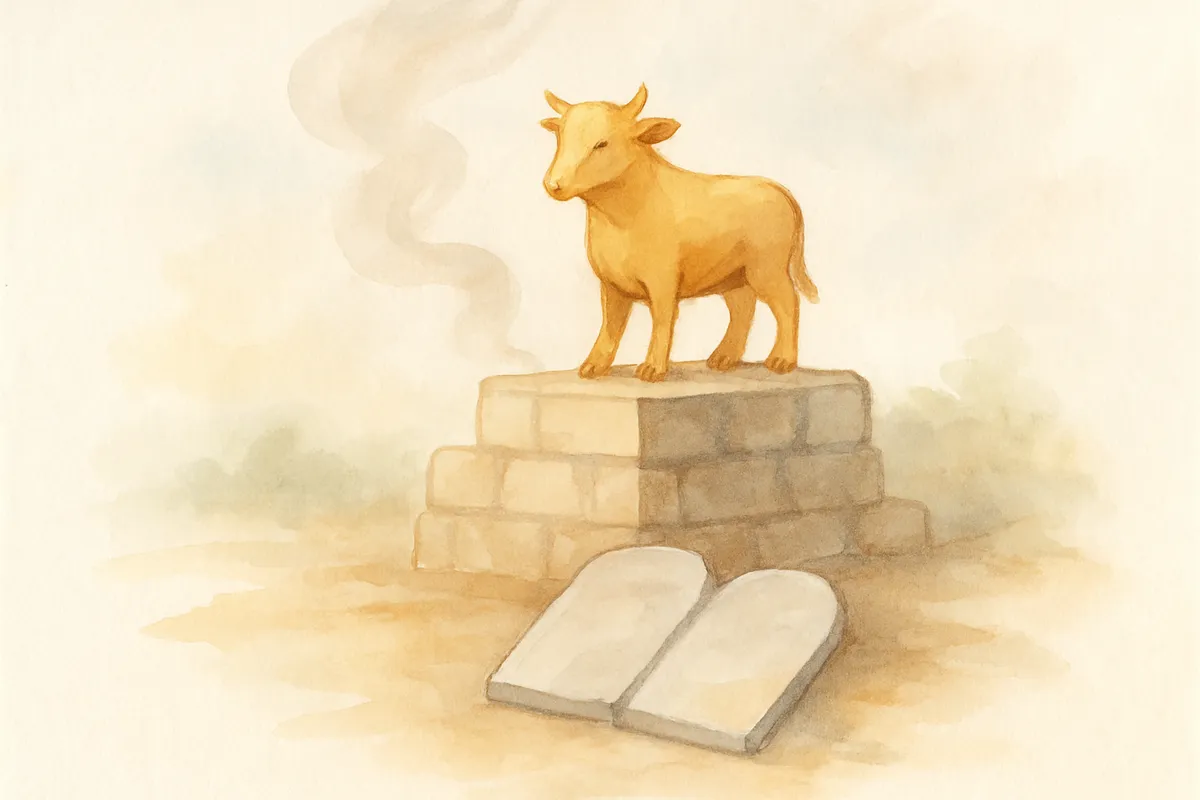
Parshat Ki Tisa — Summary
Parshat Ki Tisa (Exodus 30:11–34:35) is one of the most dramatic and theologically rich portions in the entire Torah. It spans the heights of divine intimacy — Moses receiving the Torah on Sinai — to the catastrophic depths of the Golden Calf (Egel HaZahav), and ultimately the renewal of the covenant between God and Israel. It is a story of sin, consequence, intercession, forgiveness, and restoration.
Key Takeaways
- Ki Tisa contains the sin of the Golden Calf, the most devastating spiritual failure of the generation of the Exodus.
- Moses serves as the ultimate intercessor, smashing the tablets, destroying the calf, and pleading with God not to destroy Israel.
- The shekel hakodesh (half-shekel) census tax opens the parasha, connecting communal responsibility to the Tabernacle.
- Shabbat is reaffirmed in the middle of the Tabernacle instructions, teaching that even building the Mishkan does not override Shabbat.
- The parasha ends with renewal — God gives Moses a second set of tablets and reveals the Thirteen Attributes of Mercy (Yud-Gimmel Middot HaRachamim).
Structure and Overview
1. The Half-Shekel Census (Exodus 30:11–16)
The parasha opens with God commanding Moses to count the Israelites — but not by counting people directly. Instead, each man above age twenty must donate a half-shekel (machatzit hashekel) as kofer nefesh (atonement for the soul), and the coins are counted.
"זֶה יִתְּנוּ כָּל הָעֹבֵר עַל הַפְּקֻדִים מַחֲצִית הַשֶּׁקֶל" — "This shall they give, every one who passes among those who are counted — half a shekel" [Exodus 30:13].
The Kli Yakar and other commentators note the juxtaposition of this passage with the later sin of the Golden Calf — the half-shekel was a kind of pre-emptive atonement [Kli Yakar, Exodus 35:2].
2. The Copper Laver, Anointing Oil, and Incense (Exodus 30:17–38)
God commands the construction of the Kiyor (copper laver) for priestly hand-washing, and gives precise formulas for the sacred anointing oil (shemen hamishcha) and the ketoret (incense). These are holy and may not be replicated for private use.
3. Bezalel and Oholiab — The Master Craftsmen (Exodus 31:1–11)
God designates Bezalel ben Uri of the tribe of Judah and Oholiab ben Ahisamach of the tribe of Dan to lead construction of the Tabernacle, filling them with divine wisdom (chochma, bina, da'at).
4. Shabbat Reaffirmed (Exodus 31:12–17)
In the midst of the Tabernacle instructions, God reiterates the commandment of Shabbat. This placement teaches a foundational halachic principle: the building of the Mishkan (Tabernacle) does not override Shabbat.
The Kli Yakar addresses this directly, noting that the word "ach" (אַךְ — "however/but") in the phrase "Ach et Shabbotai tishmoru" serves as a limiting word, excluding Shabbat from Mishkan labor [Kli Yakar, Exodus 35:2].
This passage also contains the phrase:
"בֵּינִי וּבֵין בְּנֵי יִשְׂרָאֵל אוֹת הִוא לְעֹלָם" — "It is a sign between Me and the Children of Israel forever" [Exodus 31:17].
5. The Golden Calf — Chet HaEgel (Exodus 32:1–35)
This is the dramatic heart of the parasha. While Moses is on Sinai receiving the Torah for forty days, the people grow anxious, approach Aaron, and demand: "Make us gods who will go before us" [Exodus 32:1].
Aaron collects gold jewelry and fashions a golden calf. The people declare: "These are your gods, O Israel, who brought you up from the land of Egypt!" [Exodus 32:4].
God tells Moses what has happened and threatens to destroy Israel and start a new nation from Moses. Moses intercedes boldly, invoking God's promises to the Patriarchs and His reputation among the nations.
Moses descends, and seeing the revelry, shatters the Tablets of the Law at the foot of the mountain — an act the Talmud says God later endorsed [Shabbat 87a].
Moses destroys the calf, grinds it to powder, and forces the people to drink it. The Levites rally to Moses and execute 3,000 ringleaders.
6. Moses' Extraordinary Intercession (Exodus 32:30–33:23)
Moses returns to God and offers one of the most astonishing statements in all of Torah:
"וְאִם אַיִן מְחֵנִי נָא מִסִּפְרְךָ אֲשֶׁר כָּתָבְתָּ" — "And if not, erase me now from Your book which You have written" [Exodus 32:32].
Moses risks his own spiritual existence for the sake of his people. God responds that only the sinner will be blotted out, but He will send a plague.
Moses then pleads to know God's ways and to see His glory. God famously responds:
"לֹא תוּכַל לִרְאֹת אֶת פָּנַי כִּי לֹא יִרְאַנִי הָאָדָם וָחָי" — "You cannot see My face, for no man can see Me and live" [Exodus 33:20].
God passes His glory before Moses, shielding him in the cleft of the rock, allowing Moses to see His "back."
7. The Thirteen Attributes of Mercy (Exodus 34:1–10)
God commands Moses to carve second tablets, and descends in a cloud. He proclaims the famous Yud-Gimmel Middot HaRachamim (Thirteen Attributes of Mercy):
"יְהוָה יְהוָה אֵל רַחוּם וְחַנּוּן אֶרֶךְ אַפַּיִם וְרַב חֶסֶד וֶאֱמֶת..." — "The LORD, the LORD, God, compassionate and gracious, slow to anger, and abundant in kindness and truth..." [Exodus 34:6–7].
These attributes form the backbone of Jewish liturgy for Selichot (penitential prayers) and Yom Kippur. The Talmud teaches that God "wrapped Himself in a tallit like a prayer leader" and taught Moses these attributes, saying: whenever Israel sins, they should recite them and be forgiven [Rosh Hashanah 17b].
8. Covenant Renewed and Laws Reiterated (Exodus 34:10–28)
The covenant is renewed. A series of laws are repeated — holidays, first fruits, Shabbat, the prohibition of mixing milk and meat — reinforcing Israel's obligations as a covenant nation.
9. Moses' Radiant Face — Keren Ohr (Exodus 34:29–35)
When Moses descends with the second tablets, his face shines with a supernatural radiance (karan ohr panav — קָרַן עוֹר פָּנָיו). The people are
Sources
People Also Asked
Want to dig deeper?