What is the Shabbat candle lighting prayer?
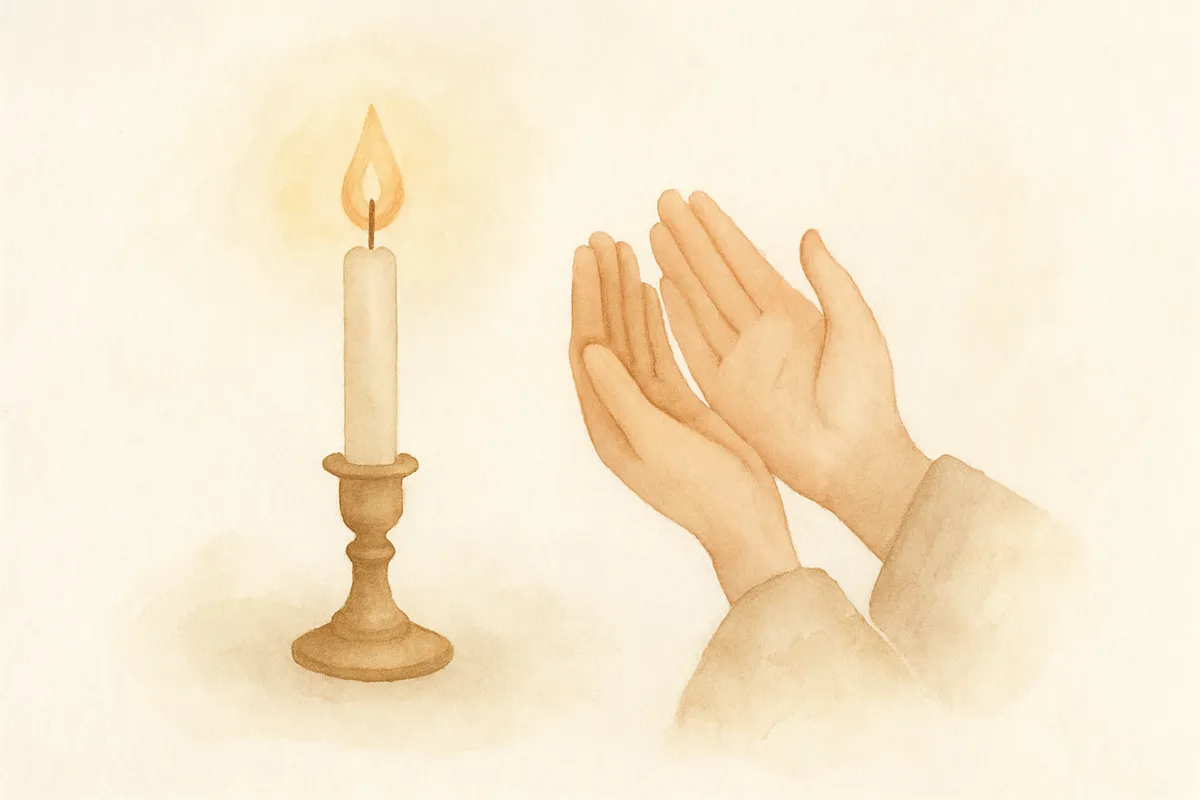
The Shabbat candle lighting blessing is a short blessing recited by women (and men when necessary) immediately after lighting the Shabbat candles, just before sundown on Friday evening. The blessing sanctifies the act of lighting and formally inaugurates the holy day of Shabbat.
Key Takeaways
- The blessing is recited after lighting the candles (unlike most blessings which precede the act), because lighting after reciting the blessing would constitute making Shabbat before the candles are lit.
- The mitzvah of candle lighting is one of three special mitzvot associated with women, alongside niddah (family purity) and challah (separating dough).
- At minimum, one candle is lit, though the widespread custom is to light two, corresponding to Zachor ("remember") and Shamor ("guard") from the two Torah versions of the Shabbat commandment.
- Many women add one candle per child beyond the base two.
- After lighting, it is customary to wave the hands over the flames three times and cover one's eyes while reciting the blessing, then open them to "receive" the Shabbat light.
The Blessing (Hebrew and Translation)
בָּרוּךְ אַתָּה יְהֹוָה אֱלֹהֵינוּ מֶלֶךְ הָעוֹלָם, אֲשֶׁר קִדְּשָׁנוּ בְּמִצְוֹתָיו וְצִוָּנוּ לְהַדְלִיק נֵר שֶׁל שַׁבָּת
Baruch Atah Adonai, Eloheinu Melech ha-olam, asher kid'shanu b'mitzvotav v'tzivanu l'hadlik ner shel Shabbat.
Translation: "Blessed are You, Lord our God, King of the universe, who has sanctified us with His commandments and commanded us to kindle the light of Shabbat."
Sources and Background
Biblical Foundation
The Torah commands us twice to observe Shabbat. In Exodus 20:8, we read: "זָכ֛וֹר אֶת־יוֹם הַשַּׁבָּת לְקַדְּשׁוֹ" — "Remember the Sabbath day to sanctify it" [Exodus 20:8]. This verse is understood by the rabbis to encompass positive acts that mark Shabbat as holy — including the lighting of candles.
The underlying rationale for Shabbat itself traces back to Creation: "וַיְבָרֶךְ אֱלֹהִים אֶת יוֹם הַשְּׁבִיעִי וַיְקַדֵּשׁ אֹתוֹ" — "God blessed the seventh day and sanctified it" [Genesis 2:3].
The Mitzvah of Candle Lighting
The Mishnah Shabbat 2:6 explicitly identifies candle lighting as one of the three cardinal mitzvot for which women bear special responsibility:
"עַל שָׁלשׁ עֲבֵרוֹת נָשִׁים מֵתוֹת בִּשְׁעַת לֵדָתָן, עַל שֶׁאֵינָן זְהִירוֹת בַּנִּדָּה וּבַחַלָּה וּבְהַדְלָקַת הַנֵּר"
"For three transgressions women die in childbirth: for being lax in the laws of niddah, challah, and kindling the [Shabbat] lamp." [Mishnah Shabbat 2:6]
The gravity of this language underscores how seriously the rabbis viewed this obligation.
Why the Blessing Comes After Lighting
This is a well-known halachic puzzle. Normally, blessings precede the performance of a mitzvah (over l'asiyatan). However, once a woman recites the Shabbat blessing, she has personally accepted Shabbat upon herself and may no longer light a flame.
- The solution: She lights first, then waves her hands in front of the flames (symbolically "hiding" them from herself), recites the blessing, and then uncovers her eyes — experiencing the Shabbat light for the first time after the blessing, as if she had not yet benefited from it. [Rema, Orach Chaim 263:5]
Two Candles — Zachor and Shamor
The widespread custom to light two candles corresponds to the two formulations of the Shabbat commandment:
- "זָכוֹר" (Zachor — "Remember") [Exodus 20:8]
- "שָׁמוֹר" (Shamor — "Guard/Observe") [Deuteronomy 5:12]
The Talmud (Shevuot 20b) teaches that both words were spoken simultaneously at Sinai — "zachor v'shamor b'dibbur echad ne'emru" — "Remember and Guard were said in one utterance." The two candles honor both dimensions of the commandment.
Personal Prayer After Lighting
After the formal blessing, it is a beautiful and widely practiced custom for women to add personal prayers — for their family, for health, for the coming of Shabbat in peace. This moment, with eyes covered, is considered a particularly auspicious time for heartfelt supplication, and many siddurim (prayerbooks) include traditional supplementary prayers for this purpose.
For personal guidance on specific halachic questions — such as when a man lights, how to handle candle lighting while traveling, or electric light substitutions — consult your local rabbi or posek.
Sources
People Also Asked
Want to dig deeper?