What is the Jewish door blessing (Mezuzah prayer)?
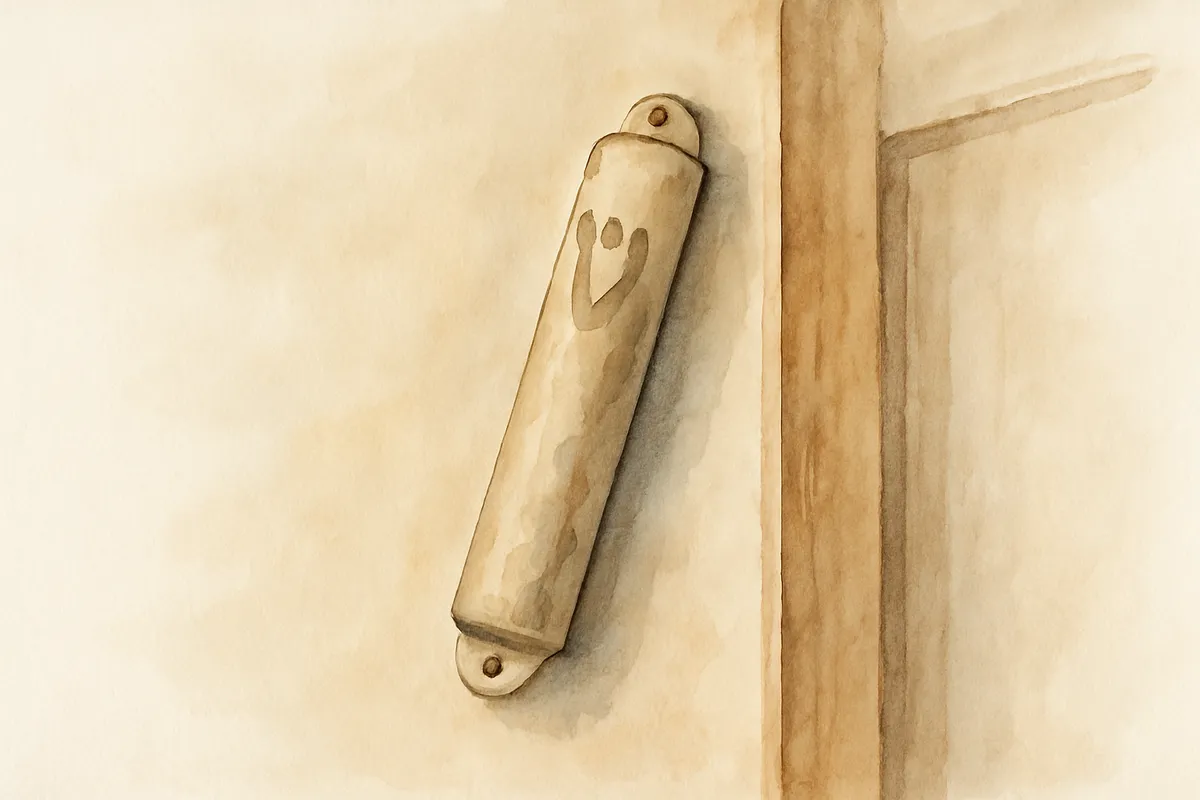
The mezuzah (מְזוּזָה, literally "doorpost") is not accompanied by a "door blessing" prayer in the sense of a fixed text displayed or recited at the door. Rather, there is a blessing recited when affixing the mezuzah to the doorpost, and the mezuzah itself contains sacred Torah passages that serve as a ongoing spiritual presence in the home. The mezuzah fulfills the commandment stated explicitly in the Torah: "And you shall write them on the doorposts of your house and on your gates" [Deuteronomy 6:9].
Key Takeaways
- The mezuzah contains two Torah passages — Shema (Deuteronomy 6:4–9) and Ve'ahavta / Vehaya im shamo'a (Deuteronomy 11:13–21) — written on a parchment scroll.
- A blessing is recited when affixing the mezuzah, not when passing through the doorway.
- The word Shaddai (שַׁדַּי), one of God's names, appears on the outside of the mezuzah scroll and serves as a sign of divine protection.
- The mezuzah must be placed at the beginning of the upper third of the doorpost, according to the accepted halachic ruling.
- Touching or kissing the mezuzah when entering or leaving is a beloved custom, expressing love of the commandment.
The Blessing for Affixing a Mezuzah
When installing a mezuzah, the following blessing is recited before or during the act of affixing it:
בָּרוּךְ אַתָּה יְהֹוָה אֱלֹהֵינוּ מֶלֶךְ הָעוֹלָם, אֲשֶׁר קִדְּשָׁנוּ בְּמִצְוֹתָיו וְצִוָּנוּ לִקְבֹּעַ מְזוּזָה.
Baruch Atah Adonai, Eloheinu Melech ha-olam, asher kid'shanu b'mitzvotav v'tzivanu likbo'a mezuzah.
"Blessed are You, Lord our God, King of the universe, who has sanctified us with His commandments and commanded us to affix a mezuzah."
This blessing is recited once when affixing multiple mezuzot to a home [Shulchan Aruch, Yoreh De'ah 289].
What Is Inside the Mezuzah?
The mezuzah scroll (klaf) contains two Torah passages, both retrieved in our sources:
First Passage — Shema Yisrael (Deuteronomy 6:4–9)
שְׁמַע יִשְׂרָאֵל יְהֹוָה אֱלֹהֵינוּ יְהֹוָה אֶחָד
"Hear O Israel, the Lord is our God, the Lord is One."
This passage continues with the commandment to love God "with all your heart, all your soul, and all your might," and concludes with the instruction to write these words "on the doorposts of your house and your gates" [Deuteronomy 6:4–9].
Second Passage — Vehaya im Shamo'a (Deuteronomy 11:13–21)
וְהָיָה אִם־שָׁמֹעַ תִּשְׁמְעוּ אֶל־מִצְוֺתַי
"And it shall come to pass, if you surely listen to My commandments..."
This passage speaks of reward for observing God's commandments and also concludes with the instruction to write these words on the doorpost [Deuteronomy 11:13–21].
Where Is the Mezuzah Placed? (Halacha)
The Talmud discusses the precise placement of the mezuzah [Menachot 33a–33b]:
- Rav Huna rules it must be raised at least one tefach (handbreadth) from the ground, and one tefach below the lintel (top beam).
- Rabbi Yehuda holds that the entire height of the doorpost is valid.
- Rabbi Yosei derives from a textual comparison — "וּקְשַׁרְתָּם" (you shall bind them, referring to tefillin) and "וּכְתַבְתָּם" (you shall write them, referring to mezuzah) — that just as tefillin are placed at height, so too the mezuzah should be placed at height.
- Accepted ruling: The mezuzah is placed at the beginning of the upper third of the doorpost, tilted diagonally (in Ashkenazic practice), per the ruling of Rashi and Rabbeinu Tam who compromised between placing it horizontally and vertically [Shulchan Aruch, Yoreh De'ah 289:6].
The Deeper Meaning
Rashi explains that the mezuzah is not merely a charm but a constant reminder of God's sovereignty every time one enters and leaves [Rashi, Deuteronomy 6:9]. Maimonides (Rambam) emphasizes that anyone who reflects on the mezuzah's message — the unity of God and the love of Torah — will be roused from slumber and trivial concerns [Rambam, Hilchot Mezuzah 6:13].
The name שַׁדַּי (Shaddai) written on the back of the scroll is understood as an acronym for שׁוֹמֵר דַּלְתוֹת יִשְׂרָאֵל — Shomer Daltot Yisrael, "Guardian of the Doors of Israel."
For personal guidance on mezuzah placement, checking, or specific halachic questions, consult your local rabbi or posek.
Sources
People Also Asked
Want to dig deeper?