What is the Hamotzi (blessing over bread)?
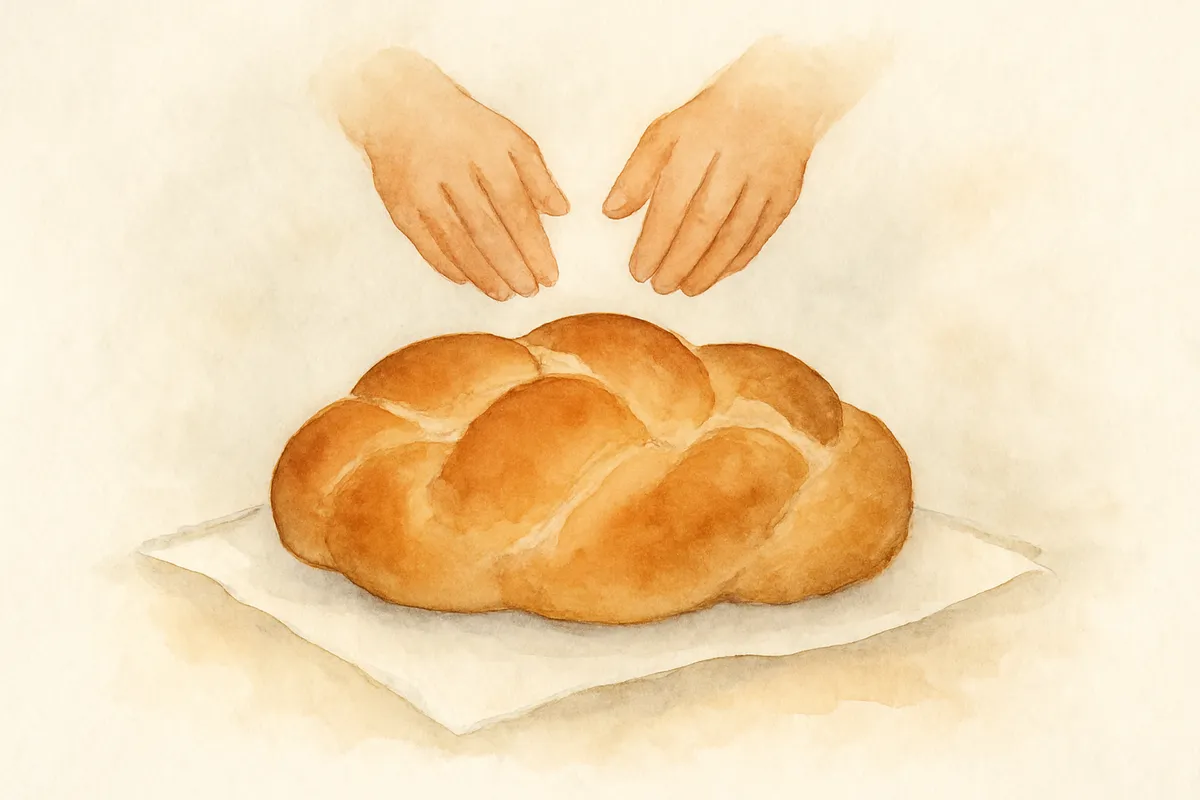
The Hamotzi (HaMotzi, "Who brings forth") is the berakhah (blessing) recited before eating bread made from one of the five grains. The full text is: "Baruch Atah Hashem, Eloheinu Melech HaOlam, HaMotzi lechem min ha'aretz" — "Blessed are You, Lord our God, King of the universe, Who brings forth bread from the earth." It is one of the most frequently recited blessings in Jewish life, said before every meal that includes bread.
Key Takeaways
- The Hamotzi is the required berakhah rishonah (blessing before eating) specifically for bread made from the five grains.
- Its text is codified in the Mishnah [Berakhot 6:1] and appears across all major siddurim and machzorim.
- Reciting Hamotzi exempts all other foods eaten during the meal from requiring their own individual blessings.
- The blessing uses the unique word HaMotzi ("Who brings forth") rather than the standard grain blessing Borei minei mezonot.
- It is recited over two loaves (lechem mishneh) on Shabbat and Yom Tov, and is a central feature of Kiddush meals.
The Text of the Blessing
The full blessing reads:
בָּרוּךְ אַתָּה יְיָ אֱלֹהֵינוּ מֶלֶךְ הָעוֹלָם הַמּוֹצִיא לֶחֶם מִן הָאָרֶץ "Blessed are You, Lord our God, King of the universe, Who brings forth bread from the earth."
This text appears identically across Ashkenazic and Sephardic traditions [Siddur Ashkenaz, Berachot; Machzor Rosh Hashanah Sefard, Kiddush; Pesach Haggadah, Motzi Matzah].
Talmudic Source and Legal Basis
The Mishnah in Berakhot 6:1 establishes the hierarchy of blessings over food:
"On fruits of the ground one says 'Borei pri ha'adamah,' except for bread, over which one says 'HaMotzi lechem min ha'aretz.'" [Mishnah Berakhot 6:1]
The Talmud [Berakhot 35a] elaborates on this, explaining that bread (lechem) receives its own special, elevated blessing distinct from other grain products, which receive Borei minei mezonot.
Why Does Bread Get a Special Blessing?
The Elevated Status of Bread
Bread is considered the most important food (ikar, the primary element of a meal) in Jewish law. This is why:
- Hamotzi exempts all other foods eaten during the meal — no additional berakhot are needed for side dishes.
- Bread triggers the obligation of Birkat HaMazon (Grace After Meals), a Torah-level obligation according to many opinions.
- It requires ritual handwashing (netilat yadayim) before its consumption.
The Word HaMotzi — Past or Present?
There is a fascinating Talmudic discussion about the word HaMotzi. The present participle form suggests God "brings forth" bread continuously — an acknowledgment that sustenance is an ongoing divine act, not merely a one-time historical event. This reflects a deeper theological theme: gratitude for the natural world as a perpetual divine gift.
What Counts as "Bread" for Hamotzi?
Not every grain product requires Hamotzi. The Talmud [Berakhot 38a] illustrates this with a discussion of kuba d'ar'a (a type of compressed grain dish):
Abaye asked Rav Yosef: "What blessing does one say over this?" Rav Yosef replied: "Do you think it is bread? It is merely a kneaded mass — one says Borei minei mezonot over it."
This teaches that only true baked bread (pat) receives Hamotzi. The key criteria according to halachic authorities are:
- Made from one of the five grains (wheat, barley, spelt, rye, oats)
- Baked (not merely cooked or fried in most opinions)
- Has the character and form of lechem (bread)
Hamotzi on Shabbat and Yom Tov
On Shabbat and Yom Tov, Hamotzi is recited over two whole loaves — lechem mishneh — commemorating the double portion of manna that fell on Fridays in the wilderness [Exodus 16:22]. This practice is recorded across all major liturgical traditions [Shabbat Siddur Sefard, Kiddush for Shabbos Eve; Machzor Rosh Hashanah Ashkenaz, Kiddush].
On Passover, Hamotzi is recited over matzah rather than leavened bread, with an additional blessing Al Achilat Matzah added immediately after [Pesach Haggadah, Motzi Matzah].
For personal guidance on specific halachic questions regarding blessings, consult your local rabbi or posek.
Sources
People Also Asked
Want to dig deeper?