What is the different minchag of either one hole or two holes in a Tallit Katan
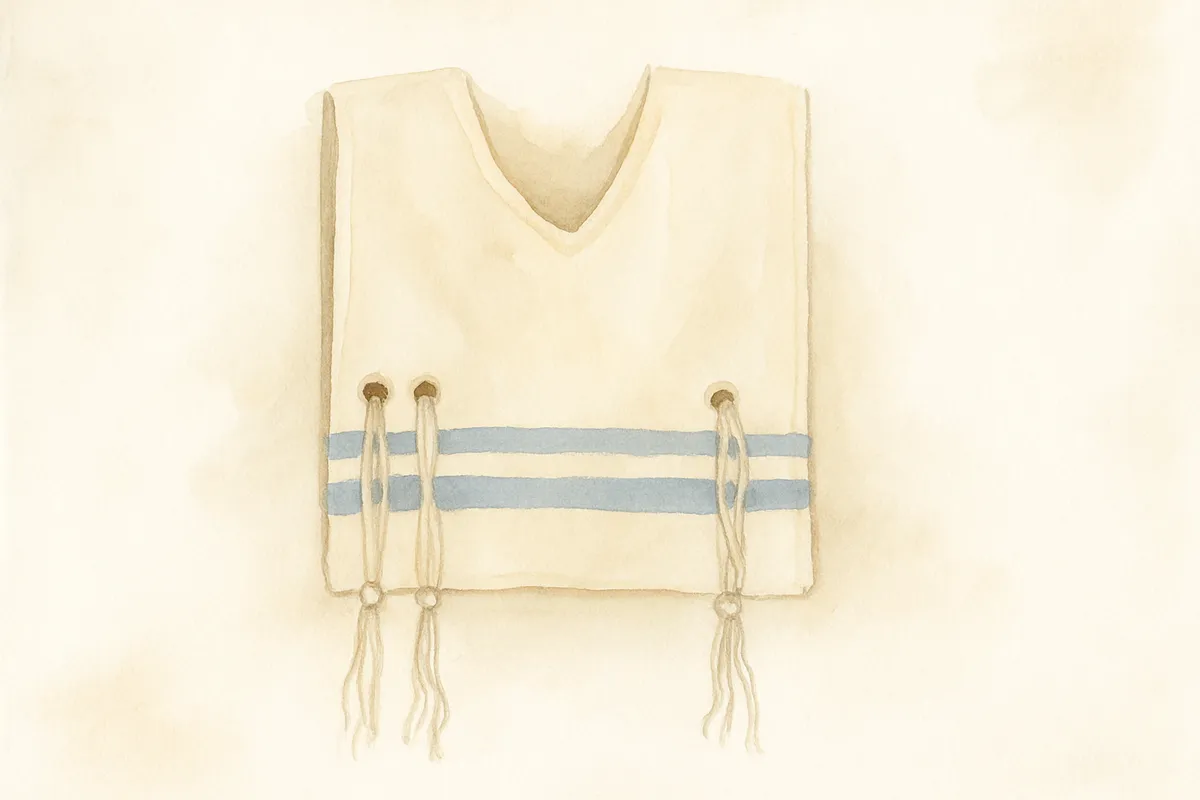
The custom of one hole vs. two holes in a Tallit Katan (small four-cornered garment) is a fascinating dispute rooted in how we understand the construction of the garment's "corners" (kanfot) and the positioning of the tzitzit strings. The two primary customs differ on whether each corner has one central hole or two adjacent holes through which the tzitzit thread is inserted, with practical implications for how the garment is shaped and worn.
Key Takeaways
- Sephardic custom generally uses one hole at each corner, through which all four doubled strands of tzitzit are inserted.
- Ashkenazic custom generally uses two holes at each corner, with the threads inserted through both holes to better secure the tzitzit and prevent tearing.
- The debate is fundamentally about how to fulfill the Torah's requirement to place tzitzit "on the corners" (al kanfei bigdeihem) [Numbers 15:38].
- Both customs are halachically valid, and the Shulchan Aruch and Rema reflect the Sephardic and Ashkenazic positions respectively.
- The number of holes affects the structural integrity of the garment and how the tzitzit lay against the fabric.
The Biblical Basis
The Torah commands:
וְעָשׂ֨וּ לָהֶ֥ם צִיצִ֛ת עַל־כַּנְפֵ֥י בִגְדֵיהֶ֖ם "They shall make for themselves tzitzit on the corners of their garments" [Numbers 15:38]
And in Devarim:
גְּדִלִ֖ים תַּעֲשֶׂה־לָּ֑ךְ עַל־אַרְבַּ֛ע כַּנְפ֥וֹת כְּסוּתְךָ֖ "You shall make twisted cords on the four corners of your garment" [Deuteronomy 22:12]
The word kanaf (corner/wing) is the textual anchor for this dispute — how exactly must the tzitzit be attached to the corner?
The Halachic Framework
The Shulchan Aruch [Orach Chayim 11:9] rules that the hole for the tzitzit must be:
- No closer than one gudal (thumb-breadth, ~3–4 cm) from the edge of the garment
- No farther than 3 gudal from the edge
This placement defines where "the corner" legally begins and ends. The question of one hole vs. two holes concerns how the strings are threaded through this zone.
The Two Customs in Detail
One Hole (Sephardic Custom)
- One single hole is made at the corner, and all four folded threads (making eight strands) are drawn through it.
- This is the view reflected in the Shulchan Aruch [Orach Chayim 11], following the Sephardic minhag (custom).
- The reasoning is that one hole is sufficient — the threads are placed on the corner as the Torah requires, and adding a second hole is unnecessary.
- Rav Yosef Karo did not specify two holes, implying the single-hole method.
Two Holes (Ashkenazic Custom)
- Two holes are made close together at each corner. The tzitzit threads are passed through both holes (in through one, out through the other, or looped through both), creating a more secure attachment.
- This is associated with Ashkenazic practice, codified and reflected in the notes of the Rema (Rabbi Moshe Isserles).
- The practical advantage is that the tzitzit are less likely to tear the fabric over time, since the tension is distributed across two holes.
- Some Ashkenazic authorities argue that a single hole places too much strain at one point and may cause the tzitzit to pull through, potentially invalidating the garment.
The Position of the Mishna Berura
- Rav Yisrael Meir Kagan (Chofetz Chaim) in the Mishna Berura [11, Biur Halacha] notes the two-hole custom and discusses the structural concern, generally supporting the Ashkenazic two-hole approach for its added security.
Why Do They Disagree?
The underlying tension is twofold:
-
Structural concern: Does a single hole adequately anchor the tzitzit over long-term use, or does the tearing risk render the garment potentially non-kosher?
-
Definition of "on the corner": Some authorities argue that inserting threads through two holes changes the geometry of attachment — the tzitzit effectively straddle the corner rather than hang from a single point. Others see this as actually better fulfilling the requirement by centering the tzitzit at the corner.
Additional Note: The Radziner and Ptil Tekhelet Customs
Communities that wear tekhelet (blue thread) [Numbers 15:38] may have additional customs about hole placement related to how the blue thread is wound and knotted, but this is a separate (though related) discussion.
For personal guidance on which custom to follow — especially if you are switching communities or are unsure of your family tradition — consult your local rabbi or posek.
Sources
People Also Asked
Want to dig deeper?