What is Tefillin and how is it used in prayer?
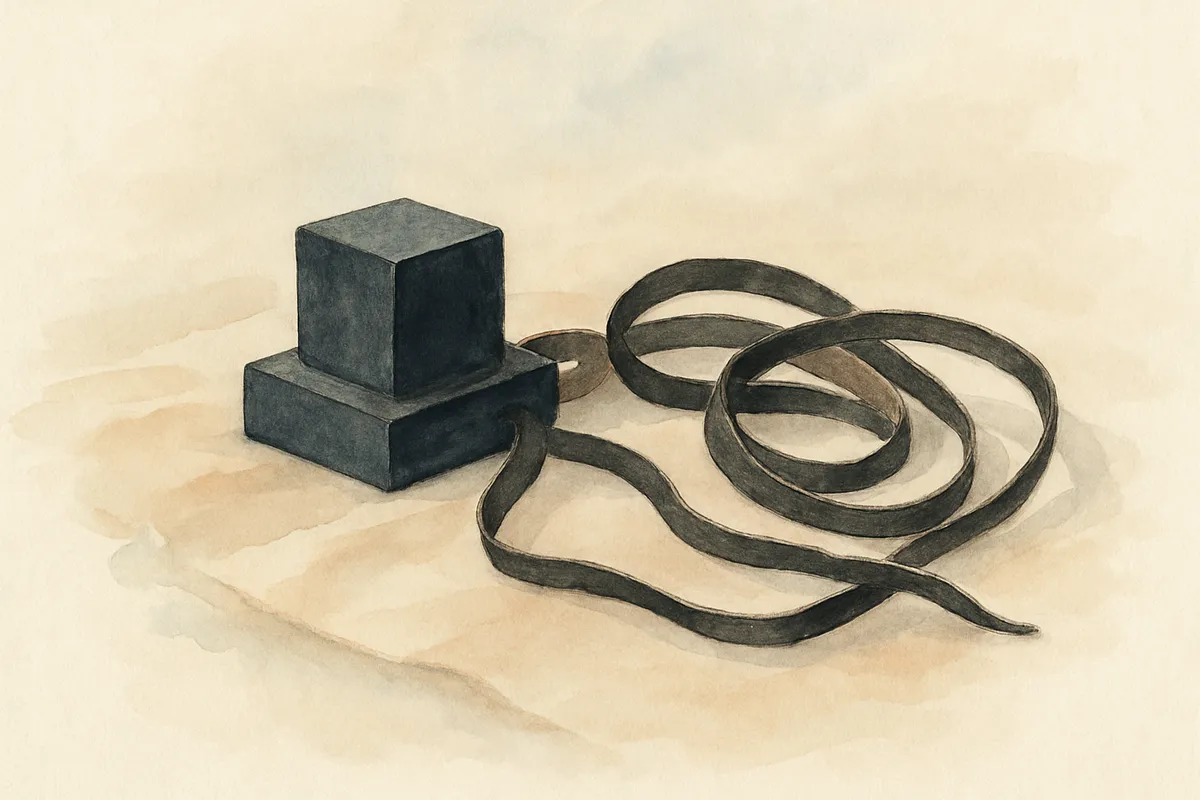
Tefillin (phylacteries) are two small black leather boxes containing handwritten parchment scrolls with four Torah passages, worn by Jewish men during weekday morning prayers. They are bound to the arm opposite the heart and on the head, serving as a profound physical reminder of God's unity, the Exodus from Egypt, and the obligation to dedicate one's mind and heart to the service of God.
Key Takeaways
- Tefillin consist of two leather boxes (batim) — one worn on the weaker arm (shel yad) and one on the head (shel rosh) — each containing four Torah passages written on parchment.
- The arm-tefillin is placed "opposite the heart" and the head-tefillin "opposite the brain," symbolizing the subjugation of both desire and intellect to God.
- One wears tefillin during weekday Shacharit (morning prayer) but not on Shabbat or most Jewish holidays.
- The Talmud teaches, remarkably, that God Himself "wears" tefillin, underscoring their supreme holiness.
- The Rambam teaches that tefillin, together with tzitzit and mezuzah, create a spiritual "shield" that protects a person from sin.
What Are Tefillin?
Tefillin are among the most fundamental mitzvot (commandments) in Jewish practice. Each of the two black leather boxes contains four Torah passages written on parchment by a trained scribe (sofer):
- Exodus 13:1–10
- Exodus 13:11–16
- Deuteronomy 6:4–9 (Shema)
- Deuteronomy 11:13–21 (V'haya im shamoa)
These passages share the themes of God's unity, the Exodus, and the commandment to remember God's signs "on your hand and between your eyes" — the direct biblical source for tefillin.
The Intention Behind Wearing Tefillin
The Shulchan Arukh (the authoritative code of Jewish law) explains the spiritual meaning of the act:
"One should intend that the Holy One, blessed be He, commanded us to place these four passages — which contain the unity of His Name and the Exodus from Egypt — upon the arm opposite the heart, and upon the head opposite the brain, so that we remember the miracles and wonders He performed for us, which testify to His unity and that He has the power and dominion over all above and below... and one should subjugate to God the soul which is in the brain, and also the heart, which is the seat of desire and thought."
[Shulchan Arukh, Orach Chaim 25:5]
This passage makes clear that tefillin are not merely ritual objects — they are instruments of kavanah (intention) and mindfulness.
How Tefillin Are Worn
Order of Donning
- The arm-tefillin (shel yad) is always put on first, followed by the head-tefillin (shel rosh).
- The arm-tefillin is placed on the bicep of the weaker arm (left arm for right-handed people), with the box facing the heart.
- The strap (retzuah) is wound seven times around the forearm and then around the hand and fingers.
- The head-tefillin is centered on the forehead above the hairline.
The Blessings
The Shulchan Arukh rules that one recites the blessing "l'haniach tefillin" (to place tefillin) when donning the arm-tefillin. Regarding the head-tefillin, the Rema (Rabbi Moshe Isserles) notes that the Ashkenazic custom is to also recite a second blessing, "al mitzvas tefillin," for the head-tefillin — even if one did not interrupt between the two [Shulchan Arukh, Orach Chaim 25:5, with Rema].
When Are Tefillin Worn?
- Tefillin are worn during weekday morning prayer (Shacharit) only.
- They are not worn on Shabbat or Yom Tov (Jewish holidays), because these days are themselves called an "ot" (sign) between God and Israel — and wearing tefillin would be redundant or even disrespectful to the sanctity of the day.
- On Chol HaMoed (the intermediate days of Passover and Sukkot), there is a famous dispute: Sephardim do not wear tefillin, while Ashkenazim traditionally did, though many Ashkenazim today follow the Sephardic/Chassidic custom and omit them.
The Talmudic Teaching: God Wears Tefillin
One of the most striking aggadic (homiletical) teachings about tefillin comes from the Talmud:
"Rabbi Avin bar Rav Adda said in the name of Rabbi Yitzchak: From where do we know that the Holy One, blessed be He, wears tefillin? As it is stated: 'The Lord has sworn by His right hand and by the arm of His strength' (Isaiah 62:8)."
[Berakhot 6a]
The Talmud continues to explain that just as Israel's tefillin contain praise of God, God's "tefillin" contain praise of Israel — specifically the verse "Who is like Your people Israel, a unique nation on earth?" (I Chronicles 17:21). This is a profound aggadic statement about the mutually defining relationship between God and the Jewish people.
Tefillin as a Shield Against Sin
The Rambam (Maimonides) writes powerfully about the combined effect of tefillin, tzitzit, and mezuzah:
"The early Sages said: Whoever has tefillin on his head and arm, tzitzit on his garment, and a mezuzah on his doorpost is assured not to sin — for he has many reminders, and these are the angels that save him from sinning, as it is written: 'The angel of the Lord camps around those who fear Him and rescues them' (Psalms 34:8)."
[Mishneh Torah, Hilchot Tefillin 6:13]
This teaching elevates tefillin from a technical ritual requirement to a daily spiritual practice that shapes moral character and consciousness.
When a Boy Begins Wearing Tefillin
According to Pirkei Avot 5:21, a boy is ready for mitzvot (commandments) at the age of thirteen, when he becomes a bar mitzvah. In practice, many Ashkenazic boys begin putting on tefillin one to two months before their bar mitzvah to practice, while Sephardic custom generally begins at thirteen precisely [Pirkei Avot 5:21].
For personal guidance on the correct practice of wearing tefillin — including matters of blessings, customs, and physical specifics — consult your local rabbi or posek.
Sources
People Also Asked
Want to dig deeper?