What is kosher rules about meat and dairy?
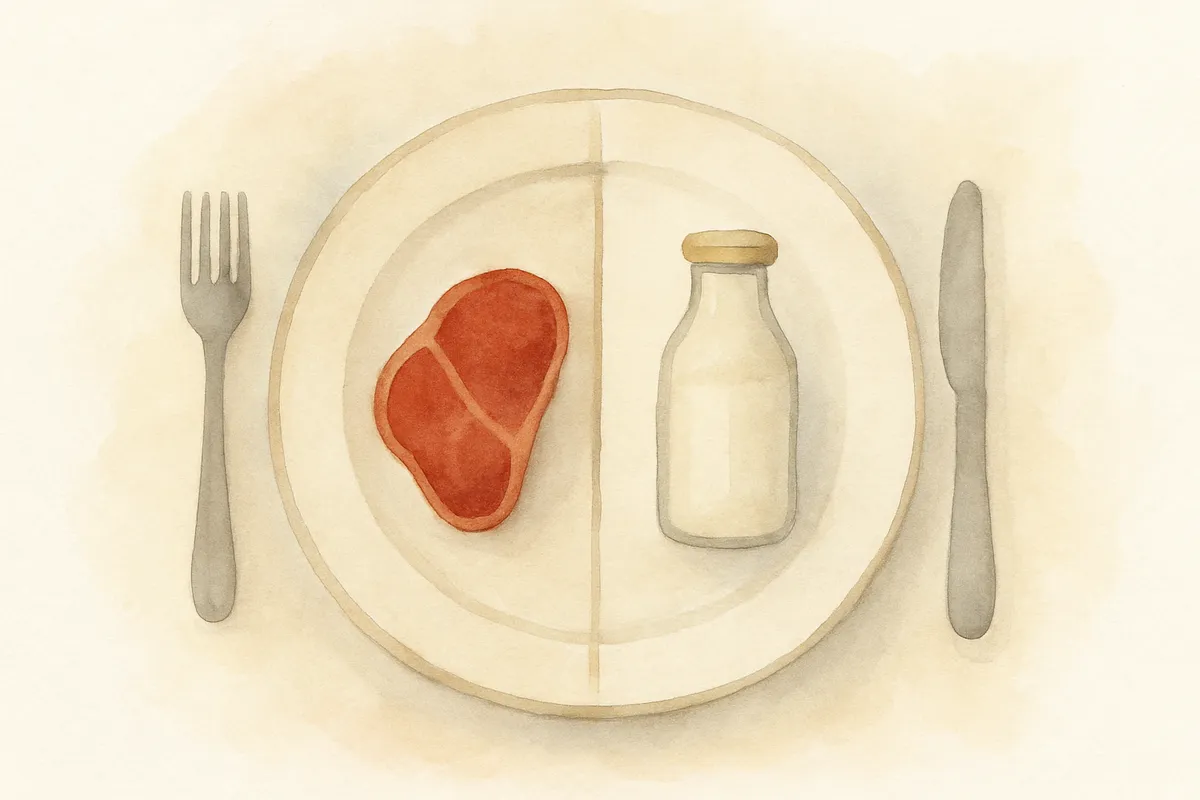
The Torah prohibits cooking, eating, and deriving benefit from a mixture of meat and dairy, derived from the verse "לֹא תְבַשֵּׁל גְּדִי בַּחֲלֵב אִמּוֹ" — "You shall not cook a kid in its mother's milk" (Exodus 23:19, 34:26; Deuteronomy 14:21), which appears three times in the Torah. The Rabbis extended these biblical prohibitions significantly and added additional rabbinic fences to protect against violation. In practice, observant Jews maintain completely separate dishes, utensils, and waiting periods between meat and dairy meals.
Key Takeaways
- The Torah-level prohibition applies specifically to the meat of a kosher domesticated animal cooked in the milk of a kosher domesticated animal.
- There are three separate biblical prohibitions: cooking meat and milk together, eating such a mixture, and deriving any benefit from it.
- Poultry with dairy is forbidden only by rabbinic decree (mi-d'rabbanan), not biblical law.
- Fish, locusts, and non-kosher species mixed with dairy carry no prohibition at all, even rabbinically.
- Separate dishes, cookware, and waiting periods between meat and dairy meals are required practice.
The Biblical Source
The verse "לֹא תְבַשֵּׁל גְּדִי בַּחֲלֵב אִמּוֹ" — "You shall not cook a kid in its mother's milk" — appears three times in the Torah. The Talmud [Chullin 115b] derives from this repetition three distinct prohibitions:
- Prohibition of cooking (bishul) meat and milk together
- Prohibition of eating (achilah) meat and milk together
- Prohibition of deriving benefit (hana'ah) from such a mixture
The Shulchan Arukh codifies this directly:
"כָּתוּב בַּתּוֹרָה: לֹא תְבַשֵּׁל גְּדִי בַּחֲלֵב אִמּוֹ ג' פְּעָמִים; אֶחָד לְאִסוּר בִּשּׁוּל, וְאֶחָד לְאִסוּר אֲכִילָה, וְאֶחָד לְאִסוּר הֲנָאָה" "It is written in the Torah: 'Do not cook a kid in its mother's milk' — three times; one for the prohibition of cooking, one for the prohibition of eating, and one for the prohibition of deriving benefit."
[Shulchan Arukh, Yoreh De'ah 87:1]
What Is Prohibited at the Biblical Level?
The Torah-level prohibition applies only to the combination of:
- Meat of a kosher domesticated animal (behemah tehorah — a pure/kosher livestock animal)
- Milk of a kosher domesticated animal
[Shulchan Arukh, Yoreh De'ah 87:3]
This means the following combinations are not biblically prohibited:
| Combination | Status | |---|---| | Kosher meat + non-kosher milk | Permitted biblically (forbidden rabbinically by some) | | Non-kosher meat + kosher milk | Permitted biblically | | Wild animal (chayah) meat + milk | Rabbinically forbidden only | | Poultry + milk | Rabbinically forbidden only | | Fish + milk | No prohibition at all | | Locusts (chagavim) + milk | No prohibition at all |
Rabbinic Extensions
The Rabbis extended the prohibition in two key ways:
1. Poultry with Dairy
Although the Torah's verse speaks of a "kid" (a young goat), the Rabbis decreed that poultry (ofe) may not be eaten with dairy, as a precautionary measure (mi-d'rabbanan). The reasoning given in the Talmud [Chullin 104a] is mar'it ayin — it looks like meat with milk to an observer.
[Shulchan Arukh, Yoreh De'ah 87:3]: "וּבְשַׂר חַיָּה וָעוֹף, אֲפִלּוּ בַּחֲלֵב טְהוֹרָה, מֻתָּר בְּבִשּׁוּל וּבַהֲנָאָה; וְאַף בַּאֲכִילָה אֵינוֹ אָסוּר, אֶלָּא מִדְּרַבָּנָן" "The meat of a wild animal or bird, even with kosher milk, is permitted in cooking and benefit; and even eating it is only forbidden rabbinically."
2. The Almond Milk Custom
The Rema (Rabbi Moshe Isserles) notes in his gloss (Hagahah) to Yoreh De'ah 87:3 that there is a custom to make almond milk and place poultry in it — since it is visibly not real dairy, this is permitted. This reflects a nuanced application of the mar'it ayin concern.
Rabbinic Fences: Separate Utensils and Waiting Periods
Beyond the categories of food, the Rabbis instituted:
Separate Dishes and Utensils
Observant Jews maintain two completely separate sets of dishes, pots, cutlery, and often sinks — one for meat (fleishig) and one for dairy (milchig). This prevents any cross-contamination.
Waiting Periods Between Meat and Dairy
After eating meat, one must wait before eating dairy. The standard Ashkenazic practice (following Rambam and the Shulchan Arukh) is six hours, based on the idea that meat fat and fibers remain between the teeth and in the digestive tract.
Different opinions on the waiting period include:
- Six hours — Rambam, Shulchan Arukh (standard Sephardic and Ashkenazic practice)
- One hour — Some Dutch communities, based on the view of Mar Ukva [Chullin 105a]
- Three hours — Some German (Yekke) communities
After eating dairy, one generally need only rinse the mouth and wash hands before eating meat, though hard cheeses may require a longer wait (opinions vary — some require six hours for aged cheese).
The Deeper Reason: Holiness and Separation
The Torah frames the dietary laws within the theme of kedushah (holiness):
"וִהְיִיתֶם לִי קְדֹשִׁים כִּי קָדוֹשׁ אֲנִי יְהֹוָה" — "You shall be holy to Me, for I am holy, the Lord your God"
[Leviticus 20:26]
Nachmanides (Ramban) explains that the meat-and-milk prohibition reflects a broader principle of not mixing categories that nature has kept separate — milk is associated with life-giving nourishment, while meat involves death, and combining them is a kind of moral dissonance.
Maimonides (Rambam) in Moreh Nevuchim (Guide for the Perplexed, 3:48) offers a rationalist explanation: this was a pagan ritual practice that the Torah prohibited.
For personal guidance on specific situations — such as what to do if meat and dairy utensils were accidentally mixed, or questions about particular products — consult your local rabbi or posek.
Sources
People Also Asked
Want to dig deeper?