What is jewish blessing door frame?
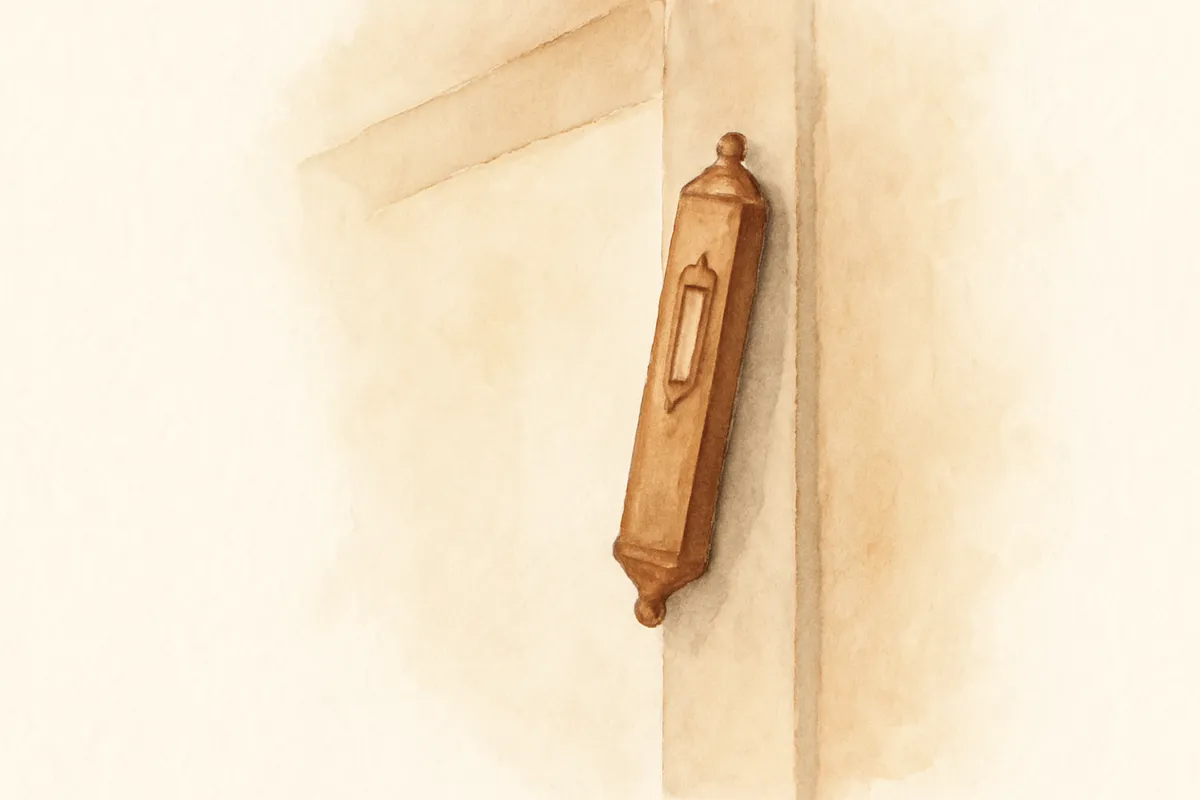
The Jewish "blessing on the door frame" refers to the mezuzah (מְזוּזָה), a parchment scroll containing handwritten Torah passages that is affixed to the doorposts of Jewish homes. It fulfills a Biblical commandment found in Deuteronomy and serves as a constant reminder of God's unity and the Jewish covenant. The word mezuzah literally means "doorpost" in Hebrew.
Key Takeaways
- The mezuzah is commanded directly in the Torah: "Write them on the doorposts of your house and your gates" [Deuteronomy 6:9].
- The scroll inside contains two Torah passages: Shema (Deuteronomy 6:4–9) and V'haya (Deuteronomy 11:13–21).
- It is placed on the right side of the doorpost as one enters, in the upper third of the frame.
- The Rambam teaches that the mezuzah serves as a spiritual awakening device — reminding us of God every time we enter or exit.
- The word "Shaddai" (שַׁדַּי), a name of God, is written on the back of the parchment and faces outward.
The Biblical Source
The mezuzah is rooted in two passages in Deuteronomy:
"וּכְתַבְתָּם עַל־מְזֻזוֹת בֵּיתֶךָ וּבִשְׁעָרֶיךָ" "And you shall write them on the doorposts of your house and your gates." [Deuteronomy 6:9; repeated in Deuteronomy 11:20]
These verses appear within the Shema passage — the central declaration of Jewish faith — making the mezuzah a physical embodiment of that faith.
What Is Written Inside?
The parchment (klaf) is written by a trained scribe (sofer) and contains:
- Deuteronomy 6:4–9 — the Shema, declaring God's unity and the commandment to love God
- Deuteronomy 11:13–21 — the V'haya, describing blessings for observing the commandments
On the back of the scroll, the scribe writes the word שַׁדַּי (Shaddai), a Divine Name, which is also read as an acronym for שׁוֹמֵר דְּלָתוֹת יִשְׂרָאֵל — "Guardian of the doors of Israel."
How and Where Is It Placed?
The Rambam (Maimonides) rules:
חַיָּב אָדָם לְהִזָּהֵר בִּמְזוּזָה מִפְּנֵי שֶׁהִיא חוֹבַת הַכֹּל תָּמִיד "A person is obligated to be careful about the mezuzah, because it is an obligation upon everyone at all times." [Mishneh Torah, Hilchot Tefillin, Mezuzah v'Sefer Torah 6:13]
Placement Rules:
- Affixed to the right side of the doorpost as you enter
- Placed in the upper third of the doorpost
- Traditionally placed at a slight diagonal (Ashkenazic custom), with the top tilting inward — a compromise between Rashi (who said vertical) and Rabbeinu Tam (who said horizontal)
- Sephardic Jews typically place it vertically
Which Doorways Require a Mezuzah?
According to halacha, any doorway with:
- Two doorposts
- A lintel (top beam)
- A minimum height (approx. 10 tefachim, ~32 inches)
- Regular residential use
...requires a mezuzah. This includes bedrooms, living rooms, and most indoor doorways, but generally not bathrooms.
The Spiritual Purpose
The Rambam offers a profound explanation of why the mezuzah matters:
"Every time one enters or exits, he will encounter the unity of the Name of the Holy One Blessed be He, and remember His love, and awaken from his slumber and his errors in the vanities of time..." [Mishneh Torah 6:13]
The mezuzah is not merely a ritual object — it transforms every entrance and exit into a moment of kavanah (intention) and spiritual awareness.
The Mezuzah and the Hanukkah Lamp
Interestingly, the Rambam also connects the mezuzah to the placement of the Hanukkah menorah:
"The Hanukkah lamp should be placed to the left of the entrance, so that the mezuzah is on the right and the Hanukkah lamp is on the left — and one is surrounded by mitzvot." [Mishneh Torah, Hilchot Megillah v'Hanukkah 4:7]
This teaches that the mezuzah is part of a broader system of mitzvot that sanctify the Jewish home.
Checking the Mezuzah
Halacha requires that mezuzot be inspected by a qualified sofer twice every seven years to ensure the parchment remains valid. The scroll can become invalid if letters crack or fade.
For personal guidance on mezuzah placement, which rooms require one, or whether your mezuzah needs checking, consult your local rabbi or posek.
Sources
People Also Asked
Want to dig deeper?