What is hafrashat challah prayer?
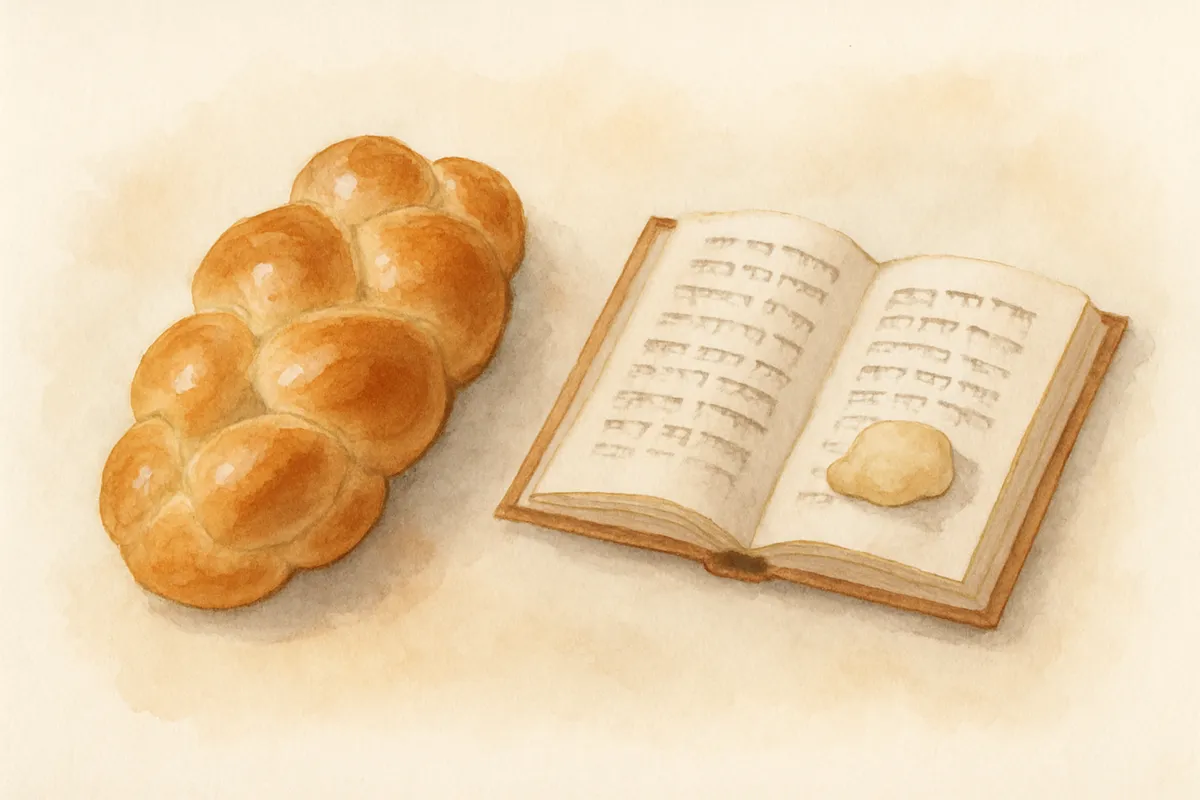
Hafrashat challah (separation of challah) is a Torah commandment requiring that a portion of dough be separated and given to a kohen (priest), based on Numbers 15:17-21. The blessing (berachah) recited before performing this separation is: "Asher kid'shanu b'mitzvotav v'tzivanu l'hafrish challah" — "Who has sanctified us with His commandments and commanded us to separate challah." This brief blessing transforms a practical act of baking into a sacred mitzvah.
Key Takeaways
- The commandment to separate challah comes directly from the Torah, as stated in Numbers 15:17-21.
- A blessing is recited before performing the separation, both in Israel and outside of Israel.
- Hafrashat challah is considered one of the three primary mitzvot specifically associated with Jewish women.
- The size of the portion separated differs depending on whether it is for personal use or commercial sale.
- If one forgets to separate challah before Shabbat, there are special remedies — but the situation requires care.
The Torah Source
The commandment originates in Numbers 15:17-21:
"רֵאשִׁית עֲרִסֹתֵכֶם חַלָּה תָּרִימוּ תְרוּמָה" — "The first of your dough you shall set apart as a gift."
[Numbers 15:20]
God commands the Jewish people that when they come into the Land and eat lechem ha'aretz (the bread of the land), they must separate a portion called challah as a terumah (elevated gift) to God — to be given to the kohen.
The Blessing Recited
The Rambam (Maimonides) rules explicitly in the Mishneh Torah that before separating challah, one recites:
"אֲשֶׁר קִדְּשָׁנוּ בְּמִצְווֹתָיו וְצִוָּנוּ לְהַפְרִישׁ חַלָּה" "Who has sanctified us with His commandments and commanded us to separate challah"
[Mishneh Torah, Bikkurim 5:11]
This blessing is recited whether in the Land of Israel or outside it (bein b'Eretz bein b'chutz la'aretz), and whether the dough is ritually pure (tahor) or impure (tamei) — the blessing is always said.
A Practical Note on Modesty
The Rambam also notes an interesting ruling in the same source: a man who is unclothed (arום) may not separate challah, because he cannot recite the blessing. However, a woman who is unclothed may sit with her face covered to the ground and recite the blessing and perform the separation. This highlights the principle that the berachah is an integral part of the act.
The Procedure
- Make the dough from one of the five grains (wheat, barley, spelt, oats, or rye) in an amount that meets the minimum shiur (measure) — traditionally about 1.2 kg (roughly 2.6 lbs) of flour.
- Take a small piece of dough — the size of an olive (k'zayit) is sufficient, though the traditional separated portion is larger.
- Recite the blessing before separating.
- Declare: "Harei zu challah" — "This is hereby challah."
- Today, since we cannot give it to a kohen in a state of purity, the separated piece is burned or wrapped and discarded.
How Much to Separate?
The Mishnah in Tractate Challah specifies:
"שִׁעוּר הַחַלָּה, אֶחָד מֵעֶשְׂרִים וְאַרְבָּעָה" — "The measure of challah is one twenty-fourth."
[Mishnah Challah 2:7]
- For a home baker: separate 1/24 of the dough.
- For a commercial baker selling in the market: separate 1/48.
- If the dough became tamei (impure) unintentionally: 1/48.
- If it became tamei intentionally (through negligence): 1/24 — "so that a sinner should not benefit" [Mishnah Challah 2:7].
A Special Mitzvah for Women
The Mishnah in Shabbat lists hafrashat challah as one of three mitzvot for which women bear particular responsibility:
"עַל שָׁלשׁ עֲבֵרוֹת נָשִׁים מֵתוֹת בִּשְׁעַת לֵדָתָן, עַל שֶׁאֵינָן זְהִירוֹת בַּנִּדָּה וּבַחַלָּה וּבְהַדְלָקַת הַנֵּר" "For three transgressions women die in childbirth: for not being careful about niddah, challah, and lighting the Shabbat candle."
[Mishnah Shabbat 2:6]
The separation of challah is closely linked to Shabbat preparation — baking challah bread for Shabbat is itself a Shabbat honor (kavod Shabbat).
Challah and Shabbat Preparation
The Ben Ish Hai (Rabbi Yosef Chaim of Baghdad) rules, following the Ari z"l, that ideally all Shabbat needs — including baking bread — should be done on Friday, so that the holiness of Shabbat rests upon them. Even someone who normally buys bread from the market should bake their own Shabbat challah at home.
[Ben Ish Hai, Lech Lecha 6:1]
What If You Forgot Before Shabbat?
The Kitzur Shulchan Aruch addresses the case where one forgot to separate challah before Shabbat:
"Outside of Israel, one may eat on Shabbat and leave aside one piece, and separate challah from it after Shabbat (Motzaei Shabbat)."
[Kitzur Shulchan Aruch 35:9]
The leftover piece must be large enough to separate challah from and still leave a remainder (shirayeha nikarim — the remnants must be recognizable as such). The Kitzur notes that if this situation falls on Erev Pesach that coincides with Shabbat, it creates a great complication (mevuchah gedolah) — and one must be especially careful to separate challah before Shabbat in all circumstances.
For personal guidance on the practical details of hafrashat challah — including minimum amounts, what to do in special circumstances, or blessings for different situations — consult your local rabbi or posek.
Sources
People Also Asked
Want to dig deeper?