What is a Tallit (Jewish prayer shawl)?
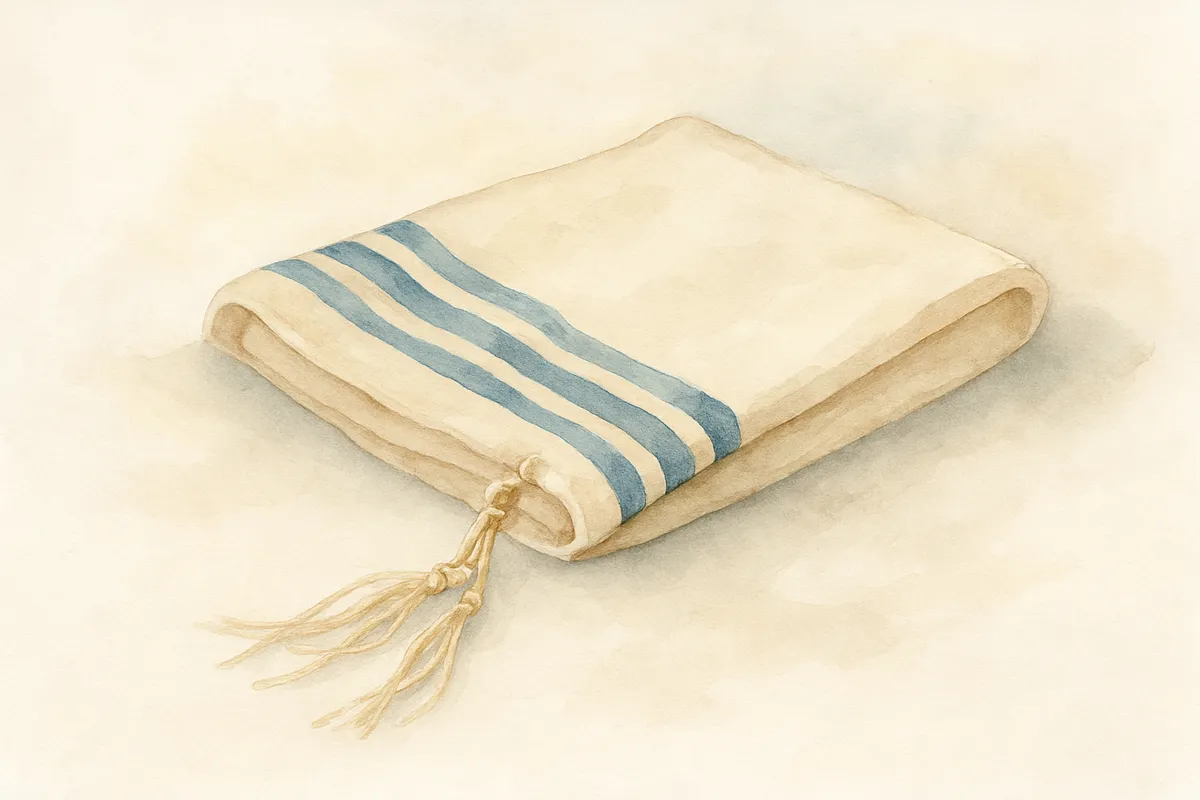
A tallit (טַלִּית, tallit — Jewish prayer shawl) is a rectangular garment worn during prayer, featuring fringes called tzitzit (צִיצִית) attached to its four corners. The primary purpose of the tallit is to fulfill the Torah commandment of tzitzit, found in Numbers 15:38-40, which commands that fringes be placed on the corners of garments as a reminder to observe all of God's commandments. It is one of the most iconic symbols of Jewish prayer and religious life.
Key Takeaways
- A tallit is a four-cornered prayer garment worn to fulfill the Torah mitzvah of tzitzit (fringes on garment corners).
- Men are obligated in this commandment; women are technically exempt but may choose to wear one.
- The fringes themselves have no inherent sanctity — they may be discarded if broken and a tallit may be entered into a bathroom.
- Selling a tallit with tzitzit attached to a non-Jew requires first removing the fringes, for safety reasons.
- In mystical tradition, God Himself is described as "wrapping" in a tallit when revealing the 13 Attributes of Mercy.
The Torah Source
The mitzvah of tzitzit originates in Numbers 15:38: "Speak to the Israelites and tell them to make fringes (tzitzit) on the corners of their garments throughout their generations." The tallit is the garment designed specifically to fulfill this obligation.
A four-cornered garment obligates its wearer in the commandment of tzitzit. The tallit is typically made large enough to "wrap" the body, symbolizing being enveloped in the mitzvot.
The Law of Tzitzit on the Tallit
The Rambam (Maimonides) rules that tzitzit fringes possess no inherent sanctity (kedushah):
"נִפְסְקוּ לוֹ חוּטֵי לָבָן אוֹ תְּכֵלֶת זוֹרְקוֹ בָּאַשְׁפָּה מִפְּנֵי שֶׁהִיא מִצְוָה שֶׁאֵין בְּגוּפָהּ קְדֻשָּׁה" "If the white or blue threads break, one throws them in the garbage, because this is a commandment that has no inherent sanctity in its body."
[Mishneh Torah, Fringes 3:9]
This means:
- A tallit with tzitzit may be taken into a bathroom or bathhouse.
- Broken tzitzit threads may be disposed of normally, without geniza (sacred burial).
Selling a Tallit to a Non-Jew
The Rambam adds an important safety ruling: one may not sell a tallit with its fringes intact to a non-Jew, not because of sanctity, but because "perhaps he will wrap himself in it, a Jew will travel with him, and [the non-Jew] will think he is Jewish and kill him." [Mishneh Torah, Fringes 3:9]. This ruling reflects the historical reality of danger faced by visibly Jewish individuals.
Who Is Obligated to Wear a Tallit?
Men
Adult Jewish men are obligated in the mitzvah of tzitzit. The obligation is tied to owning a four-cornered garment — one is not required to purchase a tallit just to become obligated, but once one wears such a garment, tzitzit must be attached.
Women
The Shulchan Arukh rules:
"נָשִׁים וַעֲבָדִים פְּטוּרִים מִפְּנֵי שֶׁהִיא מִצְוַת עֲשֵׂה שֶׁהַזְּמַן גְּרָמָא" "Women and slaves are exempt because it is a time-bound positive commandment."
[Shulchan Arukh, Orach Chayim 17:2]
The Rama (Rabbi Moshe Isserles) adds in his Hagah (gloss) that women may choose to wear a tallit, as is permitted with other time-bound positive commandments — however, he notes it appears as yuhara (presumptuous piety), and therefore the custom is that women do not wear a tallit. This remains a topic of discussion in contemporary halachic discourse.
Tumtum and Androgynos
A tumtum (person of indeterminate sex) and androgynos (hermaphrodite) are obligated in tzitzit out of doubt, but wear the tallit without a blessing [Shulchan Arukh, Orach Chayim 17:2].
The Spiritual Dimension: God "Wearing" a Tallit
A remarkable mystical dimension appears in the Kedushat Levi (Rabbi Levi Yitzchak of Berditchev):
"G-d wrapped Himself in a tallit, just like the reader in the synagogue"
[Kedushat Levi, Exodus, Ki Tisa 14, citing Talmud Rosh Hashanah 17a]
This refers to the moment God revealed the 13 Attributes of Mercy (שְׁלֹשׁ עֶשְׂרֵה מִדּוֹת) to Moses after the sin of the Golden Calf [Exodus 34:6]. The image of God "wrapping" in a tallit elevates the garment far beyond a legal obligation — it becomes an imitation of the Divine (imitatio Dei), a way of embodying divine compassion during prayer.
The Maggid of Mezeritch (Rabbi Dov Ber), the Kedushat Levi's teacher, taught that the 13 Attributes are the spiritual source of all divine compassion flowing into the world.
Practical Customs
- The tallit is typically worn during Shacharit (morning prayers) and on Yom Kippur (where it is also worn at night).
- Ashkenazic custom: Men begin wearing a tallit after marriage; Sephardic custom: from Bar Mitzvah.
- The tallit is wrapped around the body before reciting a blessing, symbolizing being surrounded by the divine commandments.
- Tekhelet (תְּכֵלֶת — blue thread) was historically included in the tzitzit but was lost; some communities have recently revived it based on the identification of the chilazon creature.
For personal guidance on matters of halachic practice, consult your local rabbi or posek.
Sources
People Also Asked
Want to dig deeper?