What is a Mezuzah and what is the prayer for hanging it?
What is a Mezuzah and What is the Prayer for Hanging It?
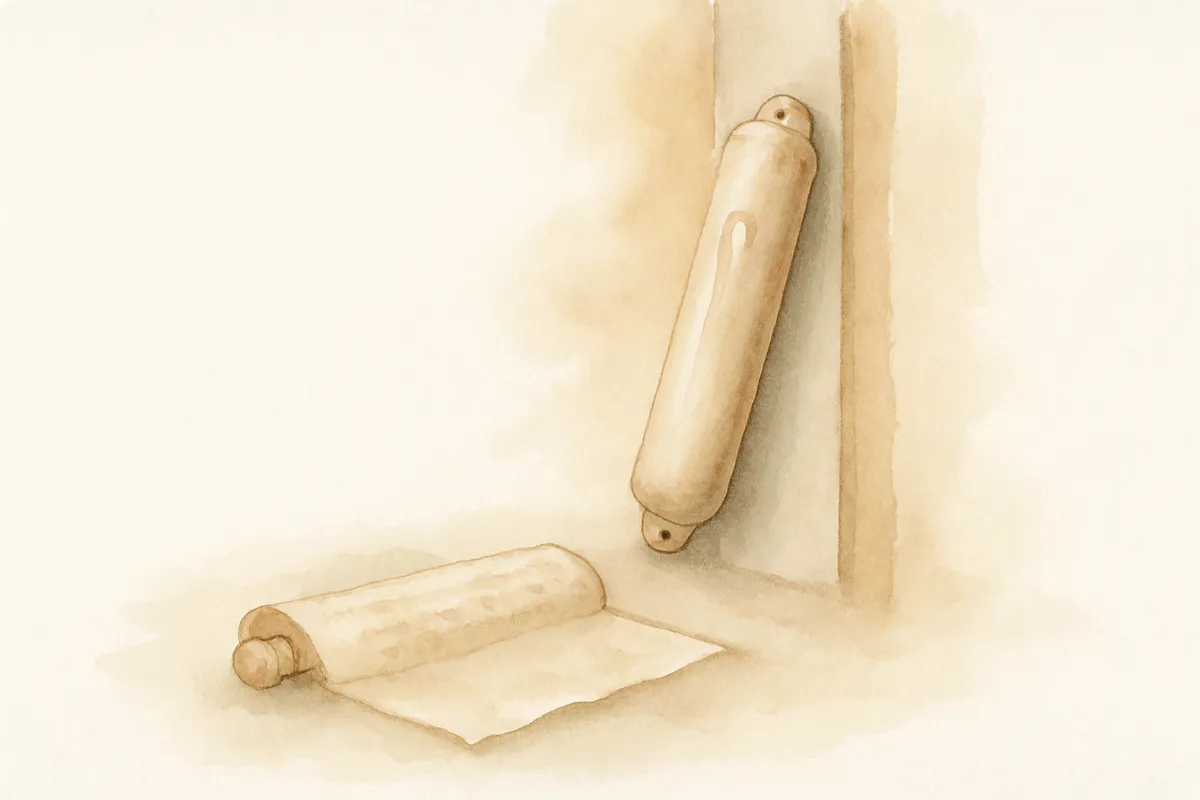
A mezuzah (מְזוּזָה, literally "doorpost") is a parchment scroll containing two biblical passages — Deuteronomy 6:4–9 (Shema) and Deuteronomy 11:13–21 (V'hayah im shamo'a) — housed in a protective case and affixed to the doorpost of a Jewish home. It is one of the most fundamental and universally observed mitzvot (commandments) in Jewish life. The prayer recited when hanging it is a short bracha (blessing) invoking God's sanctification of the act.
Key Takeaways
- The mezuzah fulfills a Torah commandment derived directly from Deuteronomy 6:9: "וּכְתַבְתָּם עַל מְזוּזֹת בֵּיתֶךָ" — "And you shall write them upon the doorposts of your house."
- It contains the Shema paragraph and the second paragraph of Shema (V'hayah im shamo'a), handwritten by a qualified sofer (scribe).
- The Rambam teaches that the mezuzah serves as a constant spiritual reminder of God's unity every time one enters or leaves the home.
- A blessing is recited when affixing a mezuzah for the first time.
- The mezuzah is placed on the right doorpost as one enters, within the outer handbreadth of the doorframe.
The Biblical Source
The commandment comes directly from the Torah:
"וּכְתַבְתָּם עַל מְזֻזוֹת בֵּיתֶךָ וּבִשְׁעָרֶיךָ" "And you shall write them upon the doorposts of your house and upon your gates." [Deuteronomy 6:9]
This verse appears as part of the Shema passage, the foundational declaration of Jewish faith. A parallel command appears in [Deuteronomy 11:20], part of the second paragraph of Shema.
What the Mezuzah Contains
The parchment (klaf) inside the case contains two Torah passages written in Hebrew by a qualified sofer sta"m (ritual scribe):
- Deuteronomy 6:4–9 — the Shema, beginning "שְׁמַע יִשְׂרָאֵל יְהֹוָה אֱלֹהֵינוּ יְהֹוָה אֶחָד" — "Hear O Israel, the Lord our God, the Lord is One."
- Deuteronomy 11:13–21 — V'hayah im shamo'a, the second paragraph of Shema, beginning "וְהָיָה אִם שָׁמֹעַ תִּשְׁמְעוּ" — "And it shall be, if you listen carefully to My commandments."
On the back of the parchment, the name שַׁדַּי (Shaddai, one of God's names) is written. This name is visible through a small opening in the case. [Shulchan Arukh, Yoreh De'ah 285]
The Blessing for Hanging the Mezuzah
The blessing (bracha) recited when affixing a mezuzah is:
"בָּרוּךְ אַתָּה יְהֹוָה אֱלֹהֵינוּ מֶלֶךְ הָעוֹלָם אֲשֶׁר קִדְּשָׁנוּ בְּמִצְוֹתָיו וְצִוָּנוּ לִקְבֹּעַ מְזוּזָה"
"Blessed are You, Lord our God, King of the Universe, who has sanctified us with His commandments and commanded us to affix the mezuzah."
Notes on the Blessing:
- The blessing is recited before or during the act of affixing — not after.
- When affixing multiple mezuzot on the same occasion (e.g., moving into a new home), one blessing covers all of them.
- The mezuzah should be nailed or affixed to the doorpost while reciting or immediately after the blessing, without interruption.
Where and How to Hang It
[Rambam, Mishneh Torah, Hilkhot Tefillin u'Mezuzah 6:13] and [Shulchan Arukh, Yoreh De'ah 285] specify:
- It is placed on the right side of the doorpost as one enters.
- It is affixed within the outer handbreadth (tefach) of the doorframe.
- It is placed in the upper third of the doorpost height.
- Ashkenazim affix it diagonally (tilted inward), following the compromise position of Rabbenu Tam and Rashi, who disagreed on whether it should be horizontal or vertical.
- Sephardim generally affix it vertically.
Regarding the Hanukkah lamp and mezuzah connection, the Rambam notes:
"...so that the mezuzah is on the right and the Hanukkah light is on the left." [Mishneh Torah, Hilkhot Megillah v'Hanukkah 4:7]
This shows that the mezuzah is treated as the primary fixture, with other ritual objects positioned in relation to it.
The Deeper Meaning and Purpose
Rambam [Mishneh Torah, Hilkhot Tefillin u'Mezuzah 6:13] writes powerfully about the mezuzah's spiritual function:
"וְכָל זְמַן שֶׁיִּכָּנֵס וְיֵצֵא יִפְגַּע בְּיִחוּד הַשֵּׁם שְׁמוֹ שֶׁל הַקָּדוֹשׁ בָּרוּךְ הוּא וְיִזְכֹּר אַהֲבָתוֹ" "Every time one enters and exits, he will encounter the unity of the Name of the Holy One, blessed be He, and will remember His love — and he will awaken from his slumber and the errors caused by the vanities of time."
This is a profoundly important statement: the Rambam frames the mezuzah not as a talisman or protective charm, but as a vehicle for spiritual awakening and mindfulness — a constant reminder of God's presence as we move through the mundane world.
The Custom of Touching the Mezuzah
The Rema (Rabbi Moshe Isserles) notes in [Shulchan Arukh, Yoreh De'ah 285]:
"Some say that when a person leaves the home, he should place his hand on the mezuzah and say 'Hashem yishmor tzeti...' — 'God shall guard my going out...'" (based on Psalm 121:8).
This practice transforms every departure into a moment of prayer and connection.
The Mezuzah and Conversion
Interestingly, the mezuzah even figures in the laws of giyur (conversion). In [Ruth Rabbah 2:22], when Ruth declared her commitment to follow Naomi, Naomi began teaching her the laws of Jewish life — including the mezuzah obligation — as part of explaining what it means to become part of the Jewish people. This illustrates how central the mezuzah is as a marker of Jewish identity and home life.
*For personal guidance on the proper placement, checking, and
Sources
People Also Asked
Want to dig deeper?