What are the rules of Shabbat?
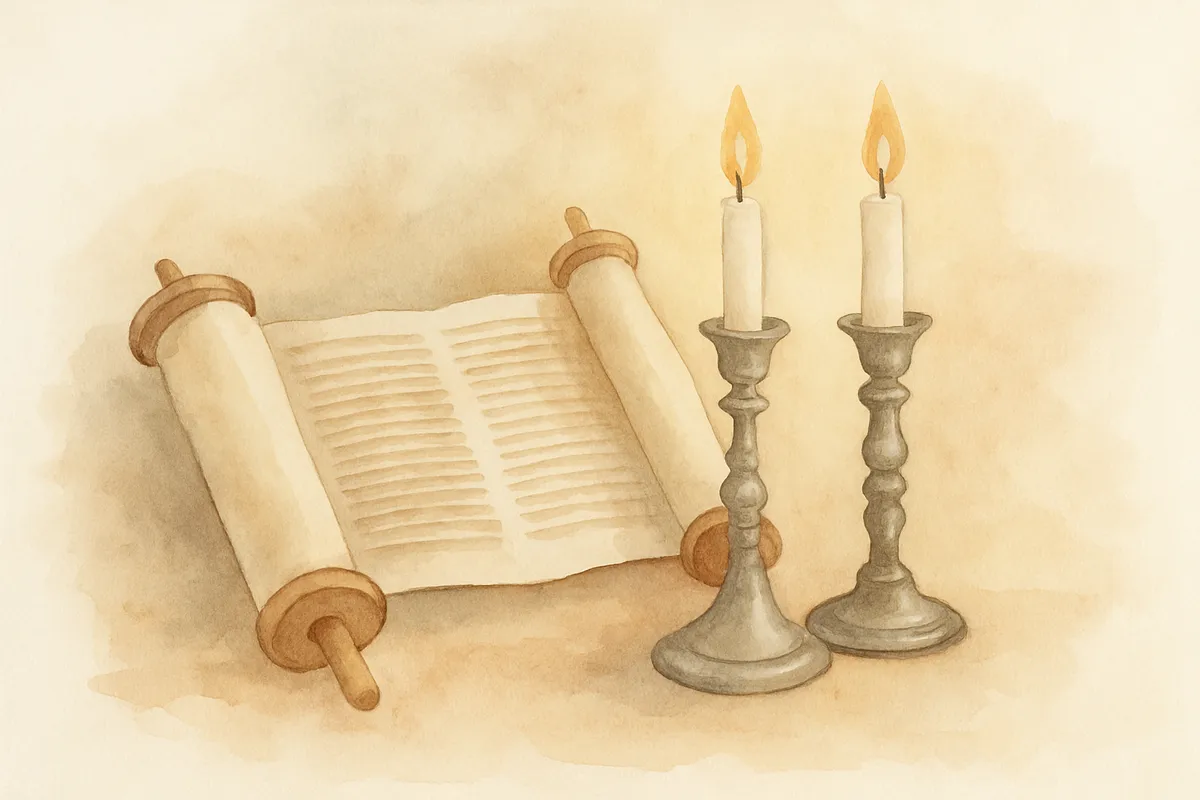
The Rules of Shabbat
Shabbat, the Jewish day of rest observed from Friday sunset to Saturday nightfall, is one of the most comprehensive and detailed areas of Jewish law. At its core, the Torah commands cessation from melachah (creative work) on the seventh day, in commemoration of both God's rest at Creation and the Exodus from Egypt. The Talmud and later halachic authorities developed this into an intricate system of 39 categories of prohibited labor and hundreds of derivative rules.
Key Takeaways
- The Torah commands "Remember the Sabbath day to sanctify it" and prohibits all melachah (creative work) on Shabbat [Exodus 20:8-10].
- The Talmud identifies 39 primary categories (avot melachah) of prohibited labor, derived from the work done in building the Tabernacle [Shabbat 73a].
- Shabbat has both positive commandments (Kiddush, festive meals, rest, Torah study) and negative commandments (prohibitions on work).
- The overarching spirit of Shabbat is accepting reality with peace and tranquility — menucha (rest) as a spiritual state, not merely physical inaction [Peninei Halakhah, Shabbat 28:1].
- For personal guidance on specific Shabbat questions, always consult your local rabbi or posek (halachic decisor).
The Torah Foundation
The primary sources for Shabbat appear in two places in the Torah:
In Genesis, after the six days of Creation:
"וַיְבָרֶךְ אֱלֹהִים אֶת יוֹם הַשְּׁבִיעִי וַיְקַדֵּשׁ אֹתוֹ" — "And God blessed the seventh day and sanctified it, because on it He rested from all His work that God created to do." [Genesis 2:3]
In the Ten Commandments, two versions appear — one in Exodus and one in Deuteronomy:
"זָכוֹר אֶת יוֹם הַשַּׁבָּת לְקַדְּשׁוֹ" — "Remember the Sabbath day to sanctify it. Six days shall you labor and do all your work, but the seventh day is Shabbat for the Lord your God — you shall do no melachah: you, your son, your daughter, your servant, your maidservant, your animal, and the stranger in your gates." [Exodus 20:8–10]
The Talmud notes that the Exodus version says zachor (remember) while Deuteronomy 5:12 says shamor (guard/observe), teaching that both positive and negative aspects were given simultaneously [Shevuot 20b].
The 39 Categories of Prohibited Labor (Avot Melachah)
The Talmud in Shabbat 73a derives 39 categories of prohibited melachah from the types of work performed in constructing the Mishkan (Tabernacle). These are grouped thematically:
Agriculture & Food Preparation
- Plowing
- Sowing
- Reaping
- Gathering (sheaves)
- Threshing
- Winnowing
- Selecting/sorting
- Grinding
- Sifting
- Kneading
- Baking/cooking
Textile Production
- Shearing wool
- Washing wool
- Combing wool
- Dyeing
- Spinning
- Warping (stretching threads on loom)
- Making two loops
- Weaving
- Separating threads
- Tying a knot
- Untying a knot
- Sewing two stitches
- Tearing (in order to sew)
Leather & Writing
- Trapping/hunting
- Slaughtering
- Skinning
- Tanning
- Scraping a hide
- Marking/scoring
- Cutting to shape
- Writing two letters
- Erasing (in order to write)
Construction & Fire
- Building
- Demolishing (in order to build)
- Extinguishing a fire
- Kindling a fire
- Striking a final hammer blow (makeh b'patish — completing a task)
Carrying
- Carrying from one domain to another (hotza'ah)
Each of these 39 categories (avot) has derivative prohibitions (toldot) that are rabbinically equivalent in severity.
Positive Commandments of Shabbat
Shabbat is not only about what not to do — it has rich positive observances:
- Kiddush — Sanctification over wine on Friday night (and before the day meal), fulfilling zachor (remembrance) [Pesachim 106a]
- Candle lighting — Women (and men) light Shabbat candles before sunset to honor shalom bayit (domestic peace) [Shabbat 25b]
- Three festive meals — Shalosh seudot, including Friday night, Shabbat day, and a third meal in the afternoon [Shabbat 117b]
- Torah study and prayer — Shabbat is a special time for learning and communal worship
- Oneg Shabbat (delight in Shabbat) — physical and spiritual enjoyment [Isaiah 58:13, cited in Shabbat 118a]
- Havdalah — The closing ceremony separating Shabbat from the weekday, over wine, spices, and a flame
Key Rabbinic Prohibitions (Shvut)
Beyond the 39 melachot, the Rabbis added numerous additional prohibitions to "fence" the Torah law:
- Muktzeh — Handling objects that have no Shabbat use (tools, money, etc.) [Shabbat 44a, Rambam, Hilchot Shabbat 24]
- Amira l'akum — Asking a non-Jew to perform prohibited labor on your behalf [Shabbat 150a]
- Uvdin d'chol — Weekday-like activities that undermine the spirit of Shabbat (e.g., reading business documents) [Shabbat 113b]
- Tehum Shabbat — Restrictions on traveling beyond 2,000 amot (~1 km) outside one's city [Eruvin 51a]
The Spirit Behind the Laws
Rav Eliezer Melamed in Peninei Halakhah beautifully captures the deeper intention of Shabbat law:
"הרעיון הכללי של השבת, שביום זה אנו מקבלים את המציאות כפי שהיא, בשלווה ומנוחה" — "The general idea of Shabbat is that on this day we accept reality as it is, with serenity and rest. If there is no clean garment — one uses a dirty one. If one forgot to cook a dish — one makes do with what there is... And although sometimes the laws of Shabbat cause distress, they free a person from the burden and tension of always attending to every small detail being properly arranged." [Peninei Halakhah, Shabbat 28:1]
This captures the profound paradox of Shabbat: the restrictions are themselves liberating.
When Shabbat Is Overridden
A crucial principle is pikuach nefesh (saving life) — virtually all Shabbat laws are suspended when a life is at risk [Yoma 85a–b]. The Talmud derives this from "וָחַי בָּהֶם" — "and you shall live by them" (Leviticus 18:5) — meaning the Torah is to be lived by, not died by.
Summary of Shabbat Times
Shabbat begins at sunset on Friday (with candle lighting 18 minutes before sunset in most communities) and ends on Saturday night when three stars are visible (*tzet
Sources
People Also Asked
Want to dig deeper?