What are the rules of passover kosher?
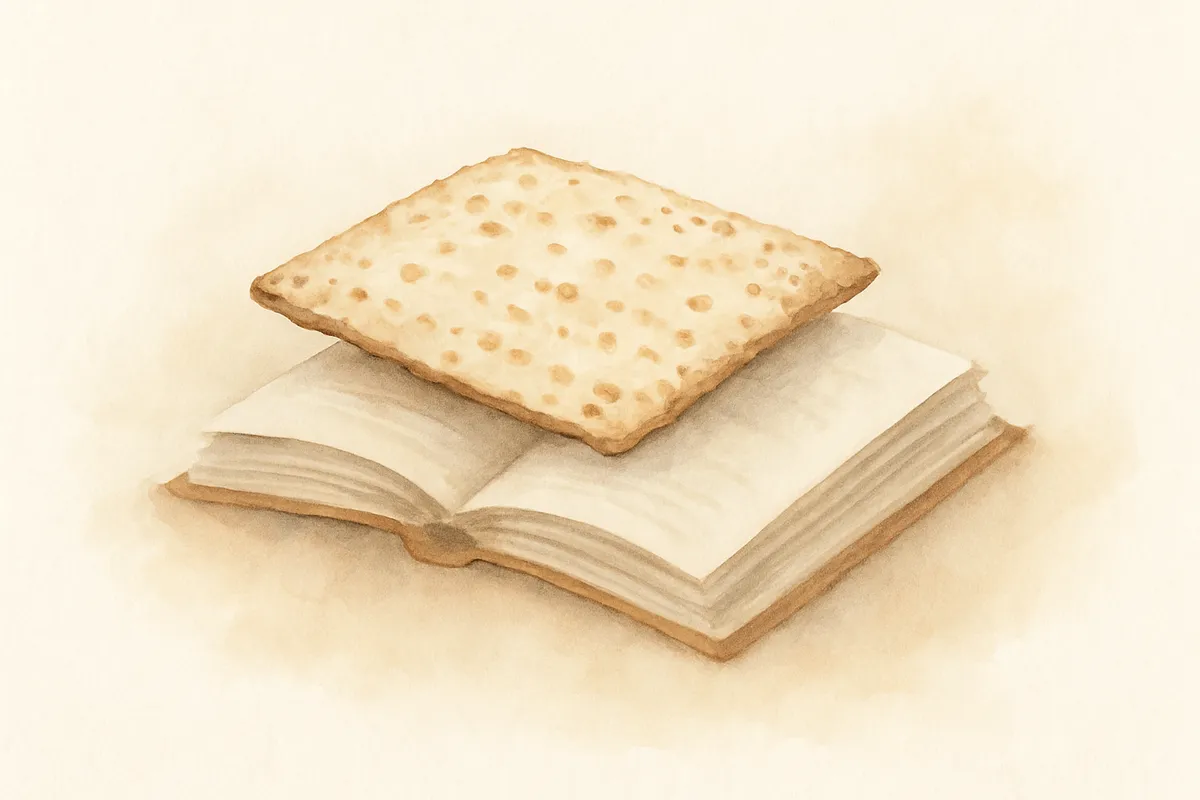
Passover Kosher Laws (Kashrut shel Pesach)
Passover has its own unique set of dietary laws that go significantly beyond year-round kashrut (kosher law). The central prohibition is chametz (leavened grain products), which is forbidden not only to eat, but to own or even benefit from during the entire eight days of Passover (seven in Israel). These rules derive directly from the Torah's command: "Matzot ye'achel et shivat ha-yamim" — "Matzot shall be eaten for seven days, and no chametz shall be seen among you" [Exodus 13:7].
Key Takeaways
- Chametz (leavened grain) is forbidden to eat, own, or benefit from during Passover — stricter than any other food prohibition.
- The five forbidden grains are wheat, barley, oats, spelt, and rye — only when leavened.
- Matzah must be eaten at the Seder; it must be made from one of these five grains under strict supervision.
- Kitniyot (legumes and rice) are forbidden for Ashkenazic Jews by rabbinic custom, but permitted for Sephardic Jews.
- All Passover food products require special Kosher l'Pesach certification.
1. The Central Prohibition: Chametz (לְחָמֵץ)
Chametz refers to any of the five grains — wheat, barley, oats, spelt, and rye — that have come into contact with water and been allowed to ferment/leaven for 18 minutes or more.
The Torah forbids chametz in four separate ways:
- Eating chametz (Exodus 12:20)
- Owning chametz — "no chametz shall be seen among you" [Exodus 13:7]
- Benefiting from chametz
- Offering sacrifices while chametz is in one's possession — as the Rambam rules: "One who slaughters the Passover offering at its proper time while possessing a k'zayit (olive's bulk) of chametz in his domain receives lashes, as it says: 'Lo tizbach al chametz dam zivchi' — 'You shall not slaughter the blood of My sacrifice upon chametz'" [Mishneh Torah, Paschal Offering 1:5].
2. Before Passover: Removing Chametz
Three preparatory rituals are required:
Bedikat Chametz — The Search for Chametz
Performed the night before Passover eve (14th of Nissan), the home is searched by candlelight for any remaining chametz.
Bi'ur Chametz — Burning the Chametz
The chametz found is burned the following morning, before the deadline (approximately 10 a.m. on Erev Pesach, though times vary by location).
Bitul Chametz — Nullification of Chametz
A verbal declaration nullifies any chametz not found, treating it as "ownerless dust of the earth."
Mechirat Chametz — Selling Chametz
Chametz that cannot be used up or disposed of (e.g., expensive whisky) may be legally sold to a non-Jew before Passover through a rabbi, and bought back after the holiday.
3. Kitniyot (קִטְנִיּוֹת) — Legumes and Rice
The Kitzur Shulchan Aruch rules: "Kol minei kitniyot asurim" — "All varieties of kitniyot are forbidden" [Kitzur Shulchan Aruch 117:4].
Kitniyot includes:
- Rice, corn, beans, lentils, peas, sesame, mustard, and similar items
- According to many Ashkenazic authorities: peanuts, sunflower seeds, and quinoa (debated)
Important distinction:
- Ashkenazic Jews: Kitniyot is forbidden by rabbinic custom (minhag), established in medieval times due to concern about grain mixture and appearance of chametz.
- Sephardic Jews: Kitniyot is permitted, as this was never their custom.
- In recent years, some Ashkenazic authorities have permitted kitniyot oil or products for those with great need — consult your rabbi.
4. Dried Fruits and Special Produce
The Kitzur Shulchan Aruch adds that dried fruits (peirot yeveshim) are also forbidden unless it is known they were dried in a Passover-certified manner — even dried figs and raisins are included [Kitzur Shulchan Aruch 117:4].
Similarly, spices such as cloves and saffron are treated with caution due to concerns about grain-based additives.
5. Matzah (מַצָּה) — The Positive Commandment
The Torah commands: "Lo tochal alav chametz — shivat yamim tochal alav matzot" — "You shall not eat chametz with it; seven days you shall eat matzot upon it, the bread of affliction (lechem oni)" [Deuteronomy 16:3].
Key rules of matzah:
- Eating matzah at the Seder night is a Torah-level obligation (mitzvat aseh).
- Matzah must be made from one of the five grains and baked within 18 minutes of water contact.
- Matzah ashirah ("enriched matzah" made with juice or eggs instead of water) is permitted for Sephardim and the elderly/ill; most Ashkenazim avoid it on Passover itself.
- Machine matzah vs. hand (matzah yad): both are widely used; some are stringent to use only handmade matzah for the Seder.
6. Passover Certification (Kosher l'Pesach)
All processed foods require Kosher l'Pesach certification. This includes:
- Medications and vitamins (consult a rabbi or published guides)
- Toothpaste: The Peninei Halakha rules that "toothpaste requires Passover certification, since it has flavor and is treated like other food products" [Peninei Halakhah, Pesach 8:9]
- Cosmetics and lipstick that may be ingested
- Dish soap and cleaning products used for Passover dishes (some are stringent)
7. Passover Dishes and Kashering (Purging) Utensils
Utensils used year-round for chametz may not be used for Passover. Options include:
- Using a separate set of Passover dishes
- Kashering (purging) metal vessels through hagalah (immersion in boiling water)
- Glassware: Ashkenazim generally do not kasher glass; Sephardim permit it through soaking
- Earthenware (cheres) cannot be kashered at all
8. The Deeper Meaning
The Torah connects these laws explicitly to the Exodus memory: "Ki b'chipazon yatzata me'eretz Mitzrayim" — "For in haste you left the land of Egypt, so that you may remember the day of your leaving Egypt all the days of your life" [Deuteronomy 16:3].
The Sfat Emet and many Chassidic masters teach that chametz — swollen, puffed-up bread — symbolizes pride and ego (gaavah), while matzah — flat, humble bread — represents anavah (humility) and total reliance on God. Passover's laws thus serve as an annual spiritual reset.
For personal guidance on specific Passover kashrut questions — including kitniyot status, medication use, or kashering your kitchen — consult your local rabbi or posek.
Sources
People Also Asked
Want to dig deeper?