What are the Jewish wedding blessings (Sheva Brachot)?
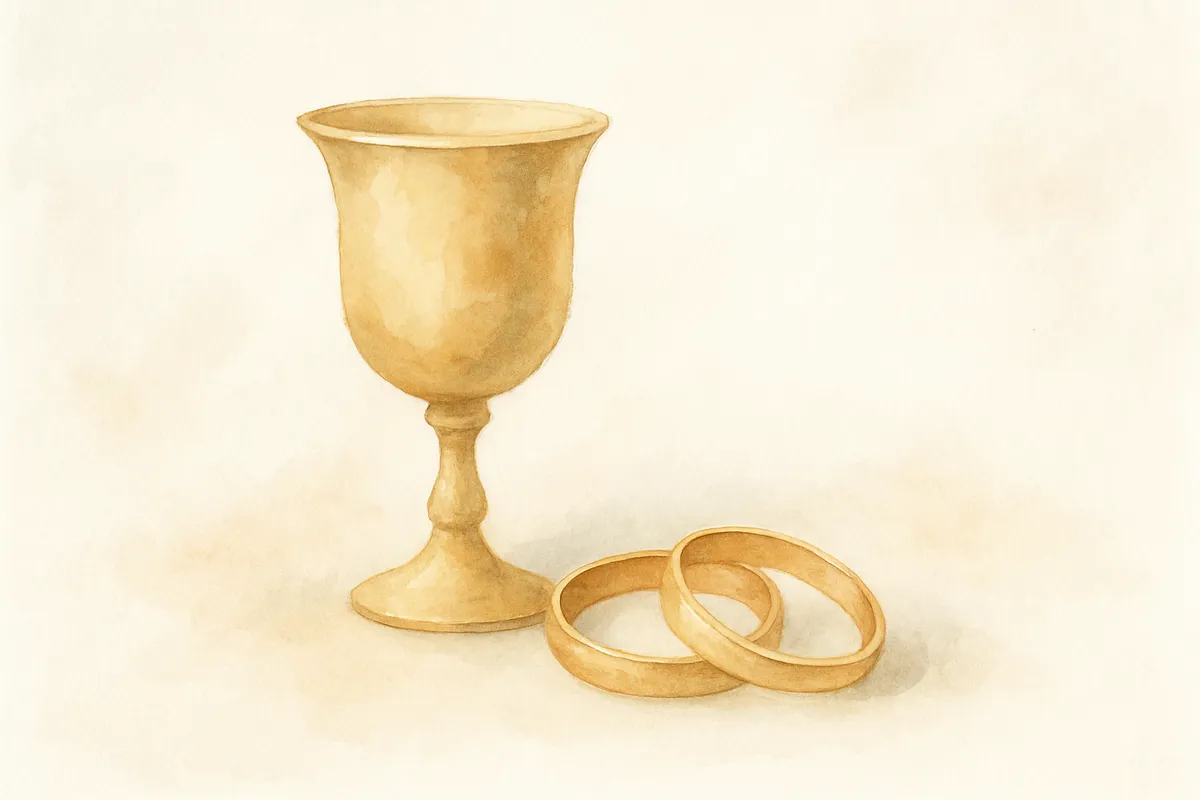
The Sheva Brachot (שֶׁבַע בְּרָכוֹת, "Seven Blessings") are the central blessings recited at a Jewish wedding ceremony and at festive meals during the week following the wedding. These seven blessings celebrate the union of bride and groom, invoke joy, and connect the marriage to both Creation and the ultimate redemption of Israel. They require a minyan (quorum of ten) to be recited.
Key Takeaways
- The Sheva Brachot are seven blessings recited under the chuppah (wedding canopy) over a cup of wine, and repeated after Birkat HaMazon (Grace After Meals) for the seven days following the wedding.
- A minyan of ten Jewish adults is required for the recitation of the Sheva Brachot [Mishnah Megillah 4:3].
- The blessings move from cosmic themes (creation of the world, creation of humanity) to intimate ones (joy of bride and groom, the rebuilding of Jerusalem).
- The Zohar teaches that women stand in the symbolic image of the altar (mizbeach), and the seven blessings connect to the Knesset Yisrael (the divine assembly of Israel) [Zohar, Mishpatim 3:161].
- The week-long celebration with repeated Sheva Brachot meals (sheva brachot week) requires a panim chadashot — a new guest — to allow the full blessings to be recited each day.
The Seven Blessings: Text and Meaning
The Sheva Brachot are recited by a designated individual (or distributed among honored guests) over a cup of wine [Siddur Sefard, Marriage Blessings 11]. Here are the seven blessings with their themes:
1. Borei Pri HaGafen — בּוֹרֵא פְּרִי הַגָּפֶן
"Blessed are You, Lord our God, King of the universe, who creates the fruit of the vine."
This blessing sanctifies the cup of wine over which all the blessings are recited. Wine symbolizes joy and sanctity in Jewish tradition.
2. HaKol Bara Lichvodo — הַכֹּל בָּרָא לִכְבוֹדוֹ
"Blessed are You... who created everything for His glory."
This blessing places the marriage in a cosmic frame: all of creation exists to glorify God, and marriage is part of that divine purpose.
3. Yotzer HaAdam — יוֹצֵר הָאָדָם
"Blessed are You... who fashioned the human being."
This blessing references God's formation of humanity, as described in Genesis: "וַיִּבֶן יְהֹוָה אֱלֹהִים אֶת הַצֵּלָע... לְאִשָּׁה" — "And the Lord God built the rib... into a woman" [Genesis 2:22]. Marriage is rooted in the original act of creation.
4. Asher Yatzar et HaAdam b'Tzalmo — אֲשֶׁר יָצַר אֶת הָאָדָם בְּצַלְמוֹ
"Blessed are You... who created the human being in His image, in the image of His likeness, and prepared for him — from himself — an eternal structure. Blessed are You, Lord, who created the human being."
This blessing deepens the previous one, emphasizing that both man and woman are created b'tzelem Elohim (in the image of God), and that the union between them reflects a divine structure. It alludes directly to "עֶצֶם מֵעֲצָמַי וּבָשָׂר מִבְּשָׂרִי" — "bone of my bones and flesh of my flesh" [Genesis 2:23].
5. Sos Tasis — שׂוֹשׂ תָּשִׂישׂ
"May the barren one [Zion] rejoice and be glad in the ingathering of her children to her midst in joy. Blessed are You, Lord, who gladdens Zion through her children."
This blessing pivots from the personal to the national, connecting the couple's joy to the future redemption and rebuilding of Jerusalem. Joy at a wedding is tied to the joy of the Jewish people's ultimate return.
6. Sameach Tesamach — שַׂמֵּחַ תְּשַׂמַּח
"Gladden the beloved companions as You gladdened Your creature in the Garden of Eden of old. Blessed are You, Lord, who gladdens groom and bride."
This blessing explicitly invokes the Garden of Eden, comparing the couple to Adam and Eve in their original, perfect state of union. The imagery connects every Jewish marriage to the first marriage in history.
7. Asher Bara — אֲשֶׁר בָּרָא
"Blessed are You... who created joy and gladness, groom and bride, mirth, song, delight and rejoicing, love and brotherhood, peace and fellowship. Soon, Lord our God, may there be heard in the cities of Judah and in the streets of Jerusalem, the sound of joy and the sound of gladness, the voice of the groom and the voice of the bride... Blessed are You, Lord, who gladdens the groom with the bride."
This is the longest and most elaborate blessing, drawing from the language of the prophet Jeremiah [Jeremiah 33:10-11]. It enumerates ten expressions of joy and concludes with the messianic hope for the rebuilding of Jerusalem.
When and How They Are Recited
Under the Chuppah
The Sheva Brachot are recited under the chuppah (wedding canopy) immediately after the ring ceremony and reading of the ketubbah (marriage contract): "קוראים הכתובה, ואחר כך מוסרים הכתובה לכלה, ומברכים על כוס שניה ואומר אלו שבע ברכות" — "The ketubbah is read, and then it is given to the bride, and they bless over a second cup and recite these seven blessings" [Siddur Sefard, Marriage Blessings 11].
After Birkat HaMazon
The Sheva Brachot are also recited after Birkat HaMazon at wedding festive meals: "בשבע ברכות שלאחר ברכת המזון" — "In the seven blessings that follow Grace After Meals" [Siddur Sefard, Sheva Berachot 2].
The Seven-Day Celebration
Following the wedding, the Sheva Brachot are recited at festive meals (seudat mitzvah) for seven days. The key requirement is the presence of panim chadashot (פָּנִים חֲדָשׁוֹת — "a new face"), meaning a guest who was not present at the wedding or at previous Sheva Brachot meals. This maintains the spirit of renewed celebration each day.
The Minyan Requirement
The Mishnah establishes that a minyan of ten is required for significant communal religious acts, including the blessing recited over a bride and groom: "...keinen Segen über Neuvermählte... wenn weniger als zehn anwesend sind" — "no blessing over newlyweds... if fewer than ten are present" [Mishnah Megillah 4:3].
Rambam codifies this requirement in Mishneh Torah as well, placing the wedding blessings in the context of communal prayer structures [Mishneh Torah, Prayer and the Priestly Blessing 7:14].
Kabbalistic Significance
The Zohar offers a profound explanation for why there are specifically seven blessings. Women, the Zohar teaches, stand in
Sources
People Also Asked
Want to dig deeper?