What are the Jewish blessings over food?
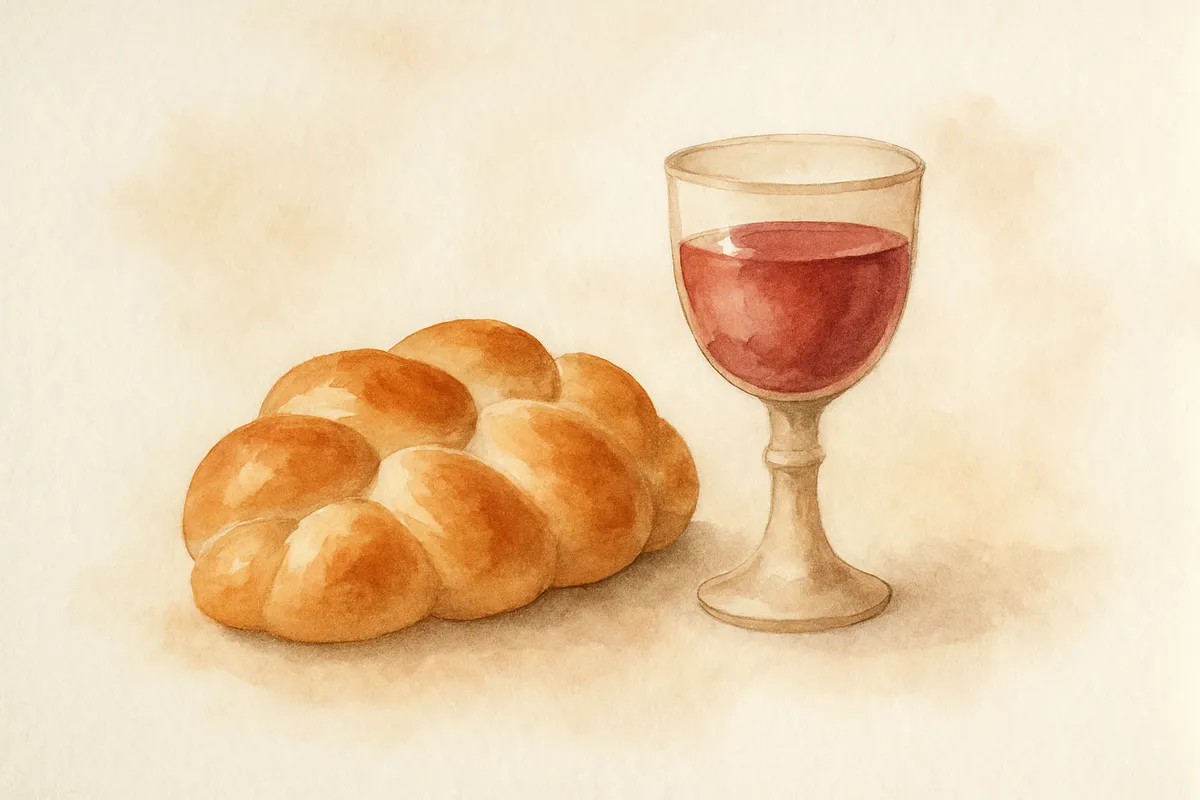
Jewish blessings over food (berakhot, ברכות) are short, formulaic prayers recited before and after eating or drinking, expressing gratitude to God as the ultimate source of all sustenance. The Sages instituted a system of blessings categorized by food type, each beginning with the formula "Barukh Atah Hashem Eloheinu Melekh ha-olam..." ("Blessed are You, Lord our God, King of the universe..."). Reciting these blessings is considered a rabbinic obligation derived from the Torah's implicit expectation of gratitude to God.
Key Takeaways
- Every food has a specific berakha (blessing) assigned to it based on its category (grain, fruit, wine, etc.).
- The Sages derived the obligation to bless from the verse in Deuteronomy: eating without blessing is considered as if one benefited from sacred property.
- One person reciting a blessing can exempt others at the table if they are eating together intentionally [Mishneh Torah, Blessings 1:12].
- Birkat HaMazon (Grace After Meals) is the primary post-meal blessing, Biblically commanded after eating bread.
- Reciting 100 blessings per day is a rabbinic ideal, fulfilled partly through blessings over food [Mishneh Torah, Prayer 7:15].
The Structure of a Food Blessing
Every berakha opens with the standard formula:
"בָּרוּךְ אַתָּה יְהֹוָה אֱלֹהֵינוּ מֶלֶךְ הָעוֹלָם" "Barukh Atah Adonai Eloheinu Melekh ha-olam" "Blessed are You, Lord our God, King of the universe..."
Rav rules that any blessing lacking God's name is not considered a valid blessing [Berakhot 12a]. This is why every berakha must include God's name (Shem) and kingship (Malkhut).
The Six Primary Blessings Before Eating (Berakhot Rishonot)
1. 🍞 HaMotzi — Bread
"הַמּוֹצִיא לֶחֶם מִן הָאָרֶץ" "...hamotzi lechem min ha-aretz" — "Who brings forth bread from the earth"
Recited over bread made from the five grains (wheat, barley, spelt, rye, oat). This is the premier food blessing — reciting it over bread at a meal covers all other foods eaten during that meal (with some exceptions).
2. 🥐 Mezonot — Grain Products
"בּוֹרֵא מִינֵי מְזוֹנוֹת" "...borei minei mezonot" — "Who creates the various kinds of nourishment"
Recited over foods made from the five grains that are not bread — e.g., pasta, cake, crackers, cookies.
3. 🍷 HaGefen — Wine and Grape Juice
"בּוֹרֵא פְּרִי הַגָּפֶן" "...borei pri ha-gafen" — "Who creates the fruit of the vine"
Wine holds a uniquely elevated status in Jewish law and has its own distinct blessing, separate from other fruits.
4. 🍎 HaEtz — Tree Fruits
"בּוֹרֵא פְּרִי הָעֵץ" "...borei pri ha-etz" — "Who creates the fruit of the tree"
Recited over fruits that grow on trees — apples, oranges, olives, dates, grapes (when eaten whole), etc.
5. 🥕 HaAdamah — Produce of the Ground
"בּוֹרֵא פְּרִי הָאֲדָמָה" "...borei pri ha-adamah" — "Who creates the fruit of the ground"
Recited over vegetables and fruits that grow from the ground — carrots, tomatoes, bananas, strawberries, etc.
6. 🥛 Shehakol — Everything Else
"שֶׁהַכֹּל נִהְיָה בִּדְבָרוֹ" "...shehakol nihyeh bidvaro" — "Through Whose word everything came to be"
The catch-all blessing for foods that don't fit the other categories — meat, fish, eggs, dairy, water, juice (other than grape), candy, etc.
Note: Shehakol is technically valid b'diavad (after the fact) for almost any food if the wrong blessing was said, since it acknowledges God's sovereignty over all creation.
The Seven Species (Shivat HaMinim)
The Torah praises the Land of Israel for seven special species [Deuteronomy 8:8]: wheat, barley, grapes, figs, pomegranates, olives, and dates. These carry special halachic significance — foods from these species take priority in the order of blessings.
Blessings After Eating (Berakhot Acharonot)
| Food Eaten | Blessing After | |---|---| | Bread (a full meal) | Birkat HaMazon (Grace After Meals) — 4 paragraphs | | Grain foods / Wine / The 5 fruits | Me'ein Shalosh ("Al HaMichya" / "Al HaGefen" / "Al HaEtz") | | Everything else | Borei Nefashot ("...who creates many souls") |
Birkat HaMazon (Grace After Meals) is the most significant post-meal blessing, Biblically mandated from the verse: "וְאָכַלְתָּ וְשָׂבָעְתָּ וּבֵרַכְתָּ" — "And you shall eat, and be satisfied, and bless [the Lord your God]" [Deuteronomy 8:10].
One Blessing for Many People
The Rambam (Maimonides) rules: "When many people gather together to eat bread or drink wine, and one recites the blessing while the others respond Amen, they are all permitted to eat and drink" [Mishneh Torah, Blessings 1:12]. This principle — called motzi (exemption) — applies specifically to bread and wine when the group has gathered with shared intent to eat together.
The Ideal of 100 Blessings Daily
The Talmud, codified by Rambam, establishes that one should recite 100 blessings each day. On Shabbat and holidays, when the Amidah prayer is shortened, one makes up the shortfall by reciting extra blessings over fruits and other foods [Mishneh Torah, Prayer 7:15].
Deeper Significance
The berakhot over food serve a profound theological purpose: they transform eating from a purely physical act into a spiritual one. By pausing to acknowledge God before consuming anything, one internalizes that "לַה' הָאָרֶץ וּמְלוֹאָהּ" — "The earth and all its fullness belong to God" [Psalms 24:1]. The Talmud [Berakhot 35b] states that eating without a blessing is akin to me'ilah (misappropriating consecrated property).
For personal guidance on specific cases — such as uncertain blessings, mixed dishes, or the order of blessings at a meal — consult your local rabbi or posek.
Sources
People Also Asked
Want to dig deeper?