The secrets of redemption by Rabbi Luzzato refers to the domination of Israel by the nations of Edomite and Ishmael. This seems prophetic of the power of Christianity and Islam, which struggles in power with Israel and Judaism.
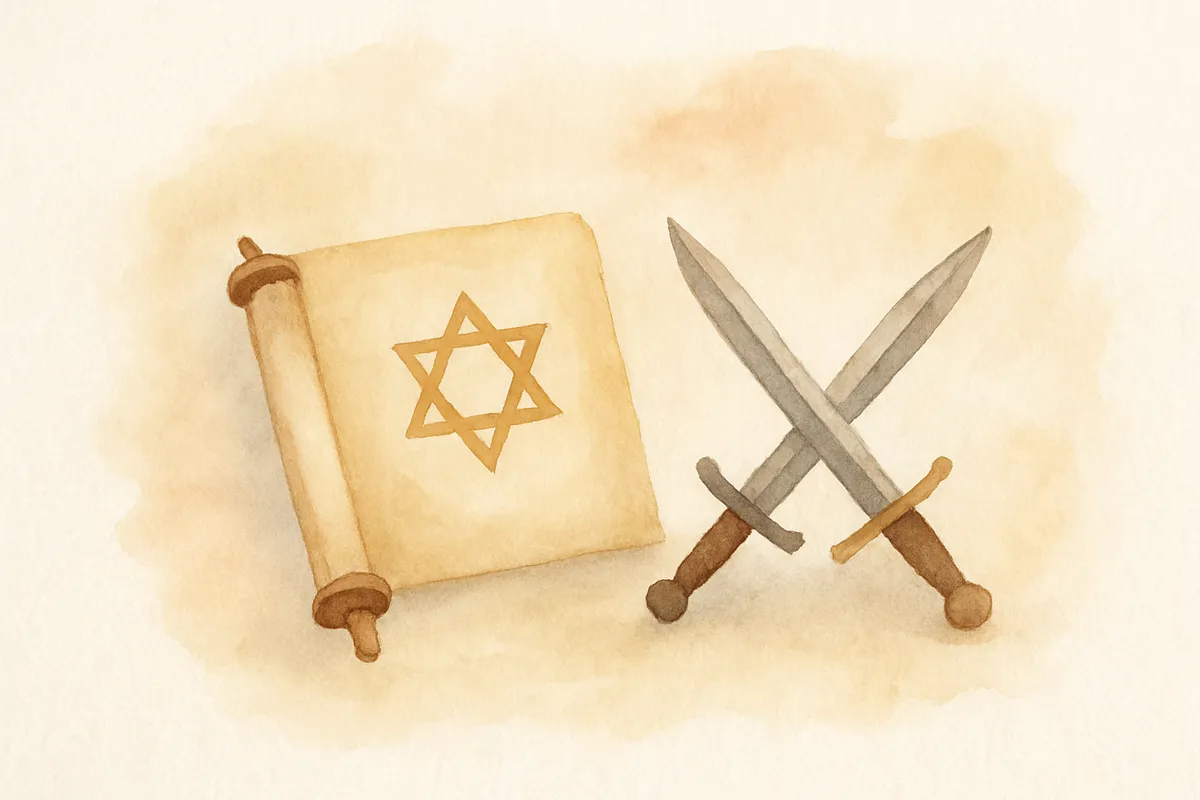
The Secrets of Redemption: Edom, Ishmael, and the Exile of Israel
Rabbi Moshe Chaim Luzzato (Ramchal) presents a profound kabbalistic and prophetic framework in which the final redemption is directly tied to Israel's struggle against the twin spiritual forces of Edom and Ishmael — widely understood in Jewish tradition as representing Christianity and Islam respectively.
Key Takeaways
- Ramchal teaches that Edom and Ishmael represent the two great spiritual-political forces opposing Israel in the final exile.
- Jewish tradition, rooted in Talmud and Midrash, consistently identifies Edom with Rome/Christianity and Ishmael with the Arab/Islamic world.
- The struggle is not merely political but metaphysical — each nation represents a corrupted spiritual force (klipa, shell) that must be overcome before redemption.
- Ramchal teaches that Israel's redemption will come precisely through and after this dual domination reaches its peak.
- This framework is not unique to Ramchal — it appears in Zohar, Midrash, Sa'adia Gaon, and many Rishonim.
The Identification of Edom and Ishmael
Edom = Rome = Christianity
The identification of Edom with Rome, and by extension Christian civilization, is ancient and pervasive in Jewish literature.
- The Talmud [Avodah Zarah 2b] and [Megillah 6a] already associate Edom with the Roman Empire.
- Rashi on Genesis 36:43 notes that Edom is the ancestor of Rome.
- The Midrash Bereishit Rabbah (65:21) explicitly states: "זו מלכות רומי — This refers to the kingdom of Rome," when discussing Esau/Edom.
- After Rome adopted Christianity, Jewish commentators naturally extended this identification to Christian civilization as a whole.
Ishmael = Arab World = Islam
- The Talmud [Nedarim 31b] and multiple Midrashim identify Ishmael with the Arab nations.
- Pirkei DeRabbi Eliezer (chapter 30) describes Ishmael's descendants dominating the Land of Israel for a period before the final redemption — understood by later commentators as a prophecy of Islamic rule.
- Sa'adia Gaon (9th-10th century) was among the earliest to explicitly identify the Islamic caliphate with the prophesied dominion of Ishmael.
Ramchal's Framework in Secrets of Redemption
The Two Forces of Exile
Rabbi Moshe Chaim Luzzato (1707–1746), in Kitzur HaKavvanot and particularly in works like Ma'amar HaGeulah (Secrets of Redemption), develops a kabbalistic architecture of history:
- Edom and Ishmael are not merely political enemies — they are the two dominant klipot (spiritual husks/forces of impurity) that suppress the kedushah (holiness) of Israel in the final exile.
- Each represents a corrupted imitation of Israel's spiritual mission:
- Edom/Christianity claims the covenant, the scriptures, and the God of Israel — but through a corrupted theological lens.
- Ishmael/Islam also claims Abrahamic descent and monotheism — but again, as a rival and distortion.
The Tension Is Theological, Not Only Political
This is a crucial point in Ramchal's thinking. The domination of Edom and Ishmael is not random geopolitical misfortune — it is spiritually structured:
- Both nations draw their power from Israel's own spiritual root, yet they obstruct Israel's fulfillment of its divine mission.
- Ramchal explains that the Shechinah (Divine Presence) itself is in exile alongside Israel, trapped beneath these two great forces.
- The redemption will involve not just a political liberation but a cosmic rectification (tikkun) in which Israel's true spiritual sovereignty is restored.
The Zohar's Contribution
The Zohar [Parshat Vayeira, 119a] contains a famous passage describing the "children of Ishmael" ruling over the Holy Land for a long period near the end of days, and then a great clash involving Edom:
"The children of Ishmael will stir great wars in the world... and the children of Edom will gather against them."
This has been read by many kabbalists as a prophecy of the clash of Christian and Islamic civilizations — with Israel caught between them — as the backdrop to the final redemption.
Why Must Israel Pass Through Both Exiles?
The Spiritual Logic
Ramchal and the kabbalistic tradition explain this through the concept of birrur (spiritual refinement/clarification):
- The sparks of holiness (nitzotzot) scattered in the world must be gathered and refined.
- Edom and Ishmael, as the two largest civilizations drawing from Abrahamic roots, contain the greatest concentration of these scattered sparks.
- Israel's exile among them — and eventual emergence from their domination — is the mechanism by which these sparks are returned to their source.
The Role of Suffering
This framework does not glorify Israel's suffering, but gives it meaning:
- The exile under these two powers is portrayed as the final, most intense stage of a long purification process.
- When the domination of Edom and Ishmael reaches its climax, the redemption (geulah) breaks through — as darkness is deepest just before dawn.
Other Authorities Who Develop This Theme
- Ramban (Nachmanides) in his commentary on Genesis and in Sefer HaGeulah discusses the four exiles and the final redemption in relation to Edom and Ishmael.
- Maharal of Prague in Netzach Yisrael elaborates on the spiritual nature of these two opposing forces and why they must ultimately yield to Israel.
- Rabbi Saadia Gaon in Emunot VeDe'ot (Book of Beliefs and Opinions) identifies the Islamic empire explicitly with Ishmael and discusses the prophetic timeline of redemption.
- Abarbanel in his messianic works similarly maps the domination of these two civilizations onto the biblical prophecies.
A Note on Humility and Interpretation
It is worth noting with care that:
- This framework is descriptive and theological, not a call to hostility toward Christians or Muslims as individuals.
- Many poskim and Jewish thinkers emphasize that individuals within these traditions can be tzaddikim (righteous people) — the critique is of the systems of power that historically oppressed Israel.
- The Ramchal's vision is ultimately universally redemptive — the end of the dominion of Edom and Ishmael benefits all humanity, as the entire world comes to recognize divine truth.
For personal guidance on the practical or theological implications of these teachings, consult your local rabbi or posek.
Sources
People Also Asked
Want to dig deeper?