The Nefesh and Its Relationship to the Body
The Nefesh and Its Relationship to the Body
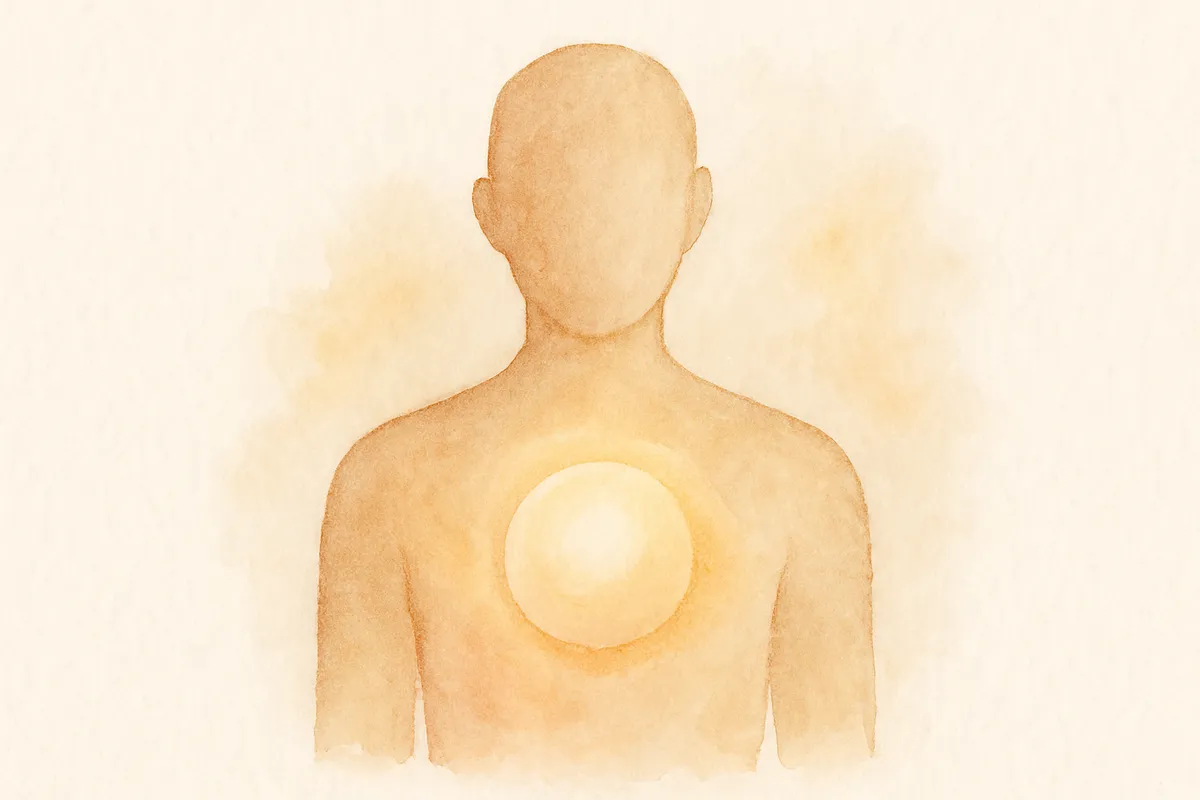
The nefesh (נֶפֶשׁ) is indeed the most "earthbound" dimension of the soul — the level directly interfacing with the physical body. But Jewish tradition doesn't frame it as merely a "projection" of faith; rather, the nefesh is understood as an objective spiritual reality regardless of whether one believes in it, much as gravity operates whether or not one believes in physics.
Key Takeaways
- The nefesh is the lowest and most body-connected of the five soul levels in Kabbalistic thought, described as the "soul of the body."
- Jewish tradition holds that the soul-body connection is an objective metaphysical reality, not merely a faith-based perception.
- The Zohar describes three governing forces in a human being — intellect, desire, and a bodily-animating force — corresponding to neshamah, appetite, and nefesh.
- Even without faith, the nefesh animates the body; the difference faith makes is in how one orients and elevates that life-force.
- The five soul levels (nefesh, ruach, neshamah, chayah, yechidah) unfold progressively, with nefesh arriving first and being most accessible.
Question
I gather that the nefesh is a projection onto the physical body with the understanding that the body is connected to God and thus has a soul. This is for people with faith well otherwise for people to come understanding, the body is just the body even though they fur at the same physical entity.
The Five Levels of the Soul (NaRaNaCH"Y)
Kabbalistic tradition, especially as systematized by the Ari (Rabbi Yitzchak Luria) and elaborated by Rabbi Yehuda Ashlag (Baal HaSulam), describes five ascending soul levels:
| Level | Hebrew | Domain | |-------|--------|--------| | 1 | Nefesh (נֶפֶשׁ) | Physical/vital life force | | 2 | Ruach (רוּחַ) | Emotional/moral life | | 3 | Neshamah (נְשָׁמָה) | Intellect and divine breath | | 4 | Chayah (חַיָּה) | Supernal life force | | 5 | Yechidah (יְחִידָה) | Absolute unity with God |
The Baal HaSulam writes explicitly:
"First comes the nefesh, which is the light of Malkhut, the smallest of all lights, and last comes the yechidah, which is the greatest of all lights."
[Introduction to Sulam Commentary, 10:2]
This ordering — abbreviated NaRaNaCH"Y — moves from bottom to top, reflecting how the soul unfolds within a person progressively.
The Nefesh as the "Soul of the Body"
The Zohar in Parashat Vayera makes a crucial three-part distinction:
"Rabbi Yehuda said: There are three governing forces in a person — the governance of intellect and wisdom, which is the power of the holy neshamah; the governance of desire, which desires all evil desires; and the governance that leads human beings and strengthens the body, which is called the nefesh of the body."
[Zohar, Vayera 21:315]
This is a profound psychological map:
- The neshamah governs through reason and divine wisdom
- The desire-force governs through appetite and passion
- The nefesh governs through bodily vitality and physical continuity
Notice that the nefesh here is not identified with desire or sin — it is the neutral animating force of the body itself.
Is the Nefesh Only Real "For Believers"?
Your question touches something very deep. You suggest that:
- For the faithful → the body is seen as connected to God via the soul
- For the secular → the body is "just the body"
Jewish tradition would gently push back on this framing. Consider two angles:
1. The Ontological Argument
The Ramchal (Rabbi Moshe Chaim Luzzatto, Derech Hashem 3:1) argues that the soul is a divine implant — "וַיִּפַּח בְּאַפָּיו נִשְׁמַת חַיִּים" ("And He breathed into his nostrils the breath of life") [Genesis 2:7] — and this breath is real whether or not the person acknowledges it. The nefesh animates you even if you deny it; you simply lose the capacity to elevate it consciously.
2. The Zohar on Death and the Body
The Zohar makes clear that the nefesh's connection to the body is so deep that even after death, the nefesh lingers near the body:
"After the soul (nefesh) departs from the body and the body remains without spirit, it is forbidden to leave it without burial..."
[Zohar, Emor 2:7]
The urgency of burial (kevurah) reflects this: the body retains a residual sacred dignity precisely because the nefesh dwelt within it. This is not a belief that changes the physics — it is a metaphysical fact the Torah legislates around.
What Faith Actually Changes
The distinction you're drawing is better framed this way:
| | Person of Faith | Person Without Faith | |---|---|---| | Nefesh present? | Yes | Yes | | Body animated? | Yes | Yes | | Awareness of soul? | Yes | Potentially not | | Ability to elevate nefesh? | Yes, through mitzvot | Diminished | | Connection to higher soul levels? | Accessible | Largely dormant |
The Kabbalistic tradition (especially Petichah LeChokhmat HaKabbalah 24:1-2) teaches that higher soul levels — ruach, neshamah, etc. — only enter a person as they grow spiritually. One who lives purely physically may have an active nefesh but undeveloped higher soul-vessels.
"When only one vessel has grown in the partzuf [spiritual configuration], only the light of nefesh enters... When a second vessel grows, the light of ruach enters as well."
[Petichah LeChokhmat HaKabbalah, 24:2]
A Deeper Insight: The Nefesh as Common Ground
Paradoxically, the nefesh may be the greatest meeting point between believers and non-believers. Every human being — regardless of faith — experiences:
- The drive to live
- The instinct to protect their body
- The felt sense of being a self
Jewish tradition says: that is the nefesh at work. The question faith opens is not whether it is there, but where it came from and where it can go.
This answer draws on the retrieved Zohar passages and the Kabbalistic sources from the Baal HaSulam, supplemented by Ramchal and traditional sources from my training. For personal spiritual guidance on the soul and embodiment, consult your local rabbi or posek.
Sources
People Also Asked
Want to dig deeper?