Mishkan
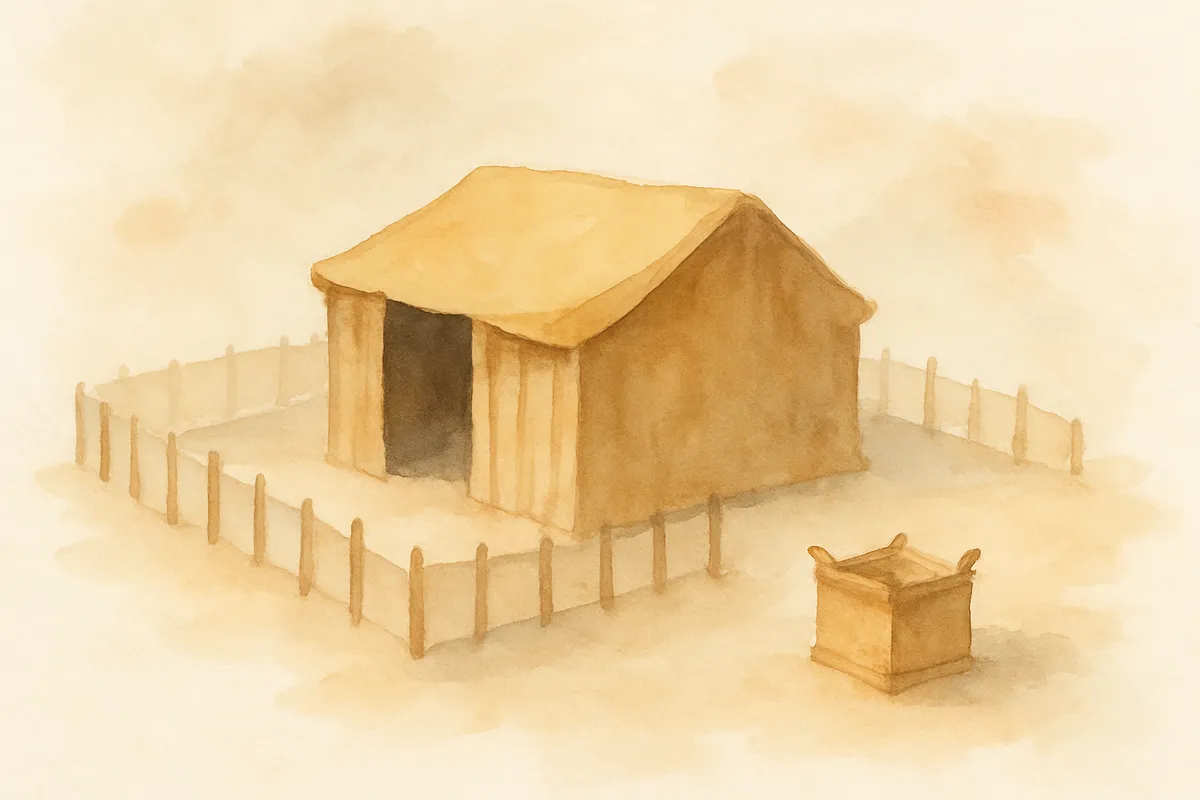
The Mishkan (מִשְׁכָּן, Tabernacle) was the portable sanctuary built by the Israelites in the wilderness, serving as the central dwelling place of God's presence (Shekhinah) among the Jewish people. It was constructed according to precise divine instructions given to Moses, and upon its completion, the Divine Presence physically filled its interior.
Key Takeaways
- The word Mishkan (מִשְׁכָּן) means "dwelling place," reflecting God's desire to dwell among His people.
- The doubling of the word mishkan in Exodus 38:21 alludes to both the earthly Tabernacle and the heavenly Temple aligned opposite it.
- Moses alone had the capacity to assemble the Mishkan, symbolizing how a Tzaddik (righteous leader) unifies the spiritual contributions of an entire community.
- The leaders (Nesi'im) who delayed their donation to the Mishkan were reprimanded — spiritual opportunities must be seized promptly.
- Each person's prayer is spiritually connected to the Mishkan, making communal worship a re-enactment of its sacred structure.
What Was the Mishkan?
The Mishkan was the portable Tabernacle constructed by the Israelites in the Sinai wilderness, serving as God's dwelling place among the people.
The Torah describes its completion and divine acceptance in Exodus 40:34:
"וַיְכַס הֶעָנָן אֶת־אֹהֶל מוֹעֵד וּכְבוֹד יְהֹוָה מָלֵא אֶת־הַמִּשְׁכָּן" "The cloud covered the Tent of Meeting, and the glory of God filled the Tabernacle." [Exodus 40:34]
This moment — the Shekhinah descending into the Mishkan — was the culmination of the entire Torah narrative from Mount Sinai. [Exodus 40:34]
The Double Language: Mishkan Mishkan
The Torah opens the account of the Mishkan's construction in Exodus 38:21 with a striking repetition:
"אֵלֶּה פְקוּדֵי הַמִּשְׁכָּן מִשְׁכַּן הָעֵדֻת" "These are the accounts of the Tabernacle, the Tabernacle of Testimony." [Exodus 38:21]
The Kli Yakar (Rabbi Shlomo Ephraim Luntschitz) explains the double mishkan in two ways:
-
The Heavenly Parallel: The earthly Mishkan is aligned (mekuvan) directly opposite the Heavenly Temple above — "the place You made to dwell in, O Lord." [Kli Yakar, Exodus 38:21]
-
Collateral for Israel's Sins: The word mishkan shares a root with mashkon (מַשְׁכּוֹן), meaning "collateral" or "pledge." The Midrash teaches that the Mishkan (and later the Temple) was given as a kind of pledge — when Israel sinned, it was the Temple that was "repossessed" rather than Israel being destroyed. [Kli Yakar, Exodus 38:21]
Moses and the Assembly of the Mishkan
A remarkable Midrashic tradition notes that Moses alone was able to erect the Mishkan — no ordinary Israelite could lift its beams.
Rebbe Nachman of Breslov (Likutei Moharan) elevates this into a profound spiritual teaching:
"Each and every prayer that everyone prays is like a limb of the Shekhinah, which are limbs of the Mishkan... no Israelite was able to put it up piece by piece, each one in its place, except Moses alone." [Likutei Moharan 2:6:2]
The Tzaddik HaDor (righteous leader of the generation) functions like Moses — gathering the individual prayers and spiritual contributions of the people and unifying them into a complete, elevated whole. [Likutei Moharan 2:6:2]
The Menorah: The Hardest Vessel to Design
Among all the vessels of the Mishkan, the Menorah (seven-branched candelabra) presented Moses with the greatest difficulty.
Bamidbar Rabbah teaches:
"You see that Moses struggled [nitkasha] with the design of the Menorah more than all the other vessels of the Mishkan, until the Holy One showed him with a finger." [Bamidbar Rabbah 15:4]
God literally demonstrated the Menorah's design visually to Moses — just as He showed him the new moon (Rosh Chodesh) and the categories of pure and impure animals. This parallels a recurring Torah theme: some Divine truths can only be transmitted by direct divine demonstration, beyond the reach of human intellect alone.
The Leaders' Delay: A Cautionary Tale
The Kli Yakar highlights an important ethical lesson about zeal in mitzvah performance from the leaders' (Nesi'im) behavior:
Because the leaders were negligent — waiting until the end to bring their donation — the letter yud (י) was removed from their name in the Torah, written deficiently as הַנְּשִׂאִם instead of הַנְּשִׂיאִים. [Kli Yakar, Exodus 35:27]
The danger of their delay? Had the people already donated everything needed, the leaders would have had no portion in the Mishkan at all. The lesson: when a mitzvah presents itself, act with alacrity (zerizut).
Each Person's Unique Contribution
The Mei HaShiloach (the Izhbitzer Rebbe) connects the census of the Israelites to the Mishkan's spiritual architecture:
"God allotted goodness and life to each individual, and no one is similar to his fellow." [Mei HaShiloach, Bamidbar 3]
Just as each plank and vessel of the Mishkan had its unique and irreplaceable place, so too does every Jewish soul carry a unique spiritual mission that no other person can fulfill.
Broader Significance
The Mishkan is not merely a historical artifact — it is a living spiritual blueprint:
- The Mishkan mirrors the cosmos (the seven days of Creation correspond to the seven statements of Moses completing the Mishkan — noted by Ramban).
- It mirrors the human body (Nefesh HaChaim by Rav Chaim of Volozhin develops this).
- It mirrors communal prayer — as Rebbe Nachman teaches, every Jew's prayer is a limb of the Mishkan. [Likutei Moharan 2:6:2]
The ultimate goal of the Mishkan was expressed in God's command: "וְעָשׂוּ לִי מִקְדָּשׁ וְשָׁכַנְתִּי בְּתוֹכָם" — "And they shall make Me a sanctuary, and I will dwell among them" [Exodus 25:8] — a verse the Sages note says "among them," not "among it," teaching that the true Mishkan is built within the heart of every Jew.
Sources
People Also Asked
Want to dig deeper?