If one wears his talis katan to sleep, does he make s bracha on it in the 'morning
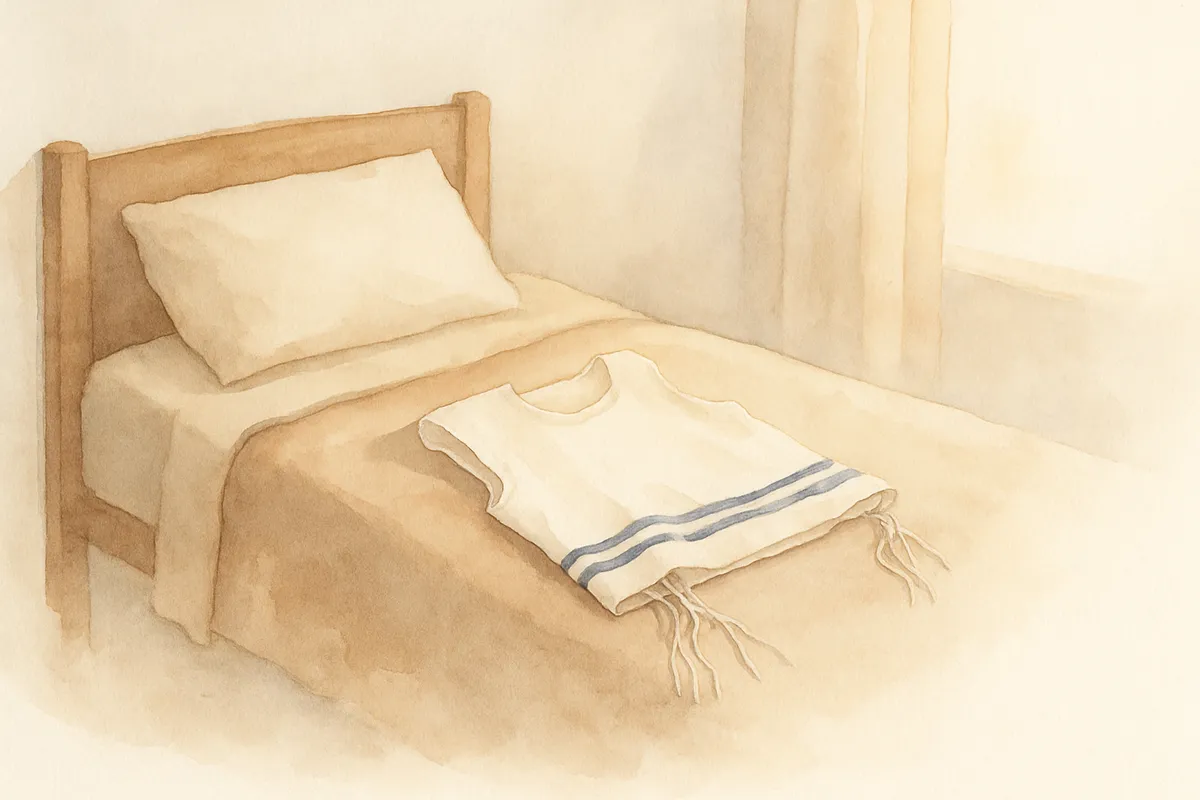
Wearing a Tallis Katan to Sleep: Making a Bracha in the Morning
The question of whether to recite a bracha (blessing) on a tallis katan (small four-cornered garment) worn through the night is a matter of significant halachic debate. The dominant Ashkenazic practice is to remove the garment and put it back on in the morning in order to make a bracha, while those who follow Sephardic custom generally do not recite a new bracha if the garment was worn continuously through the night.
Key Takeaways
- The core issue is whether sleeping constitutes an interruption (hefsek) significant enough to require a new bracha upon waking.
- Ashkenazic practice (following the Rema) is to remove and replace the tallis katan in order to make a bracha with intention.
- Sephardic practice (following the Beit Yosef/Shulchan Aruch) holds that no new bracha is made since the garment was never removed.
- Some Ashkenazic authorities hold that even if not removed, a bracha should still be recited upon waking.
- The deeper question involves whether mitzvos require renewed conscious intent (kavanah) after unconsciousness.
The Core Halachic Question
The bracha on tzitzis is: "Blessed are You... Who has sanctified us with His commandments and commanded us concerning the commandment of tzitzis."
The question is: does wearing the garment through the night create a new obligation for a bracha in the morning, or does the original bracha cover continuous wearing?
Two sub-questions drive this dispute:
- Does sleep constitute a sufficient interruption (hefsek) to nullify the original bracha?
- Does tzitzis as a daytime mitzvah (mitzvat aseh shehazman grama) require renewed fulfillment — and thus a renewed bracha — with the start of each new day?
The Opinions
The Beit Yosef / Shulchan Aruch (Sephardic Practice)
Rabbi Yosef Karo in the [Shulchan Aruch, Orach Chaim 8:14] rules that if one slept in one's tallis katan and did not remove it, no new bracha is recited in the morning.
His reasoning: since the garment was never taken off, the original bracha still applies — there was no interruption that would void it.
The Rema (Ashkenazic Practice)
Rabbi Moshe Isserles (Rema) in his gloss to [Shulchan Aruch, Orach Chaim 8:14] disagrees and writes that the proper practice is to remove the tallis katan in the morning and put it back on, thereby enabling a new bracha.
His reasoning draws on the view that:
- Tzitzis is primarily a daytime obligation — nighttime wearing is technically exempt
- Each new day therefore represents a renewed obligation requiring a fresh bracha
- Removing and replacing ensures the bracha is made with full kavanah (intention)
The Mishnah Berurah
Rabbi Yisrael Meir Kagan (Chofetz Chaim) in [Mishnah Berurah 8:42] supports the Ashkenazic practice of removing and replacing, emphasizing that one should have explicit kavanah (intention) when putting it back on in the morning.
He notes that ideally one should take it off, look at the tzitzis strings, and put it on fresh — making the bracha with full consciousness.
The Opinion of the Gra
The Vilna Gaon (Gra) held a stricter view — that a bracha should be recited even without removing the garment, since the new day creates a new obligation. This is a minority Ashkenazic position but is respected.
The Aruch HaShulchan
Rabbi Yechiel Michel Epstein in [Aruch HaShulchan, Orach Chaim 8:28] acknowledges the debate but rules that the established Ashkenazic custom to remove and replace is the correct approach, and one who does so fulfills the mitzvah in the most ideal (l'chatchilah) manner.
Practical Summary by Community
| Community | Practice | |---|---| | Sephardim | Do not remove; no new bracha recited | | Ashkenazim | Remove and replace in the morning; recite bracha | | Those who forget to remove (Ashkenazic) | Some say recite bracha anyway; others say no bracha — when in doubt, do not recite to avoid a bracha l'vatala (blessing in vain) |
The Deeper Dimension
There is a beautiful mussar (ethical) point embedded in this halacha. The requirement to consciously re-don the tallis katan each morning reflects the principle that mitzvos should not become mere habit. The act of removing and replacing — pausing to look at the tzitzis — is an act of renewed dedication each day, reminding us of the 613 commandments symbolized by the tzitzis [Rashi, Numbers 15:39].
For personal guidance on your specific practice, consult your local rabbi or posek.
Sources
People Also Asked
Want to dig deeper?