Explain the hidden meaning of the three opinions of what was the etz hadaat (wheat, grapevine, fig)
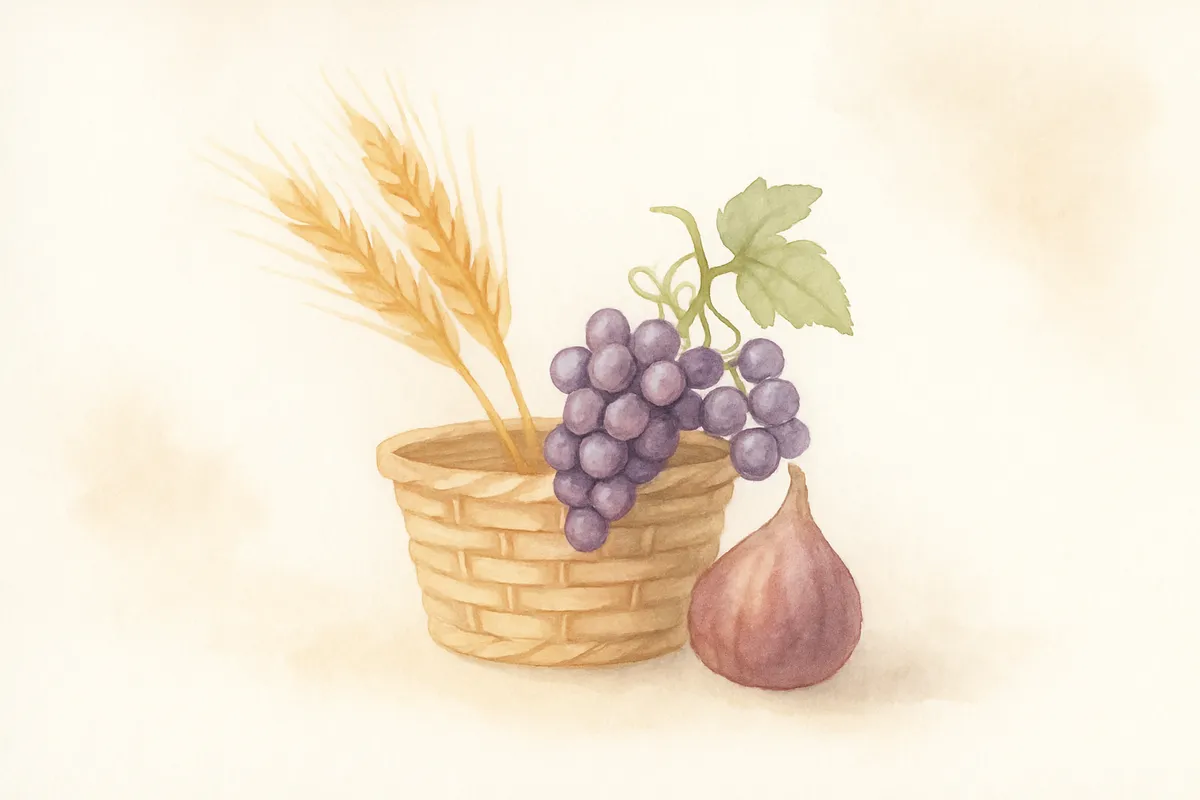
The identity of the Etz HaDa'at (Tree of Knowledge) is one of the most fascinating aggadic debates in the Talmud, and the three opinions — wheat, grapevine, and fig — are not random guesses but deeply symbolic teachings about the nature of sin, knowledge, and human nature.
Key Takeaways
- The Talmud in Sanhedrin 70a-b records three opinions: Rabbi Meir (grape/wine), Rabbi Nehemiah (fig), and Rabbi Yehuda (wheat).
- Each opinion reflects a different understanding of what type of da'at (knowledge/desire) caused humanity's downfall.
- The fig opinion is uniquely supported by the pshat (plain text) of Genesis 3:7, where Adam and Eve immediately cover themselves with fig leaves.
- Each opinion connects the sin to a recurring source of human weakness: intoxication, sexual desire, or material ambition.
- The Talmud itself suggests no single answer is definitive — the hidden identity preserves the tree's mystery intentionally.
The Talmudic Source
The debate appears in [Sanhedrin 70a-b], where the Rabbis ask: מה היה אותו האילן? — "What was that tree?" Three Tannaim offer competing answers, each supported by textual or thematic reasoning.
The Three Opinions and Their Hidden Meanings
🍇 Opinion 1: The Grapevine — Rabbi Meir
Rabbi Meir holds that the Etz HaDa'at was a grapevine, and that its fruit was grapes, which produce wine.
The textual hook: The verse says "ותתן גם לאישה עמה ויאכל" — "she gave also to her husband and he ate" [Genesis 3:6]. Rabbi Meir argues: "What brings the most misery to humanity? Wine."
The hidden meaning: Wine (yayin) represents the force of intoxication — the loss of rational self-control. The sin of the Etz HaDa'at was not simply eating; it was the suspension of divine reason (the sechel) in favor of immediate sensory pleasure.
- Wine appears throughout Torah as the substance that leads to catastrophic sin: Noach's drunkenness leads to disgrace [Genesis 9], Lot is intoxicated before forbidden relations [Genesis 19], and the ben sorer u'moreh (rebellious son) [Sanhedrin 70a — from our retrieved sources] is defined by his consumption of meat and wine.
- The deeper teaching: the original sin was the first intoxication — being "drunk" on desire, seduced by the serpent's promise of godlike knowledge, and losing sober judgment.
- Wine is called yayin, gematrically associated with sod (secret/mystery = 70), suggesting that the grape conceals hidden truths that intoxicate when misused.
🌾 Opinion 2: Wheat — Rabbi Yehuda
Rabbi Yehuda holds the tree was wheat — or more precisely, that chittah (wheat) was originally a great tree, not a grass.
The textual hook: The word chittah (wheat) shares a root with chet (sin), and the Midrash plays on this wordplay extensively.
The hidden meaning: Wheat represents civilization, intellect, and ambition — the very forces that can elevate or destroy humanity.
- The Talmud notes [Sanhedrin 70b]: "A child does not know how to call out 'father' and 'mother' until it tastes grain." Wheat awakens self-consciousness and ego — the very thing that made Adam and Eve aware of their nakedness.
- Wheat is the foundation of bread (lechem), which represents human civilization — the transformation of raw nature through labor and intellect. The sin of the Etz HaDa'at in this view was the premature awakening of human ambition — grasping for the fruits of civilization before humanity was spiritually mature enough to handle them.
- The Maharal of Prague deepens this: wheat represents the yetzer (drive) toward building and acquiring. Before the sin, Adam was meant to receive; after eating, he must labor — "בְּזֵעַת אַפֶּיךָ תֹּאכַל לֶחֶם" — "By the sweat of your brow you shall eat bread" [Genesis 3:19]. The punishment mirrors the sin: he grabbed wheat prematurely, so wheat becomes the symbol of his toil.
- This opinion also teaches that knowledge without Torah is dangerous — wheat (intellect/civilization) ungoverned by divine command destroys rather than builds.
🌿 Opinion 3: The Fig — Rabbi Nehemiah
Rabbi Nehemiah holds the tree was a fig tree, and this opinion has the strongest pshat support.
The textual hook: Immediately after eating, "וַיִּתְפְּרוּ עֲלֵה תְאֵנָה" — "they sewed fig leaves together" [Genesis 3:7]. Why did they immediately reach for fig leaves specifically? Because, says Rabbi Nehemiah, the remedy was right there — they grabbed leaves from the very tree of their sin.
The hidden meaning: The fig represents sexual awareness and desire — the most intimate and powerful of human drives.
- The fig is associated in rabbinic literature with erotic knowledge and fertility. The immediate result of eating was shame about nakedness — a sexual awakening. This connects the sin directly to yetzer ha'ra (the evil inclination) in its most primal sense.
- The Midrash Tanchuma on Noach [retrieved source 4] makes this explicit, connecting Eve's sin to blood-guilt and the mitzvot of niddah and challah — suggesting the sin had a fundamentally physical/intimate dimension.
- There is a deeper Kabbalistic reading: the fig (te'enah) is associated with Malchut (the lowest divine attribute) in the Zohar, and with the concealment of holiness. The fig's many seeds represent the complexity of desire — not a single overwhelming temptation but a network of small, seemingly innocent impulses that accumulate into transgression.
- Significantly, the fig is the one fruit that ripens gradually — there is no sudden moment when a fig becomes ripe. This teaches that the sin of the Etz HaDa'at was not a single catastrophic moment but a gradual slide into temptation, beginning with the serpent's conversation and culminating in eating.
Why Three Opinions? The Meta-Teaching
The Maharal (Chiddushei Aggadot, Sanhedrin 70b) explains that the three opinions are not contradictory — they represent three dimensions of the same sin:
| Tree | Dimension of Sin | Human Faculty Corrupted | |------|-----------------|------------------------| | 🍇 Grape | Intoxication / loss of reason | Sechel (intellect) | | 🌾 Wheat | Ambition / premature civilization | Ratzon (will/drive) | | 🌿 Fig | Sexual desire / intimate knowledge | Nefesh (animal soul) |
Together, they describe the complete human being going wrong at every level — mind, will, and body.
The Ramban's Perspective
The Ramban [Ramban on Genesis 2:9, retrieved source 2] notes the careful language of the Torah — "בְּתוֹךְ הַגָּן" (in the middle/center of the garden) — suggesting that both the Etz HaChaim (Tree of Life) and Etz HaDa'at were centrally located, at the very heart of the garden.
This is not coincidental. The center of the garden represents the center of existence — the axis between the divine and human realms. That the sin occurred at the center means it struck at the core of what humanity was created to be.
A Final Hidden Teaching
The Talmud deliberately leaves the question unresolved — and the Ben Ish Chai notes that this itself is a sod (hidden teaching): God deliberately concealed the
Sources
People Also Asked
Want to dig deeper?