Can athletic shoes with some leather trim allowed to be worn on tisha b'av?
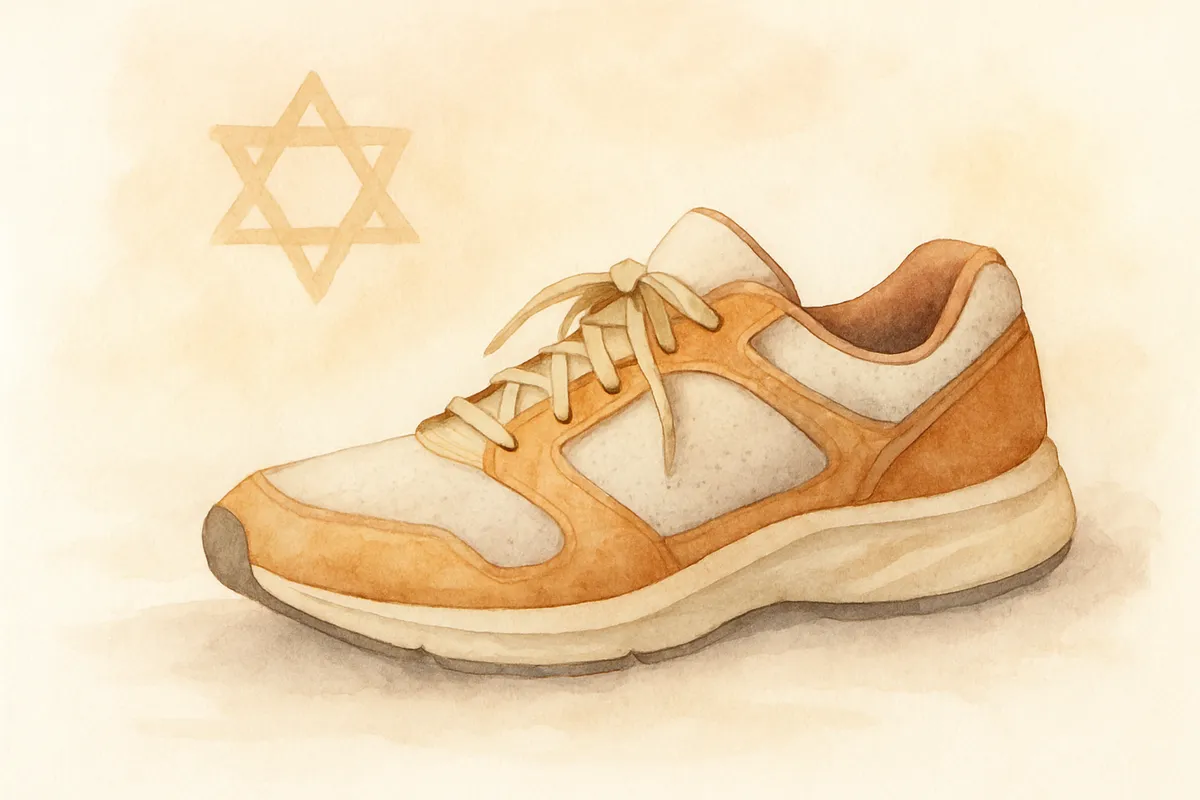
Athletic shoes with leather trim occupy a debated area in halacha (Jewish law). The core prohibition on Tisha B'Av is wearing leather shoes, and most authorities hold that a shoe made primarily of non-leather material — even with some leather trim — is generally permitted, though some authorities encourage stricter practice. The key factor is whether the shoe provides the comfort and protection of a full leather shoe.
Key Takeaways
- The Torah-based prohibition is specifically against leather footwear, derived from mourning practices.
- Athletic shoes that are primarily synthetic/fabric, even with leather trim, are generally permitted by many authorities.
- The spirit of the prohibition is to feel the hardness of the ground — a fully cushioned athletic shoe may still be problematic for some opinions.
- Some authorities rule stringently on any shoe that provides full foot protection, regardless of material.
- When in doubt, wearing simple cloth or rubber house shoes is the most cautious approach.
The Source of the Prohibition
The prohibition of wearing shoes on Tisha B'Av is rooted in the practices of mourning and affliction. The Torah mentions:
"בָּנִים אַתֶּם לַיהֹוָה אֱלֹהֵיכֶם לֹא תִתְגֹּדְדוּ וְלֹא תָשִׂימוּ קׇרְחָה בֵּין עֵינֵיכֶם לָמֵת" "You are children of the LORD your God; you shall not gash yourselves or shave the front of your heads because of the dead." [Deuteronomy 14:1]
This verse establishes the broader framework of mourning restrictions for Israel. Similarly, in the context of Aaron's sons' deaths, Moses commands:
"רָאשֵׁיכֶם אַל־תִּפְרָעוּ וּבִגְדֵיכֶם לֹא תִפְרֹמוּ" "Do not bare your heads and do not rend your clothes." [Leviticus 10:6]
These verses inform the Rabbinic understanding of mourning-related prohibitions, including the removal of shoes.
What Exactly Is Prohibited?
The Mishnah in Yoma (73b) lists the five inuyim (afflictions) of Yom Kippur — which are applied equally to Tisha B'Av — including the prohibition of נעילת הסנדל (ne'ilat hasandal), "wearing the sandal."
The classic understanding is that this refers specifically to leather footwear, as leather shoes were the standard comfortable footwear in Talmudic times.
The Question of Non-Leather or Mixed-Material Shoes
Peninei Halacha (a widely used contemporary halachic work by Rabbi Eliezer Melamed) addresses this directly:
"It is therefore forbidden to walk on Tisha B'Av in shoes and sandals that one normally walks in outside in a place with stones, and it does not matter what material they are made from. However, it is permitted to walk in simple cloth or rubber house shoes that one does not normally walk in outside in a place with stones, because one feels the hardness of the ground in them." [Peninei Halakhah, Zemanim 10:8:4]
This is a significant ruling. Rabbi Melamed holds that the material alone is not the determining factor — rather, it is whether the shoe provides full outdoor protection and comfort.
Opinions on Athletic Shoes with Leather Trim
Lenient View
Many poskim (halachic decisors), including those who follow Rav Ovadia Yosef and others in the Sephardic tradition, permit non-leather shoes broadly, focusing on the ikkar (main substance) of the shoe being non-leather.
Stringent View
Peninei Halacha and others argue that a fully cushioned, protective athletic shoe — even if mostly synthetic — defeats the purpose of feeling discomfort, and should be avoided. The earlier edition of Peninei Halacha even stated that the lenient view was the accepted ruling but encouraged those who could to be stricter.
Middle Ground
A shoe with minor leather trim that is otherwise a standard athletic shoe falls into a gray area. Most authorities would permit it technically, but encourage the machmir (stricter) approach of wearing simple canvas or rubber-soled shoes instead.
Practical Bottom Line
- ✅ Permitted by most: Athletic shoes made primarily of synthetic/mesh material, even with small leather accents
- ⚠️ Discouraged by some: Fully cushioned athletic shoes that provide complete foot protection
- ✅ Best practice: Simple cloth sneakers, canvas shoes, or rubber Crocs-style shoes that let you feel the ground
For personal guidance, consult your local rabbi or posek.
Sources
People Also Asked
Want to dig deeper?