Cain and Abel: How does the story of Cain and Abel address themes of sibling rivalry, jealousy, and the consequences of sin?
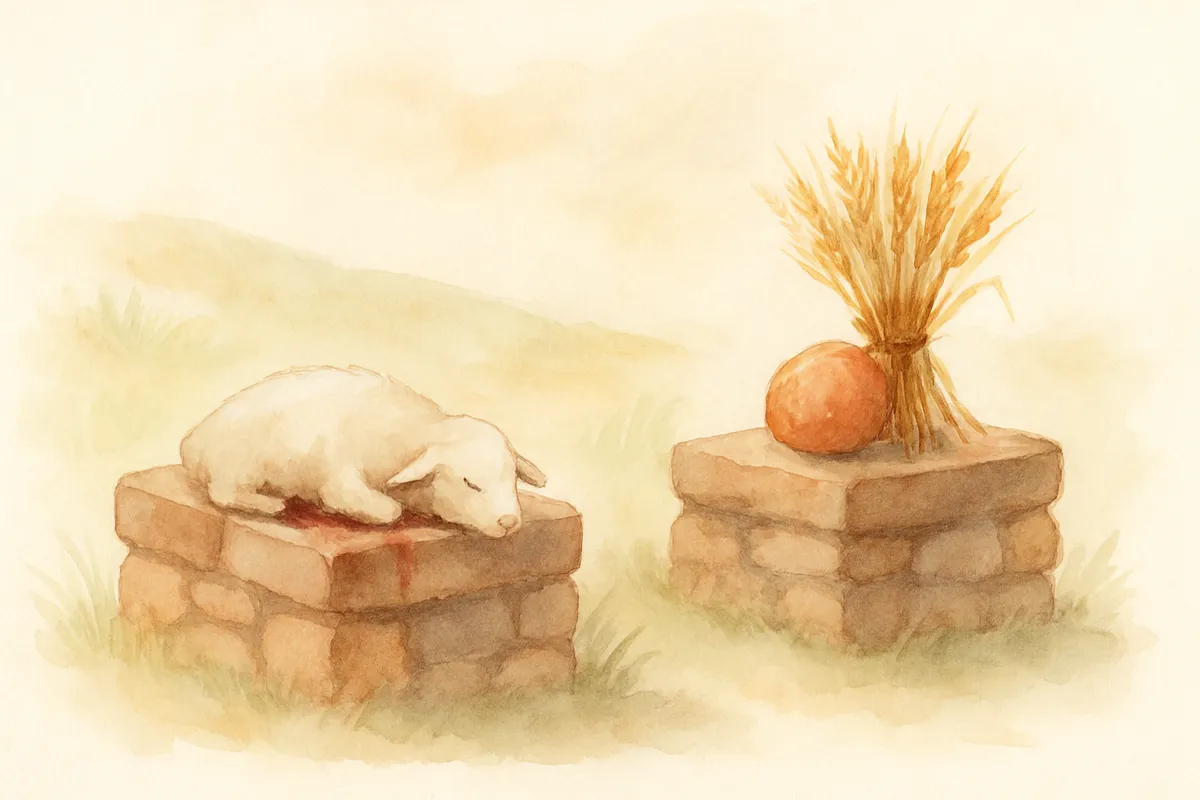
The story of Cain and Abel is one of the Torah's most profound explorations of the human capacity for jealousy, moral failure, and divine accountability. The narrative traces how unchecked envy escalates from wounded pride to fratricide, establishing foundational principles about sin, free will, and consequence that resonate throughout all of Torah thought.
Key Takeaways
- Jealousy over divine favor — not material competition — is the root cause of the world's first murder, teaching that spiritual envy is among the most destructive forces.
- God's warning to Cain before the murder demonstrates that sin is not inevitable; free will and self-mastery are always available.
- Cain's punishment is exile and wandering, not death — raising deep questions about divine justice, mercy, and teshuva (repentance).
- "Am I my brother's keeper?" becomes one of Torah's most haunting rhetorical inversions — the correct answer being an emphatic yes.
- The altar on which Cain and Abel brought offerings is identified by Rambam as the same sacred site used by Adam, Noah, Abraham, and ultimately the Temple — connecting this story to all of Jewish history.
The Narrative: Pshat (Plain Meaning)
Birth and Vocation
The Torah introduces the brothers with striking economy [Genesis 4:1-2]:
וְהָאָדָם יָדַע אֶת־חַוָּה אִשְׁתּוֹ וַתַּהַר וַתֵּלֶד אֶת־קַיִן "And the man knew Eve his wife, and she conceived and bore Cain..."
Cain (Kayin) works the soil; Abel (Hevel) tends flocks. Their very names carry meaning — Kayin suggests acquisition (from kaniti, "I have acquired"), while Hevel literally means vapor or breath, perhaps foreshadowing Abel's brief life [Rashi, Genesis 4:1].
The Offerings and Divine Rejection
[Genesis 4:3-5] records that Cain brought mipri ha'adamah — "from the fruit of the ground" — while Abel brought mibechorot tzono umechelbeihein — "from the firstborn of his flock and their fat portions." God accepted Abel's offering but rejected Cain's.
Why the rejection? The Torah does not say explicitly, creating a rich interpretive debate:
- Rashi [Genesis 4:3] notes that Cain brought inferior produce — "from the leftover of his food" — while Abel brought the finest firstborn animals. The difference was not the type of gift but the quality of heart behind it.
- Midrash Tanchuma [Bereshit 9:1] specifies that Cain brought flaxseed — the most inferior of his crops — reinforcing the theme of half-hearted giving.
- Sforno suggests the rejection was also tied to Cain's attitude: he brought an offering without prior instruction or deep devotion, while Abel acted with genuine spiritual initiative.
This establishes the Torah's foundational principle: God desires the heart, not merely the act.
The Anatomy of Jealousy
From Disappointment to Rage
[Genesis 4:5] states: וַיִּחַר לְקַיִן מְאֹד וַיִּפְּלוּ פָּנָיו — "And it burned greatly for Cain, and his face fell."
Rambam (Maimonides) in his Shemonah Perakim (Eight Chapters) uses Cain as the paradigmatic case of a person who allows a negative emotion to fester rather than address its root cause. The "fallen face" is a psychologically precise description — depression born of envy.
God's Warning: The Opportunity to Choose
Crucially, before the murder, God intervenes and addresses Cain directly [Genesis 4:6-7]:
לָמָּה חָרָה לָךְ... הֲלוֹא אִם־תֵּיטִיב שְׂאֵת וְאִם לֹא תֵיטִיב לַפֶּתַח חַטָּאת רֹבֵץ "Why are you angry?... If you do well, will you not be lifted up? And if you do not do well, sin crouches at the door."
This verse is one of the Torah's clearest affirmations of free will (bechirah chofshit). Rashi [Genesis 4:7] explains that "sin crouches at the door" means the yetzer hara (evil inclination) is always lying in wait — but you have the power to master it. Or HaChaim (R. Chaim ibn Attar) adds that God's question is not punitive but therapeutic — an invitation to self-examination before it is too late.
The Murder and Its Aftermath
The Elliptical Verse
[Genesis 4:8] contains one of the most discussed textual mysteries in all of Torah:
וַיֹּאמֶר קַיִן אֶל־הֶבֶל אָחִיו — "And Cain said to Abel his brother..."
The verse opens with "and Cain said" — but never records what he said. The Torah then simply states they went to the field and Cain killed Abel. This silence is deliberate:
- Targum Yerushalmi (Palestinian Targum) fills the gap, suggesting Cain and Abel argued about divine justice — specifically, whether the world was governed fairly.
- Midrash Bereishit Rabbah [22:7] offers three versions of the argument: a dispute over territory, over the site of the Temple, or over whose offering should be accepted.
- The silence of the text teaches that words leading to murder need not be recorded — what matters is the act and its consequences.
"Am I My Brother's Keeper?"
After the murder, God asks [Genesis 4:9]:
אֵי הֶבֶל אָחִיךָ — "Where is Abel your brother?" וַיֹּאמֶר לֹא יָדַעְתִּי הֲשֹׁמֵר אָחִי אָנֹכִי — "I do not know. Am I my brother's keeper?"
This is Cain's double sin: first murder, then lying to God. But the Sages see deeper meaning:
- Netziv (R. Naftali Zvi Yehuda Berlin) notes that Cain's question, "Am I my brother's keeper?", is actually the Torah's way of establishing the opposite principle — we are absolutely responsible for one another. The question is meant to be answered with revulsion.
- The Talmud [Sanhedrin 37a] derives from the plural demei achicha ("bloods of your brother") that "whoever destroys a single soul, Scripture accounts it as if he destroyed an entire world." The first murder thus becomes the philosophical foundation for the infinite value of human life.
The Voice of the Blood
God responds [Genesis 4:10]:
קוֹל דְּמֵי אָחִיךָ צֹעֲקִים אֵלַי מִן־הָאֲדָמָה "The voice of your brother's bloods cries out to Me from the ground."
Rashi [Genesis 4:10] notes the plural demei (bloods, not blood) — Abel's blood, and the blood of all his potential descendants who would never be born. Every murder silences an entire future.
The Consequences of Sin
Cain's Punishment
[Genesis 4:11-12] records a layered punishment:
- Cursed from the ground — the very earth that drank Abel's blood rejects Cain.
- Na va'nad (נָע וָנָד) — he becomes a restless wanderer, unable to find home or rest.
**Ramban
Sources
People Also Asked
Want to dig deeper?