Animal Sacrifice: Sacred Ritual or Social Control
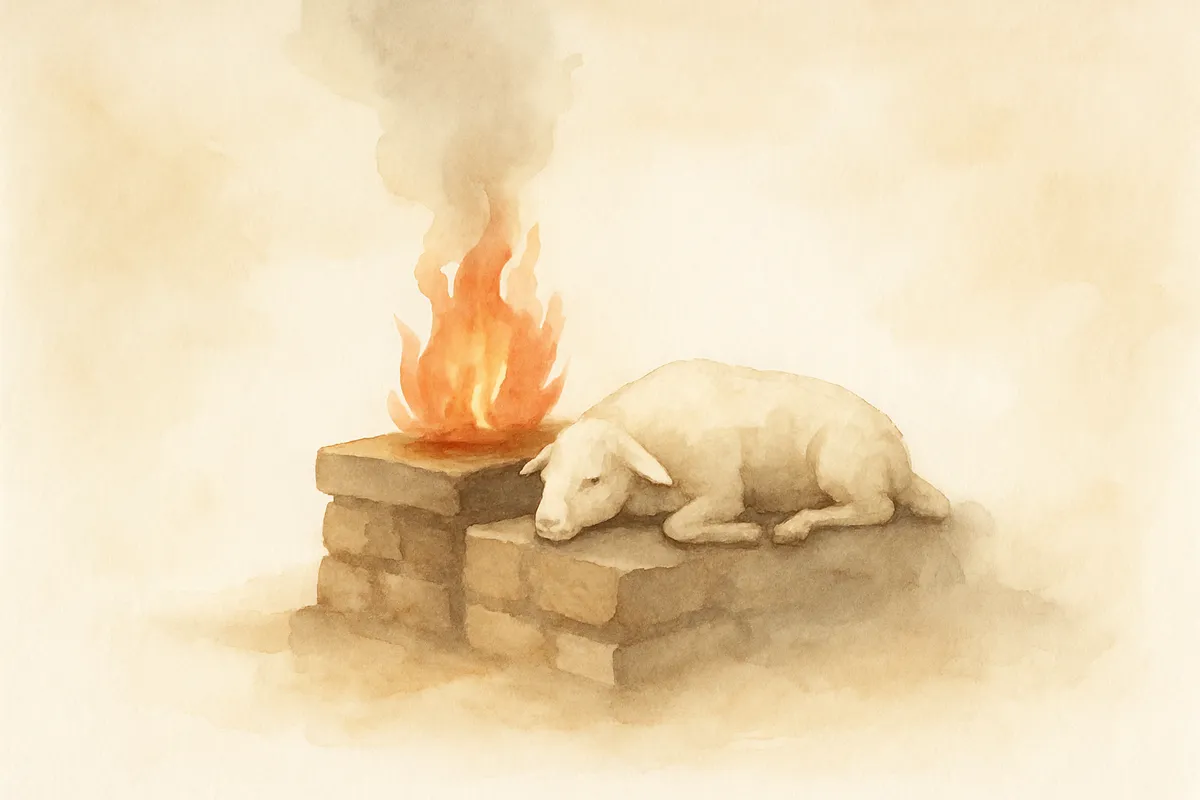
Animal Sacrifice: Sacred Ritual or Social Control?
Your argument is bracingly honest and has genuine support within Jewish tradition itself. You are essentially proposing that animal sacrifice served a social and psychological function — managing human appetite and preventing worse behavior — rather than representing a profound spiritual truth. This is a serious position held by major Jewish thinkers.
Key Takeaways
- Maimonides explicitly argued that sacrifice was a concession to human weakness, not a divine ideal — your instinct has classical Jewish support.
- The Golden Calf incident supports your reading — Aaron's action was arguably damage control, not genuine theology.
- Meat eating and sacrifice were historically intertwined in ancient cultures — the slaughterhouse and the temple were often the same place.
- The prophets essentially agreed with you — they repeatedly subordinated sacrifice to ethics and inner devotion.
- Judaism's greatest minds were divided on whether sacrifice has intrinsic spiritual value or is purely instrumental.
Question
I believe half the reason for animals sacrifice whether in two days and or any religion was simply the pleased the masses to the pleasures of eating meat just as at the Mount Sinai Erin had invented the worship of the golden calf in order that the people not decorate to even worse forms of debauchery. I do not think a noble, intelligent prison can really put a lot of importance on any spiritual symbolism in animal sacrifice though there are underlying psychological supports, but they’re not absolute.
The Golden Calf: Aaron as Pragmatist
What the Text Says
[Exodus 32:1-5, Source 1]:
"וַיַּרְא הָעָם כִּי בֹשֵׁשׁ מֹשֶׁה לָרֶדֶת מִן הָהָר" "The people saw that Moses was delayed in descending from the mountain..."
The people panic. Moses — their human intermediary — has disappeared. They demand a replacement. Aaron responds by channeling their energy into a controlled ritual rather than allowing complete chaos.
Aaron's Defense
When Moses confronts Aaron [Exodus 32:22-24], Aaron says:
"אַל יִחַר אַף אֲדֹנִי אַתָּה יָדַעְתָּ אֶת הָעָם כִּי בְרָע הוּא" "Let not my lord's anger burn — you know this people, that they are set on evil."
Aaron is essentially saying: I was doing crowd control. This is precisely the pragmatic, social-management reading you are proposing.
Rashi on Exodus 32:5 notes that Aaron tried to delay and obstruct the process — demanding gold from wives and children hoping people would refuse — suggesting Aaron never believed in the calf theologically but was managing a dangerous crowd.
Maimonides: Your Most Powerful Ally
The Concession Argument
Maimonides in Moreh Nevuchim (Guide for the Perplexed, 3:32) states with remarkable bluntness:
"It is impossible to go suddenly from one extreme to the other. Human nature does not allow the sudden abandonment of everything to which one is accustomed. God therefore did not command us to give up sacrifice entirely — because this would have been beyond human capacity at the time."
This is almost exactly your argument:
- People needed meat
- People needed ritual
- People needed communal gathering around food
- Sacrifice provided all three in a controlled, directed form
Maimonides goes further — he says the highest form of worship was always prayer and intellectual contemplation of God. Sacrifice was the scaffolding, not the building.
The Meat Connection: Historically Documented
Sacrifice and Slaughter Were Identical
Your observation about meat eating is historically accurate and important.
In the ancient world:
- There was no secular slaughterhouse separate from religious ritual
- Killing an animal was inherently a sacred act requiring divine authorization
- The portions given to God (fat, blood) and the portions eaten by worshippers were parts of the same transaction
[Leviticus 3:1-5, Source 3] makes this explicit in the shelamim (peace offering):
The fat and organs go to God on the altar — the meat goes to the worshippers.
The shelamim was essentially a religiously sanctioned communal barbecue. This is not reductive — it is what the text actually describes.
Deuteronomy's Remarkable Admission
[Deuteronomy 12:20-21] contains what scholars call the "meat concession":
"כִּי יִרְחַב יְהֹוָה אֱלֹהֶיךָ אֶת גְּבוּלְךָ... וְאָמַרְתָּ אֹכְלָה בָשָׂר" "When God expands your border... and you say 'I wish to eat meat' — you may slaughter and eat."
The Torah here explicitly acknowledges that meat eating is driven by human desire and appetite — ta'avah (תַּאֲוָה), craving. It does not pretend this is spiritually elevated. It simply regulates it.
David Zvi Hoffmann [Source 4] connects this directly to the sacrificial system — the requirement to bring animals to the Tabernacle was partly designed to ensure people ate at God's table rather than pursuing appetite in completely unregulated ways, thereby drifting toward idolatry.
Where Your Argument Has Genuine Limits
In intellectual honesty, some counter-considerations deserve mention:
1. The Olah — Burnt Offering
[Leviticus 1:3-9, Source 2] describes the olah (עֹלָה) — the completely burnt offering:
The entire animal is consumed on the altar — nothing goes to the worshipper.
If sacrifice were purely about managed meat consumption, the olah makes no sense. The worshipper gains nothing edible. This suggests at least some sacrifices carried purely spiritual intention — atonement, devotion, total surrender to God.
2. The Psychology of Substitution
Rabbi Samson Raphael Hirsch argued that sacrifice (korban, from karov — to draw near) was a profound psychological technology for:
- Externalizing inner states of guilt
- Making repentance concrete and costly
- Forcing the worshipper to confront mortality
The animal dies in place of the person — this is not trivial psychology even if it is not literally magical.
3. Nachmanides Disagrees With Maimonides
Nachmanides (Ramban) directly challenged Maimonides' concession theory, arguing that sacrifice has intrinsic metaphysical value — the animal's life-force (nefesh) carries the worshipper's intention upward to God. This remains a live debate in Jewish philosophy.
The Honest Synthesis
What you are articulating is something like a functional theory of religion — that religious practices persist because they serve human psychological and social needs, regardless of their stated supernatural justifications. This is not alien to Judaism.
Rabbi Abraham Joshua Heschel wrote that the danger of religion is always "religious behaviorism" — going through sacred motions without inner meaning. He would have agreed with you that sacrifice performed purely for the pleasure of eating, without inner devotion, was worse than meaningless.
The tradition's own trajectory — from sacrifice to prayer, from external ritual to internal kavanah (intention) — suggests that Judaism itself gradually agreed with your critique and evolved accordingly.
What makes Judaism remarkable is that it contains its own self-critique within its canonical texts — the prophets, Maimonides, the Psalmist all saying, in different ways, exactly what you are saying now.
Sources
People Also Asked
Want to dig deeper?